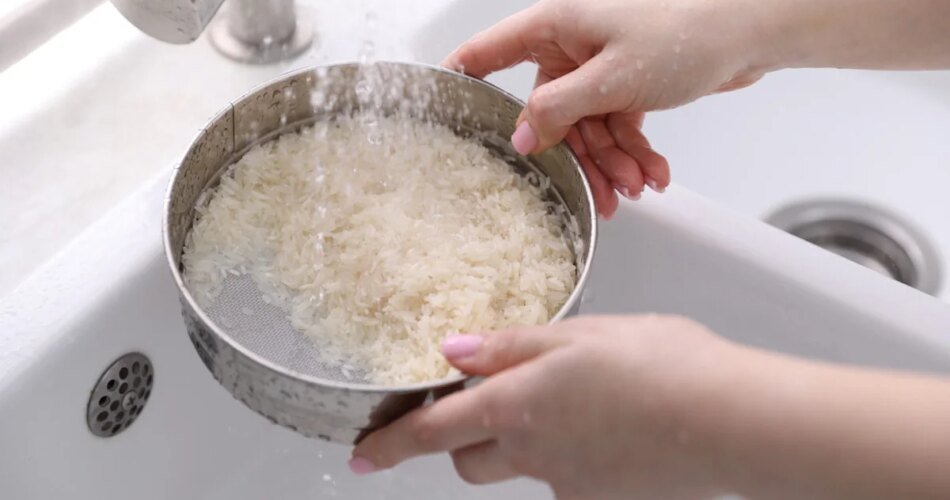
Woman washing rice in sieve at sink
Research by the water regulator found households used an average of seven litres of water to wash rice before cooking it – Olga Yastremska/iStock

Asian and Muslim communities have been told to wash their rice and feet less in a water-saving push.

Ofwat, the water industry regulator, has been criticised for funding “bizarre” guidance targeting ethnic minority households.

It used £270,000 of billpayers’ money for a research initiative that used a celebrity chef to teach Southeast Asians how to cook and wash rice with less water.

Muslims were also encouraged to use only a litre of water when performing ritual ablutions known as “wudu” before prayer.

As part of an ongoing water-saving scheme, the project was led by South Staffordshire Water, which worked on developing “water-saving behavioural change campaigns within faith and diverse communities” by targeting “excessive” washing of food by some cultures.

But critics have questioned the value of the project and suggested water companies should focus more on fixing leaking infrastructure, which results in more than a billion litres of water being wasted every day.

The water industry has come under increased scrutiny following the long, dry summer which has left much of the country under hosepipe bans, sparking concerns customers could be penalised with higher bills under schemes to limit water use and fund improvements to the network.

Andy Burnham was reported to be preparing an intervention this week after The Telegraph revealed that Ofwat, the regulator, planned to allow firms to build “surge pricing” into bills from April during periods of water scarcity.

See also  Travelodge chief executive steps down amid safety overhaul

Downing Street said “customers cannot be treated as a blank cheque”.

Mike Wood, the shadow Cabinet Office minister, said: “Cutting down on water waste is a noble aim, but the bigger issue here is the waste of taxpayers’ money.

“Families are already facing huge bill increases; they will not be best pleased that their money is being spent on bizarre schemes centred on trying to change longstanding religious and cultural practices.”

Ofwat’s £600m Water Innovation Fund launched in 2020 to research ways of tackling the climate crisis, financed by household water customers in England and Wales.

Researchers identified rice as a particular concern and found that households used an average of seven litres of water to wash rice before cooking it, when only one litre is necessary.

Ping Coombes, a celebrity chef who won MasterChef in 2014, was brought in to deliver a campaign video released in 2024 explaining how people can use less water for home cooking.

In the video, Ms Coombes states: “It is common practice to wash your rice five to seven times till the water runs clear. It made me think, is it really necessary to wash rice so many times? I actually wash my rice only twice.”

The guidance goes on to recommend reusing rice water to grow plants at home.

Another aim of the research was to evaluate water efficiency in the Muslim community, particularly how they could use less water for wudu before praying.

See also  Is Treasury selloff a major issue for stock market bulls?

The washing ritual is performed up to five times a day. “Muslims would typically use six to 12 litres of water per wudu session if using water under a full flowing running tap,” the research found.

To use less water, a group of Muslim households based around Cambridge Central Mosque were advised to perform wudu in the same ways as the prophet Mohammed is believed to have done by using only one litre of water.

It was claimed this resulted in around 10 times less water being used when compared with the upper end of what a Muslim may typically require, saving as much as 55 litres a day per person if adopted.

The guidance was trialled with a group of Muslim households based in Cambridge, with the study recommending “mass dissemination” could be achieved by promoting water-saving on Islamic television channels.

It was warned, however, that water companies should not appear to “blame” a specific religion for being more wasteful of water than others when communicating with customers.

Ofwat’s Water Innovation projects, which award funding to water companies for promising eco-friendly initiatives, have addressed a wide range of topics in recent years, including how to make consumers use less water with Nectar points.

An ongoing £1.8m project at Severn Trent Water offers customers loyalty points to spend online when they reduce their usage.

A spokesman for South Staffs Water said: “Water efficiency is an important part of managing water resources and we educate our customers on how they can support with this, as well as the actions South Staffs Water and Cambridge Water are doing. Our engagement reflects the demographic we serve across both regions.”

See also  Meta trial begins as states accuse company of harming children online

An Ofwat spokesman added: “This summer’s prolonged dry weather reminds us of the need for all of us to use water more efficiently and to be stewards of this finite, precious resource.

They added: “This pilot worked in collaboration with water companies, charities and with multiple faith groups to provide different communities with relevant and practical suggestions to save water […] It did not tell people what they can or can’t do, or impinge on religious worship or custom.”


Source link