
Westpac Banking Corp (ASX: WBC) shares have continued sliding since the bank’s latest quarterly update.
A new 52-week low naturally makes the shares look more tempting.
But has the investment case improved enough for me to buy?

Image source: Getty Images
The valuation has come down
Westpac shares touched a 52-week low of $33.46 on Monday, well below their 52-week high of $43.32.
That represents a decline of almost 23% from the peak and has taken some of the heat out of the valuation.
According to CommSec, analysts currently expect earnings per share of $2.08 in FY26 and $2.15 in FY27. At $33.46, Westpac is trading at around 16 times FY26 earnings and approximately 15.6 times FY27 earnings.
Those numbers look considerably more reasonable to me than they did when the shares were above $40.
Consensus forecasts also point to fully franked dividends of $1.54 per share in FY26 and $1.55 in FY27, so investors are still being offered a healthy stream of income while they wait.
But a cheaper share price alone is not enough to make me change my view.
My main concern hasn’t gone away
I wrote negatively about Westpac earlier this month after its third-quarter update, and the issue that bothered me then is still important today.
Mortgage applications have slowed.
Westpac reported average monthly mortgage applications of around 29,000 during the third quarter, while the run rate following the federal budget had fallen further to approximately 26,000.
That catches my attention because home lending remains a huge part of Westpac’s business. Its Australian mortgage portfolio stood at $529.1 billion at the end of June.
The bank also expects Australian housing credit growth to slow from 6.8% in FY26 to 4.7% in FY27.
Westpac is still profitable and its third-quarter update contained positives, including growth in business lending and deposits. But I would like to see clearer evidence that the bank can generate stronger growth outside its enormous mortgage business before becoming more positive.
The consensus numbers do not give me much reason to rush either. Earnings per share are currently expected to rise only modestly between FY26 and FY27, while the dividend forecast is almost unchanged.
I’d rather own CBA or NAB
If I wanted to buy an Australian bank today, I would still look elsewhere.
Commonwealth Bank of Australia (ASX: CBA) remains my preferred high-quality banking business.
I like its enormous customer franchise, strong digital capabilities, and ability to grow relationships across personal banking, home lending, business banking, and other financial services.
National Australia Bank Ltd (ASX: NAB) also interests me more than Westpac.
NAB’s strong position in business banking gives it exposure to an area I find attractive, particularly when competition and slower growth can make Australian home lending more challenging.
Westpac is working to strengthen its own business banking operations, including adding more regional bankers. That could help over time.
For now, though, I think CBA and NAB give me stronger reasons to invest.
Foolish takeaway
The new 52-week low has made Westpac shares more reasonably priced, but I am still not a buyer.
I would want more than a falling share price to change my mind. The slowdown in mortgage applications remains a concern, while current forecasts suggest earnings growth could be fairly subdued in the near term.
Westpac could certainly recover from here, and its dividend may attract income investors.
For my own money, though, I would rather put it behind CBA or NAB and wait for stronger evidence before reconsidering Westpac.
Source link
Author

- Ytv Market News
- Share-market news writer and analyst with deep experience covering equities, commodities, forex, and cryptocurrencies for readers in the USA, UK, Canada, and Australia. Ytv Market News delivers timely market updates, practical trading insights, and clear explanations of macro and company-level catalysts that move prices. Combines on-the-ground financial reporting with technical analysis, using concise charts and actionable ideas to help investors and traders make smarter decisions.
Latest entries
 CanadaAugust 24, 2026Avanti Helium Secures Up to US $10 Million Institutional Growth Financing To Support Its Transition Into Commercial Helium Production And Long-Term Expansion
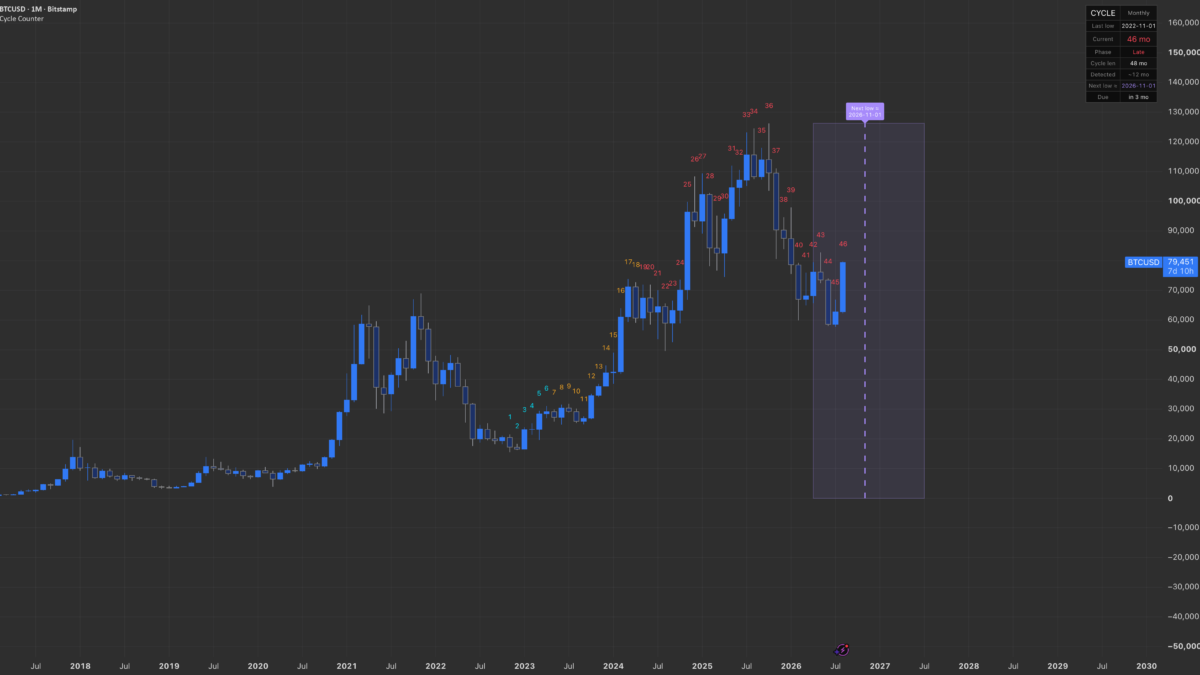 Trading IndicatorsAugust 24, 2026Cycle Counter with Phase and Next-Low Projection — Indicator by TOJI88 — TradingView
- UkAugust 24, 2026Market Open: Hunting Cuts Guidance, eEnergy Funding
 AustraliaAugust 24, 2026Redstone Resources Testing Copper and Critical Mineral Targets in West Musgrave