
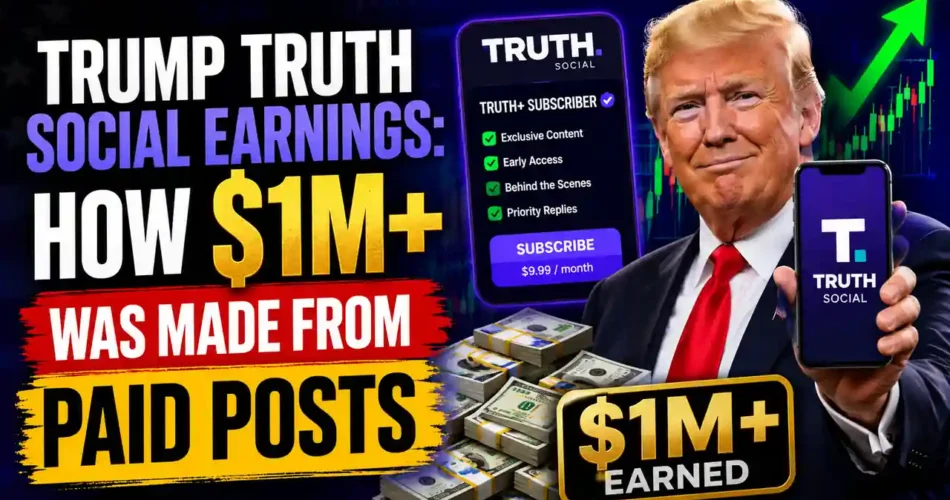
Trump Has Already Made Over $1 Million Selling Access to His Truth Posts
Since launching his own social platform, Trump has turned his posts into a revenue stream. More than just a political megaphone, the channel has become a paid-access product: followers pay to see or interact with content earlier than the public. Financially, that model has already generated more than $1 million in gross receipts. An analytical look at how the system works, why it’s lucrative, and what it means for digital politics and media monetization shows this is more than a novelty — it’s a case study in audience-first monetization for high-profile personalities.
How paid access on social platforms works
Paid access systems, whether called tipping, subscriptions, or pay-for-prioritized-view, let creators charge followers for special privileges. Typical features include early access to posts, exclusive content, and direct engagement tools. Platforms implement these using internal payment systems or third-party processors, taking a share of revenue and handing the rest to the creator.
On Trump’s platform, paid access functions as a gateway: subscribers pay a fee to view specific posts before they go public or to receive notifications and a higher likelihood of engagement. For a figure with millions of followers, even a modest conversion rate into paid subscribers yields significant income. The model leverages scarcity (time-limited or member-only content) and directness (cutting out traditional media gatekeepers) to convert attention into cash.
Why Trump’s page converts at scale
- Built-in audience: Public figures with long-standing name recognition start with enormous reach. Many followers value immediacy — the ability to hear directly and first from a leader without journalist filters.
- Polarized engagement: Highly partisan audiences display higher willingness to pay for perceived loyalty signals and direct interaction.
- Media amplification: Paid posts that later become publicly visible still attract media coverage, which signals importance and encourages more people to pay for early access on subsequent posts.
- Simple value proposition: The exchange is straightforward: pay to be first. That clarity reduces friction and boosts conversion.
Economics: rounding up the revenue
Estimating income from paid access requires three inputs: the number of paid posts, the price per post or subscription, and the number of paying users per post. Public reporting and payment-notice disclosures indicate the structure and suggest conservative revenue calculations that exceed $1 million.
- Price points: Many platforms use per-post fees or tiered subscriptions. If the per-post fee is modest (for example, a single-digit dollar amount), a conversion rate of only a few tenths of a percent across a huge follower base translates into sizable gross receipts.
- Volume: High-profile accounts publish frequently. Even occasional paid posts compound revenue when posted consistently over time.
- Platform cut: Platforms commonly take 10–30% of gross receipts, depending on payment processing, app store rules, and platform policy. The creator retains the balance.
The reported figure — over $1 million — likely represents gross receipts before platform fees and taxes. Net income to the account holder would be lower but still substantial. For context, consistent microtransactions from a politically mobilized base create a recurring revenue stream that rivals or exceeds traditional political fundraising for certain use cases.
Comparison with other monetization forms
Paid-access posts differ from ad revenue or conventional fundraising in several ways:
- Directness: Payments come from consumers, not advertisers or donors. The creator controls pricing and content gating.
- Predictability: Regular paid posts can create a reliable revenue cadence, though subject to variability in engagement.
- Compliance and rules: Political fundraising typically follows strict campaign finance rules; paid-access content must be navigated carefully to avoid crossing into regulated donations, especially if tied to campaign activities or promises.
Compared with ads, paid access is more resilient to third-party platform policy changes that throttle reach, because paying users actively opt in rather than being passively served content.
Regulatory and ethical considerations
Turning political messages into paid products raises several regulatory and ethical questions.
- Campaign finance risk: If paid content is used to solicit political support or coordinate campaign activity, it may implicate campaign finance laws. Legal teams must ensure paid posts that benefit a campaign are reported and processed according to election law.
- Transparency: Voters and consumers may expect disclosure regarding what is behind paywalls and whether the revenue supports political operations, personal enterprises, or platform maintenance.
- Information inequality: Gating timely political communication to paying followers can create information asymmetries. Early access to statements or policy positions may advantage wealthier or more committed supporters.
- Platform moderation and responsibility: When a high-profile account monetizes speech, platforms face pressure to enforce content and safety policies uniformly while handling appeals from a large, politically invested user base.
Legal exposure varies by jurisdiction. In the U.S., the Federal Election Commission (FEC) and state campaign regulators focus on transactions that finance campaigns. If paid posts are marketed as campaign support, reporting rules could apply. Conversely, if framed as private communications or content subscriptions, they may fall outside direct campaign finance oversight — though this line can blur.
Media dynamics and public perception
Paid early access reshapes how media outlets and audiences interact. Journalists often report on posts once public, but early paid posts can drive news cycles before wider release. This creates incentives for media monitoring services and rival outlets to subscribe for early notice, potentially shifting who breaks stories.
Public perception also splits. Supporters may view paid access as a fair exchange to support their preferred figure and receive exclusive interaction. Critics argue it monetizes civic discourse and privileges paying followers. Both reactions can be amplified in traditional and social media coverage, creating a feedback loop that sustains the revenue model.
Longevity and scalability
Can this revenue stream scale sustainably? Several factors determine longevity:
- Audience fatigue: Repeated paywalls risk alienating followers who expect free access to public statements.
- Legal and platform changes: New regulations or app store policies could restrict certain monetization methods or impose higher fees.
- Competitive offerings: Other platforms or intermediaries that offer free aggregation could undercut the value proposition of early access.
- Diversification: High-profile figures often combine multiple revenue channels (donations, merchandise, subscriptions), reducing dependence on any single mechanism.
However, as long as the account remains a primary source of timely information for a sizable, committed audience, paid-access posts provide a low-friction monetization method that can outpace more traditional channels.
Broader implications for content monetization
This case highlights key trends for content creators and public figures:
- Monetize attention directly: Instead of relying solely on ads or sponsorships, creators increasingly sell access and exclusivity to audiences.
- Microtransactions at scale: Small fees from many followers compound rapidly for accounts with large audiences.
- Political content as a product: The commercialization of political messaging raises novel policy questions and could prompt new regulatory frameworks.
- Platform power: Platforms that enable micro-payments can reshape how political and news content is distributed and consumed.
The model is not limited to politics. Influencers, journalists, and niche experts can adopt similar strategies, provided they clearly separate monetized content from regulated fundraising and adhere to platform rules.
What this means going forward
Expect other high-profile accounts to experiment with paid early access, especially when media amplification promises additional reach. Regulators and platforms will likely scrutinize these arrangements closer as they intersect with political activity. For observers of media and politics, the trend represents a reconfiguration of incentives: attention becomes revenue, and immediacy becomes a commodity.
FAQ
Is selling access to posts legal?
Generally yes, but legality depends on how the payments are used. If payments are solicited for campaign support, campaign finance laws and disclosure rules may apply. Legal counsel should assess context-specific risks.
How much does the platform take?
Platform fees vary. App stores and payment processors commonly take 15–30%, while some platforms keep a smaller share. Exact splits depend on the service’s terms.
Does this replace campaign fundraising?
Not directly. While it can generate significant revenue, campaign fundraising and regulated political donations follow specific rules and disclosure requirements that paid content may circumvent only if carefully structured.
Do paying users get special influence?
Paying users gain early access or prioritized engagement but not necessarily formal decision-making power. Ethical concerns arise if monetary payment becomes the sole route to direct influence over policy or campaign decisions.
Could platforms ban this practice?
Yes. Platforms can change monetization features or restrict paid-access tools. App store rules and regulatory pressure could also limit how political figures monetize posts.
References
U.S. Department of State – Social Media Terms of Use
U.S. Office of Personnel Management – Social Media Policy (PDF)
UK Government Security – Social Media Guidance
UK Government – Code of Practice for Online Social Media Platforms (PDF)
Government of Canada – Digital Government Policies, Standards and Guidelines

