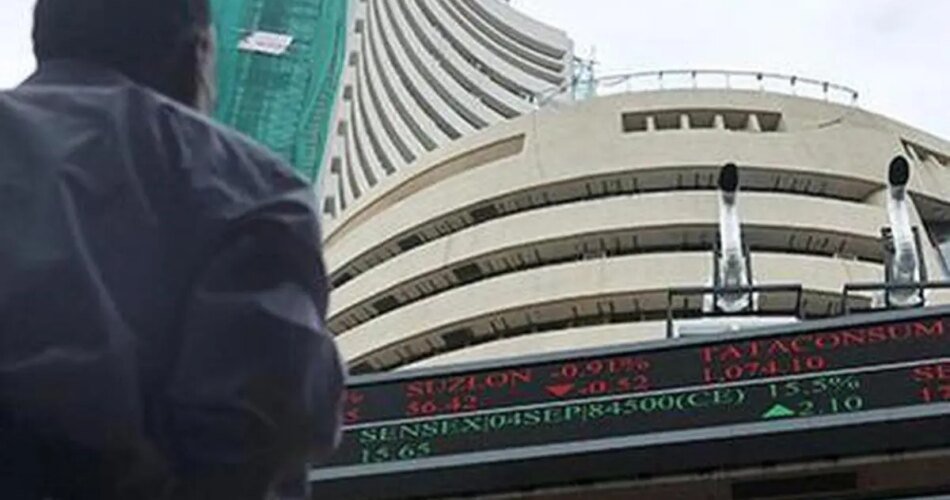

In a volatile Closing Auction Session, Sensex shed nearly 2,500 points, over 3%, in a matter of minutes
| Photo Credit:
th-online Administrator
Markets closed lower for a second consecutive session on Thursday, with benchmark indices surrendering early gains under the weight of broad-based selling in PSU banks, metals, and heavyweight financial stocks, and a wild final few minutes that turned what was a moderate decline into a far messier close.
The Sensex ended at 76,933.59, down 0.70 per cent, while the Nifty 50 settled at 24,090.85, off 116 points or 0.48 per cent, its weakest close in six sessions. The damage, however, was amplified in the Closing Auction Session, where the Sensex shed nearly 2,500 points, over 3 per cent, in a matter of minutes, an extraordinary bout of volatility on what was the monthly Sensex and Bankex F&O expiry day. The CAS alone accounted for nearly 40 points of the losses. Equally, the Bankex also witnessed extreme volatility with the 65,000 Put option jumping from ₹6 to a whopping ₹1,000 within minutes on August 27, leaving traders shocked and perplexed.

Meanwhile, SEBI chairperson, Tuhin Kanta Pandey, at an NSE event said that is not looking to make changes to its new closing-auction system.
In a footnote that underscores just how unusual the past two sessions have been, Nifty closed exactly at its day low on both Wednesday and Thursday, the first time this has happened on consecutive sessions since the index’s inception in 1997.
“Markets traded under pressure on Thursday, with benchmark indices ending lower amid mixed global cues and selling in heavyweight stocks across sectors,” said Ajit Mishra, SVP Research at Religare Broking. “Until greater clarity emerges, participants should maintain a cautious, stock-specific approach.”
The session was marked by a clear divergence between sentiment and reality. Global cues were not unfavourable, Nvidia reported stronger-than-expected revenue and guidance, lifting AI-linked stocks globally, while Asian markets broadly advanced. US PCE inflation data came in largely in line with expectations. Yet, none of it translated into sustained buying on Dalal Street.
HDFC Bank was among the key drags after news of a US class-action lawsuit rattled investors, while selling in Hindalco, Reliance, Bharti Airtel, and select FMCG names added to the pressure. On the other side, Adani Enterprises, Kotak Mahindra Bank, and Adani Ports finished as top Nifty gainers. Sectorally, pharma and consumer durables outperformed, while cement, PSU banks, metals, and media bore the brunt of selling.
The broader market was relatively more resilient, both Nifty Midcap 100 and Nifty Smallcap 100 ended marginally lower, each declining around 0.10 per cent. Still, the market breadth was firmly negative, with 313 of the Nifty 500 stocks ending in the red, and the advances-declines ratio at 0.74.
The rupee came under pressure after opening flat following Wednesday’s holiday, closing 13 paise weaker at 95.54 against the dollar, dragged by month-end dollar demand, short-covering, and a modest rebound in the dollar index post the PCE print. Spot support for USDINR is seen at 95.30, with resistance near 95.75.
In commodities, gold retreated below $4,600 per ounce and silver held near $68.5, easing after a sharp run-up this week, as hotter-than-expected US PCE data, headline at 3.7 per cent against an estimate of 3.6 per cent, kept rate-hike possibilities on the table. Crude extended losses into a fourth straight session before recovering; Brent, which briefly dipped near $87 per barrel, clawed back to around $88.20, and WTI recovered to $82.20, after Iran and Oman signalled progress toward a maritime corridor agreement in the Strait of Hormuz. Tehran, however, cautioned a full reopening depends on conditions beyond the bilateral deal, including the US naval blockade, keeping the crude market two-sided.
Inderbir Jolly, CEO of PL Wealth, put the broader picture in context: “…foreign investors have returned as buyers, the monsoon has recovered and the domestic growth and earnings backdrop remains resilient. At the same time, elevated crude prices, geopolitical developments and an uncertain global rate environment mean that markets are unlikely to move in a broad-based manner…”
All eyes now turn to Federal Reserve Chair Kevin Warsh’s address at the Jackson Hole symposium on Friday, a speech that will be parsed for signals on whether the Fed leans hawkish or stays neutral. Domestically, India’s July IIP data is due Friday, which will offer a fresh read on industrial momentum and could shape near-term sentiment in capital goods and industrials. With the August derivatives series behind it, the market will also be watching how institutional positions build in the new September series. In the near term, Nifty is expected to trade within the 23,800–24,600 range, with 24,000 acting as a critical support floor.
Published on August 27, 2026
Source link
Author

- Ytv Market News
- Share-market news writer and analyst with deep experience covering equities, commodities, forex, and cryptocurrencies for readers in the USA, UK, Canada, and Australia. Ytv Market News delivers timely market updates, practical trading insights, and clear explanations of macro and company-level catalysts that move prices. Combines on-the-ground financial reporting with technical analysis, using concise charts and actionable ideas to help investors and traders make smarter decisions.
Latest entries
 Crypto NewsAugust 28, 2026Ethereum Price Forecast: Rising stablecoin supply and ETF inflows behind ETH’s rally
 CanadaAugust 28, 2026Lightspeed Publishes its Fifth Annual Sustainability Report
 AustraliaAugust 28, 2026Austco Healthcare Posts Record FY26 Revenue as Recurring Income Builds
 Stock Market VideosAugust 28, 2026Mike Maloney: Why a Global Monetary Reset Is Already Happening