
Global borrowing costs have surged to levels last seen before the financial crisis amid growing fears that governments are losing control of “unsustainable” debt piles.
An increasingly toxic cocktail of the Iran conflict, the AI industry’s unprecedented borrowing spree and inflation fears sent the yield on 30-year US Treasuries to a two-decade high of 5.33pc on Wednesday. Yields on benchmark 10-year US debt also rose as high as 4.74pc.
In Britain, the Debt Management Office sold government bonds carrying the highest interest rate since 2007. Some £4bn in gilts were issued with a yield of 5.155pc, the highest rate since just before Northern Rock collapsed.
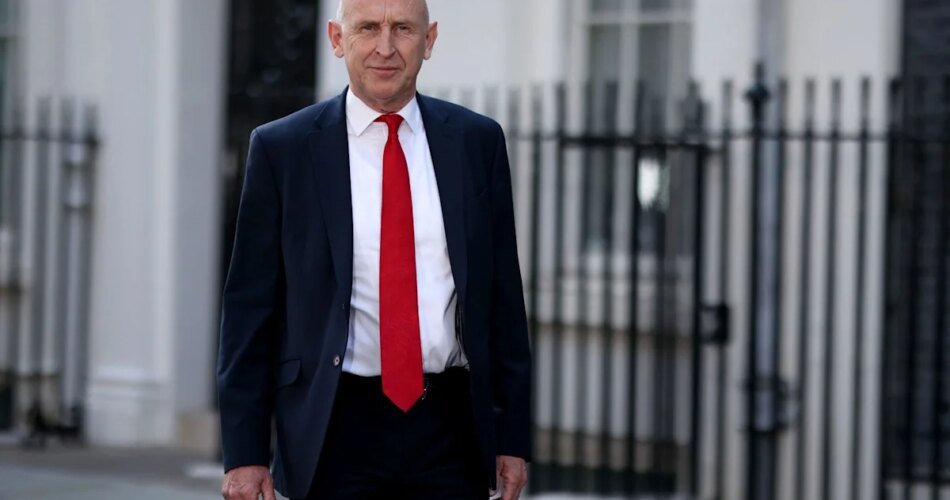
Rising debt costs posing a headache for John Healey, the Chancellor, who is preparing to unveil his maiden Budget on Oct 28.
The problem is not confined to just Britain and the US. Borrowing costs in Japan are at a 30-year high and France’s 10-year bond yield on Tuesday hit its highest level since 2009.
Robin Brooks, at the Brookings Institution, said investors were increasingly losing faith in the ability of governments to get debt down.
“When you have a lot of debt and run unsustainably large budget deficits, you’re extremely vulnerable to any old shock that comes along,” he said. “It’s not about the shock, but – instead – the mess we are making of fiscal policy on a global scale.”
The former IMF economist warned that countries with “lots of debt and political dysfunction” like the UK, France and Japan were “being hit harder than others”.
By contrast, more prudent countries like Switzerland and Germany have been more insulated, though the borrowing costs of both increased on Tuesday.
Britain’s debt pile is already close to 100pc of GDP, while France and Japan have even higher debt shares.
Mr Brooks said investors were demanding a higher premium for long-term borrowing amid growing uncertainty over the political and economic outlook of debt-laden countries.
“Initial conditions turn out to be massively important,” he said. “The benefits of responsible fiscal policy … have never been more apparent.”
While investor demand for British debt remains robust, with more than three buyers bidding for every bond on offer, economists said rising borrowing costs served as a warning to Andy Burnham.
The Prime Minister and Mr Healey are seeking to borrow more by exploiting flexibility in the fiscal rules introduced by Rachel Reeves, the previous chancellor.
The new Chancellor is exploring ways to boost investment at a time when rising prices and borrowing costs, driven by conflict in the Middle East, have already eaten into half Mr Healey’s £24bn buffer to balance the books.
Source link