

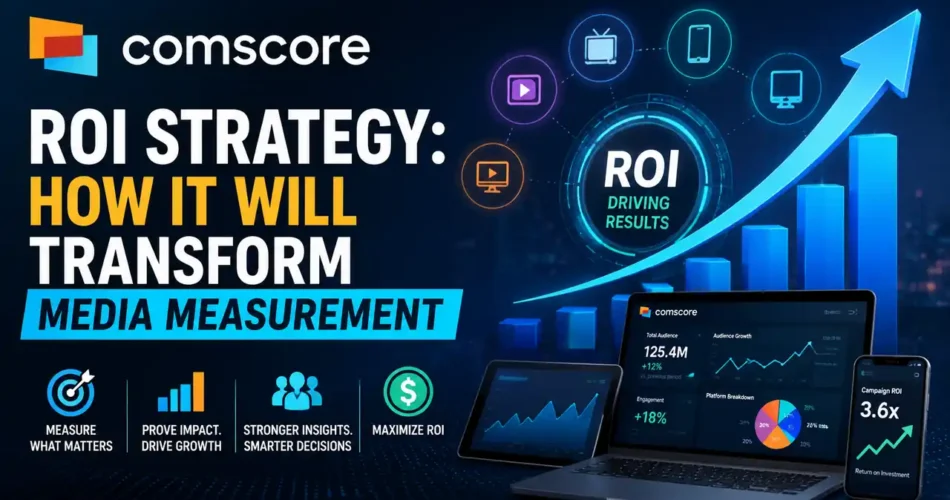
Comscore Announces ROI Strategy to Transform the Business
Comscore has introduced a new strategy centered on return on investment (ROI), aiming to strengthen its business by helping clients connect media measurement more directly to commercial outcomes. The shift reflects growing demand from advertisers and publishers for insights that show not just audience reach, but real business impact.
With this move, Comscore is positioning itself as more than a measurement provider. The company wants to become a partner that helps clients improve campaign efficiency, increase revenue, and make smarter media decisions.
Why ROI Is Now the Main Focus
The advertising industry has changed quickly in recent years. Brands now want clearer proof that their media spend is producing sales, subscriptions, leads, or other measurable results. At the same time, publishers need stronger ways to prove the value of their inventory and audience.
Comscore’s ROI-first strategy is designed to meet those needs. Instead of focusing only on reach or impressions, the company is moving toward measurement models that connect exposure with outcomes.
Market Changes Driving the Shift
Several trends have made ROI more important than ever. Advertisers are under pressure to reduce wasted spend, while agencies are expected to justify every budget decision. Publishers also need better monetization tools to compete in a crowded digital market.
This environment has created a strong opportunity for measurement companies that can prove business value, not just audience size.
What the Strategy Includes
Comscore’s new direction appears to combine product innovation, better data integration, and more client support. The goal is to create a system that helps customers understand how media performance translates into revenue.
Product Improvements
The company is expected to enhance its reporting and analytics tools so they can show more outcome-based insights. This may include campaign lift, conversion measurement, and cross-platform performance tracking across TV, streaming, desktop, and mobile.
Data Partnerships
To make ROI measurement more accurate, Comscore is likely expanding its data ecosystem. That includes partnerships with first-party data providers, identity solutions, and ad tech platforms that help connect ad exposure to consumer behavior.
Revenue-Focused Reporting
Instead of only showing audience numbers, the new approach emphasizes business metrics. These may include estimated sales impact, subscription growth, and other revenue-related outcomes that matter to advertisers and publishers.
Advisory Support
Comscore also appears to be strengthening its consulting and client support services. This can help customers understand the results, improve campaign planning, and use the data more effectively in future media buys.
Benefits for Clients
The ROI strategy has potential advantages for both advertisers and publishers. For advertisers, it offers better visibility into which campaigns are actually driving results. For publishers, it creates a stronger story around inventory value and audience quality.
Agencies may also benefit because outcome-based reporting can improve campaign optimization and help them allocate budgets more intelligently. In short, the strategy is meant to make measurement more useful across the entire advertising ecosystem.
How Advertisers Benefit
Advertisers can use ROI-focused analytics to identify high-performing channels, reduce ineffective spend, and improve return on ad investment. This can lead to more efficient budgeting and stronger campaign planning.
How Publishers Benefit
Publishers can use outcome-based metrics to demonstrate the value of their audience more clearly. That can improve pricing power, support premium ad sales, and create more trust with buyers.
Challenges Ahead
Although the strategy sounds promising, there are still challenges. Privacy rules, identity limitations, and data fragmentation make it harder to track user behavior across devices and platforms.
Comscore will need to balance accuracy with compliance while also educating clients about how ROI measurement works. That means the company must invest in transparent methodology, reliable modeling, and strong communication.
Privacy and Measurement Limits
As third-party identifiers become less available, companies like Comscore must rely more on first-party data, consented data, and privacy-safe modeling. This makes measurement more complex, but also more sustainable for the future.
Client Education
Many clients still think in terms of impressions, reach, and clicks. Moving them toward ROI-based decision-making may take time, especially for teams that are used to traditional reporting.
What This Means for the Industry
If successful, Comscore’s strategy could influence how the broader media measurement market evolves. More companies may move away from vanity metrics and toward business outcomes as the main way to judge performance.
This could also change how media is bought and sold. Campaigns that can prove clear ROI may receive more budget, while low-performing placements may lose value. Over time, that shift could improve efficiency across digital advertising.
Conclusion
Comscore’s ROI strategy reflects a major shift in the media measurement world. The company is trying to connect audience data with real business results, which is exactly what advertisers and publishers increasingly want.
If the rollout is executed well, the strategy could strengthen Comscore’s market position and help clients make better commercial decisions. It is a practical move that matches the growing demand for performance, transparency, and measurable value.
FAQ
What does Comscore’s ROI strategy mean?
It means Comscore is focusing on measurement tools that show how media activity leads to business results like sales, subscriptions, or conversions.
Why is ROI important in media measurement?
ROI helps advertisers and publishers understand whether their spending or inventory is generating real value, not just traffic or impressions.
Will traditional metrics still matter?
Yes. Reach, impressions, and audience data will still matter, but they will be supported by more outcome-based reporting.
Who benefits most from this strategy?
Advertisers, publishers, and agencies all stand to benefit because they can make better decisions using clearer performance data.
What challenges could Comscore face?
Privacy restrictions, identity loss, and the need to educate clients about new measurement methods are some of the biggest challenges.

