

Many dividend stocks pulled back this year as fears of higher interest rates drove income-oriented investors back toward lower-risk CDs, bonds, and T-bills. But over the long term, most blue chip dividend stocks generate bigger total returns than fixed-income plays.
Three reliable dividend stocks worth buying today are Chevron (CVX -1.02%), ExxonMobil (XOM -0.93%), and The Williams Companies (WMB +0.91%). Let’s see why these three energy plays will remain safe income stocks to buy, hold, and forget for at least the next decade.

Image source: Getty Images.
Chevron
Chevron is one of the world’s largest integrated energy companies. It owns upstream extraction facilities and downstream refineries, as well as midstream pipelines that transport its own resources. It has a presence in 180 countries, but it gets most of its oil from the U.S., Kazakhstan, and Australia. It’s also expanding into new oil-rich regions like Guyana, and it’s less exposed to the volatile Middle East market than many of its industry peers.

Today’s Change
(-1.02%) $-2.11
Current Price
$203.17
Key Data Points
Market Cap
Day’s Range
$201.75 – $205.30
52wk Range
$146.49 – $214.71
Volume
2.7M
Avg Vol
8.7M
Gross Margin
18.48%
Dividend Yield
3.43%
Chevron’s scale and diversification insulate it from major economic shocks, and it only needs the price of Brent crude (currently at $88 per barrel) to stay above $50 per barrel to generate enough cash to cover its capex and dividends through 2030. It also plans to increase its oil and gas production by 2%-3% annually through the end of the decade.
Chevron has raised its dividend annually for 39 consecutive years, and it will be crowned a Dividend King if it maintains that streak for 50 years. It pays a forward yield of 3.5%, and its low trailing payout ratio of 67% gives it plenty of room for future hikes.
ExxonMobil
ExxonMobil is another massive integrated energy company that owns upstream, downstream, and midstream assets. It operates in over 56 countries, but it gets most of its oil from the Permian Basin in the United States. Like Chevron, ExxonMobil has also been expanding aggressively in Guyana and ramping up its oil production in Asia and Africa.

Today’s Change
(-0.93%) $-1.54
Current Price
$163.57
Key Data Points
Market Cap
Day’s Range
$162.25 – $165.22
52wk Range
$108.35 – $176.41
Volume
5.3M
Avg Vol
15.8M
Gross Margin
20.88%
Dividend Yield
2.50%
ExxonMobil only needs Brent crude prices to remain above $35 per barrel to cover its capex and dividends. It aims to increase its oil and gas production by nearly 3% through 2030.
ExxonMobil has raised its dividend annually for 43 consecutive years, making it a future Dividend King, and it pays a forward yield of 2.5% with a low trailing payout ratio of 53%. It’s notably more exposed to the Middle East conflicts than Chevron, but its growth in the Permian Basin, Guyana, and the liquefied natural gas (LNG) market should offset that pressure.
The Williams Companies
Williams is a midstream company that operates over 33,000 miles of pipeline across the United States. It mainly delivers natural gas through its pipelines, which sets it apart from many of its industry peers — which typically transport a broader mix of crude oil, natural gas, and other resources.

Today’s Change
(0.91%) $0.64
Current Price
$71.13
Key Data Points
Market Cap
Day’s Range
$69.60 – $71.49
52wk Range
$56.09 – $80.08
Volume
3M
Avg Vol
6.9M
Gross Margin
43.93%
Dividend Yield
2.91%
Williams transports about 30% of the country’s natural gas, which powers nearly half of our domestic data centers, through its Transco pipelines between Texas and the Eastern Seaboard. That “superhighway” makes Williams more of an AI infrastructure play than many of its industry peers, and it’s building “behind the meter” (BTM) sites at data centers to provide hyperscalers with a stable flow of natural gas that bypasses the bottlenecks at traditional utilities.
As a midstream company, Williams generates most of its revenue by collecting “tolls” from upstream and downstream companies, as well as utilities that use its infrastructure. That business model is well insulated from volatile commodity prices, and it generates plenty of cash to fund its dividends — which it’s raised annually for the past 10 years. It pays an attractive forward yield of nearly 3%, which is supported by a trailing payout ratio of 82%, and offers a balanced blend of growth and income.
Source link
Author

- Ytv Market News
- Share-market news writer and analyst with deep experience covering equities, commodities, forex, and cryptocurrencies for readers in the USA, UK, Canada, and Australia. Ytv Market News delivers timely market updates, practical trading insights, and clear explanations of macro and company-level catalysts that move prices. Combines on-the-ground financial reporting with technical analysis, using concise charts and actionable ideas to help investors and traders make smarter decisions.
Latest entries
 Crypto NewsAugust 24, 2026Strategy Halts Bitcoin Purchases And Strengthens Its Balance Sheet
 CanadaAugust 24, 2026Avanti Helium Secures Up to US $10 Million Institutional Growth Financing To Support Its Transition Into Commercial Helium Production And Long-Term Expansion
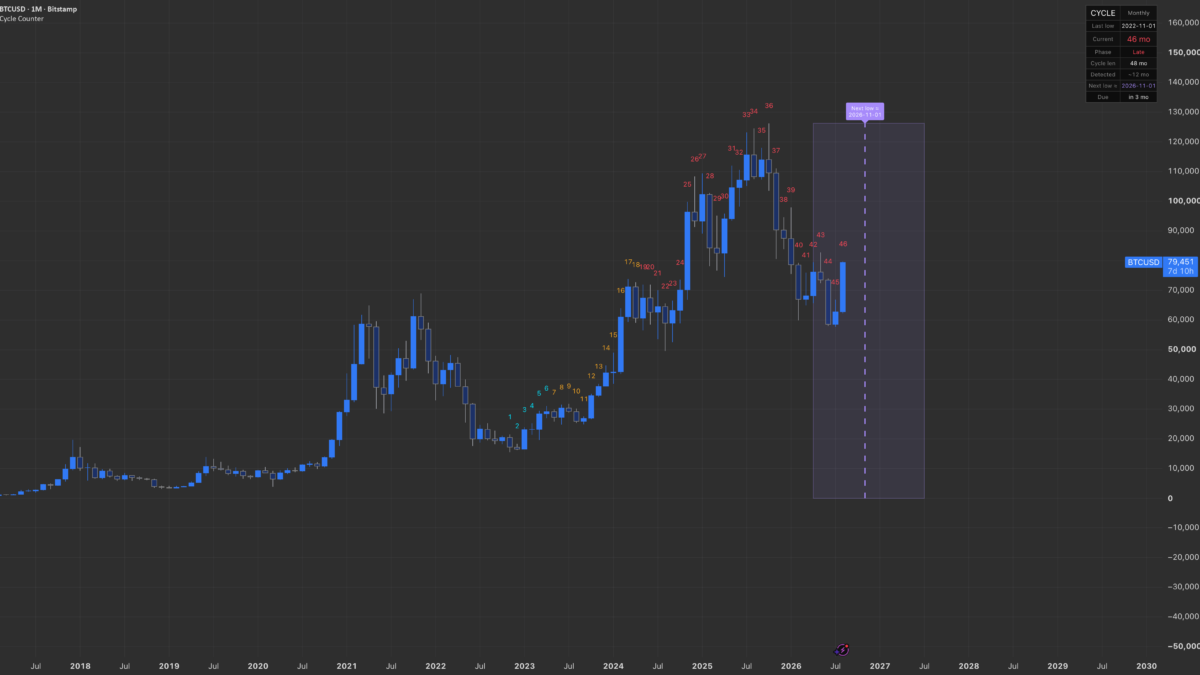 Trading IndicatorsAugust 24, 2026Cycle Counter with Phase and Next-Low Projection — Indicator by TOJI88 — TradingView
- UkAugust 24, 2026Market Open: Hunting Cuts Guidance, eEnergy Funding