

We can readily understand why investors are attracted to unprofitable companies. For example, although software-as-a-service business Salesforce.com lost money for years while it grew recurring revenue, if you held shares since 2005, you’d have done very well indeed. But while history lauds those rare successes, those that fail are often forgotten; who remembers Pets.com?
So should SHT Smart High-Tech (FRA:7H6) shareholders be worried about its cash burn? In this article, we define cash burn as its annual (negative) free cash flow, which is the amount of money a company spends each year to fund its growth. We’ll start by comparing its cash burn with its cash reserves in order to calculate its cash runway.
Does SHT Smart High-Tech Have A Long Cash Runway?
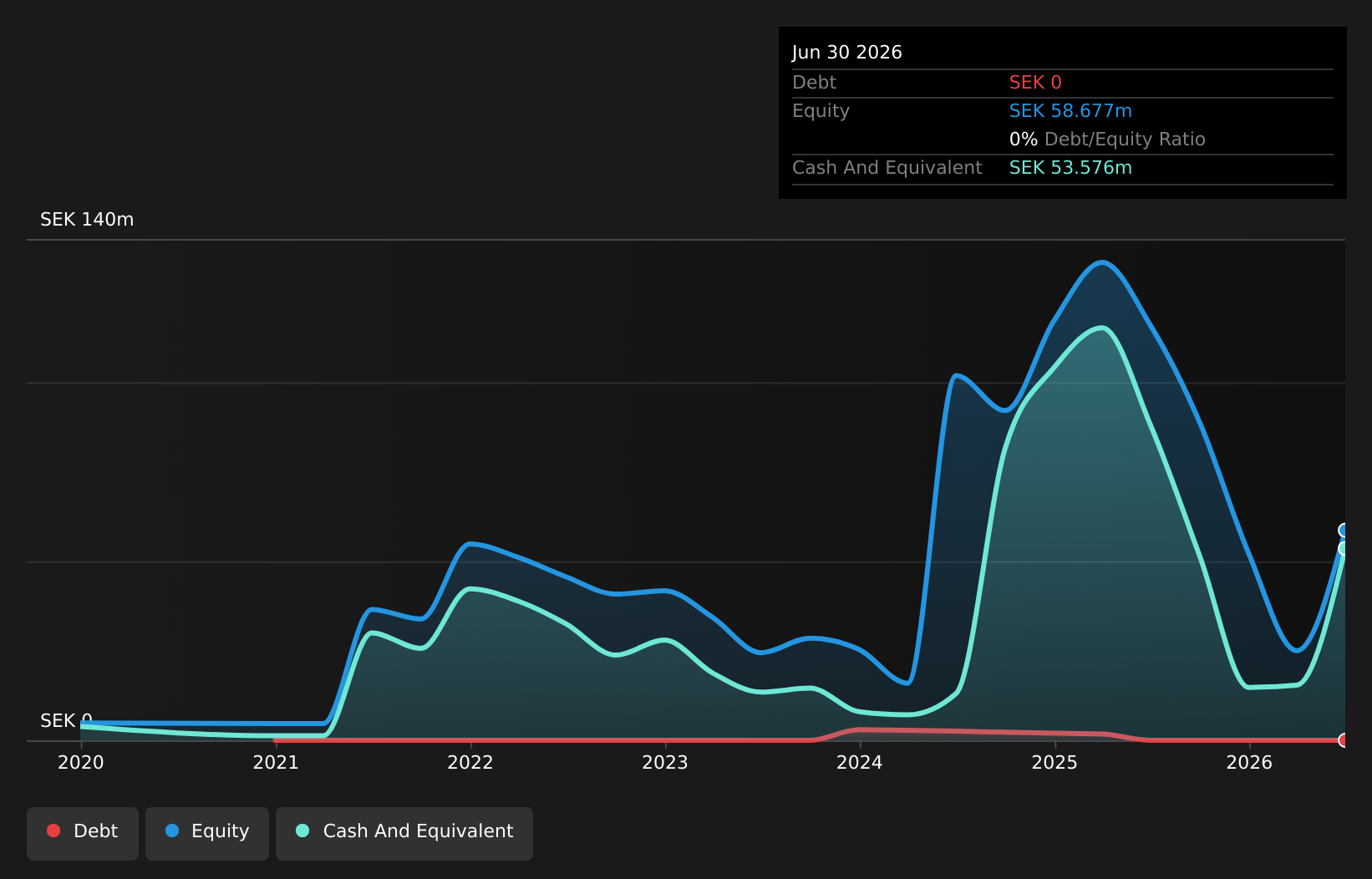
A cash runway is defined as the length of time it would take a company to run out of money if it kept spending at its current rate of cash burn. As at June 2026, SHT Smart High-Tech had cash of kr54m and no debt. In the last year, its cash burn was kr67m. So it had a cash runway of approximately 10 months from June 2026. To be frank, this kind of short runway puts us on edge, as it indicates the company must reduce its cash burn significantly, or else raise cash imminently. You can see how its cash balance has changed over time in the image below.
See our latest analysis for SHT Smart High-Tech
How Well Is SHT Smart High-Tech Growing?
SHT Smart High-Tech reduced its cash burn by 13% during the last year, which points to some degree of discipline. In contrast, however, operating revenue tanked 62% during the period. Taken together, we think these growth metrics are a little worrying. In reality, this article only makes a short study of the company’s growth data. You can take a look at how SHT Smart High-Tech has developed its business over time by checking this visualization of its revenue and earnings history.
Can SHT Smart High-Tech Raise More Cash Easily?
Since SHT Smart High-Tech revenue has been falling, the market will likely be considering how it can raise more cash if need be. Companies can raise capital through either debt or equity. Many companies end up issuing new shares to fund future growth. We can compare a company’s cash burn to its market capitalisation to get a sense for how many new shares a company would have to issue to fund one year’s operations.
SHT Smart High-Tech’s cash burn of kr67m is about 0.8% of its kr8.5b market capitalisation. So it could almost certainly just borrow a little to fund another year’s growth, or else easily raise the cash by issuing a few shares.
So, Should We Worry About SHT Smart High-Tech’s Cash Burn?
On this analysis of SHT Smart High-Tech’s cash burn, we think its cash burn relative to its market cap was reassuring, while its falling revenue has us a bit worried. We don’t think its cash burn is particularly problematic, but after considering the range of factors in this article, we do think shareholders should be monitoring how it changes over time. Readers need to have a sound understanding of business risks before investing in a stock, and we’ve spotted 4 warning signs for SHT Smart High-Tech that potential shareholders should take into account before putting money into a stock.
Of course, you might find a fantastic investment by looking elsewhere. So take a peek at this free list of companies with significant insider holdings, and this list of stocks growth stocks (according to analyst forecasts)
New: Manage All Your Stock Portfolios in One Place
We’ve created the ultimate portfolio companion for stock investors, and it’s free.
• Connect an unlimited number of Portfolios and see your total in one currency
• Be alerted to new Warning Signs or Risks via email or mobile
• Track the Fair Value of your stocks
Have feedback on this article? Concerned about the content? Get in touch with us directly. Alternatively, email editorial-team (at) simplywallst.com.
This article by Simply Wall St is general in nature. We provide commentary based on historical data and analyst forecasts only using an unbiased methodology and our articles are not intended to be financial advice. It does not constitute a recommendation to buy or sell any stock, and does not take account of your objectives, or your financial situation. We aim to bring you long-term focused analysis driven by fundamental data. Note that our analysis may not factor in the latest price-sensitive company announcements or qualitative material. Simply Wall St has no position in any stocks mentioned.
Source link
Author

- Ytv Market News
- Share-market news writer and analyst with deep experience covering equities, commodities, forex, and cryptocurrencies for readers in the USA, UK, Canada, and Australia. Ytv Market News delivers timely market updates, practical trading insights, and clear explanations of macro and company-level catalysts that move prices. Combines on-the-ground financial reporting with technical analysis, using concise charts and actionable ideas to help investors and traders make smarter decisions.
Latest entries
 JapanAugust 24, 2026Asian shares mostly decline as bond market pressure mounts
 Crypto NewsAugust 24, 2026Crypto: Binance Now Lets AI Trade on Your Behalf
 CanadaAugust 24, 2026Lysander Announces Cash Distributions for the Lysander-Canso ActivETFs
 Trading IndicatorsAugust 24, 2026RSI Regime Filter | Trading Indicator


