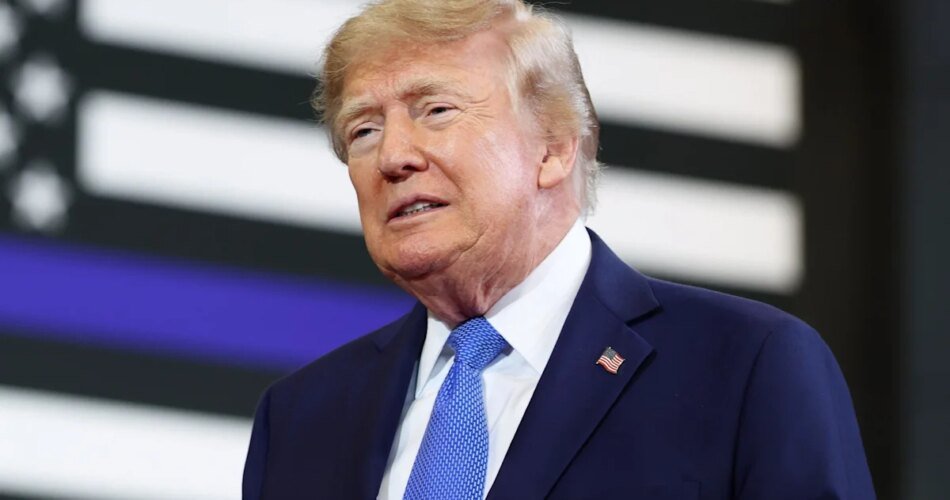

Donald Trump has launched a major intervention in the bond market after a global sell-off that pushed government borrowing costs to multi-decade highs.
The US treasury said it would pump billions of dollars into the bond market after fears about inflation and surging government debt propelled borrowing costs to their highest level since the financial crisis.
In a move to calm increasingly volatile bond markets, the treasury said on Wednesday that it would double the amount available to buy long-dated US treasuries to $4bn (£3bn).
Officials said the intervention was designed to temper big swings in the cost of borrowing.
However, George Saravelos, at Deutsche Bank, said the surprise intervention was a sign of “increasing administration unease” about the rise in US long-term borrowing costs.
He warned the move to inject cash into the financial system could also pile pressure on the US Federal Reserve to raise interest rates, which could draw the ire of Mr Trump.
Borrowing costs in major Western economies have surged to levels last seen in 2007 because of concerns that governments are losing control of debt. The US government’s debt pile is nearing $40tn.
Investor worries regarding Mr Trump’s war in Iran, a surge in borrowing from the AI industry and concerns about rising inflation pushed the yield on 30-year US treasuries to a two-decade high of 5.33pc on Tuesday.
Yields on benchmark 10-year US debt also rose to 4.71pc.
A sharp increase in borrowing costs also took place across Europe. France’s 10-year bond yield hit its highest level since 2009 on Tuesday, while the yield on German bunds climbed to 3.25pc, a 15-year high.
However, the announcement by the US treasury sent bond yields falling on Wednesday afternoon.
The yield on 10-year US treasuries fell six basis points to 4.65pc, down from the multi-decade high it reached on Tuesday. The yield on 10-year gilts, as UK bonds are known, dropped five basis points to 5.03pc.
It marks a significant intervention for Scott Bessent, the US treasury secretary, who has previously called himself “the nation’s top bond salesman”.
The move also triggered a fall in the value of the dollar, in a move that analysts warned would accelerate if the government continued to prop up the bond market.
The treasury insisted its intervention was designed to make trading longer-term debt less volatile by making it easier for investors to sell debt. It maintained the market was still strong.
Bonds with maturities of 10 years or more will qualify for the “liquidity-support buybacks” in the temporary intervention that will continue from Sept 9 to the start of November.
Source link