(Bloomberg) — The US Treasury Department’s decision to boost buybacks of long-dated bonds is complicating the outlook for issuance of short-term securities, including Treasury bills, which are expected to be used to finance the plan.
Most Read from Bloomberg
Treasury’s plan to increase “by at least double, the size of liquidity support buyback operations” came just two weeks after the department said in its quarterly refunding announcement that buybacks would continue at the same size. It also projected a seasonal drop in Treasury bill supply due to corporate tax inflows in September.
Wednesday’s mid-quarter revision upends that guidance by increasing the amount of issuance needed to finance the larger buybacks, especially since there is no ceiling on the purchases. The move came after long-dated Treasury yields climbed to multiyear highs.
“I’m not sure how credible anything they say is now,” said Thomas Simons, chief US economist at Jefferies LLC. “Forecasting bill supply was quasi impossible before, so this only makes it slightly more difficult.”
Treasury relies heavily on bill issuance, helped by strong investor demand and a steady coupon outlook, to fund its growing debt pile. Increased supply added to pressures in short-term funding markets last year, prompting the Federal Reserve to start buying T-bills. While funding conditions have improved, supply shifts can temporarily affect short-term interest rates.
Since ramping up bill issuance in early July, Treasury has raised about $551 billion on net, including Aug. 25 settlements, TreasuryDirect data show. That’s a pace that exceeded what dealers had penciled in ahead of the Treasury’s announcement of its refunding plans and led them to push out projections for supply reductions to late August.
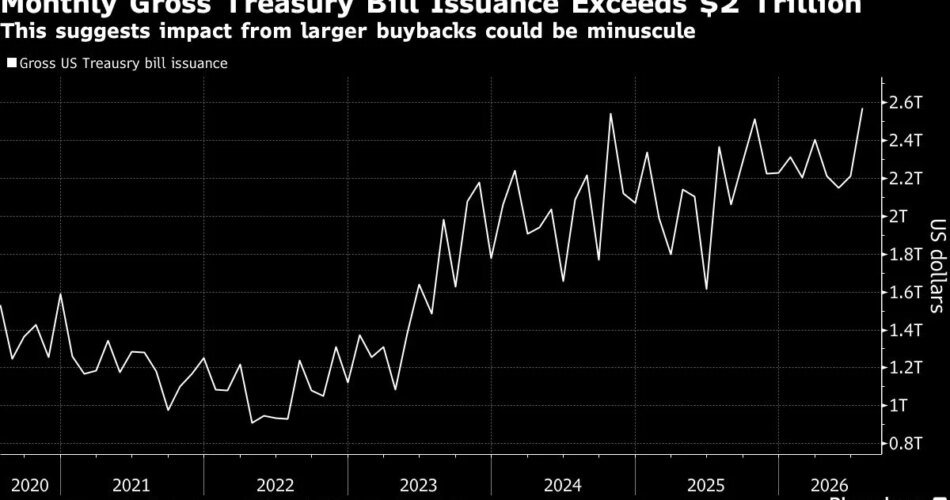
The additional funds needed are still relatively minuscule compared with total issuance. Treasury currently auctions a gross total of almost $2.25 trillion of bills per month.
Wells Fargo & Co. estimated that the increase could change the pace of bond buybacks to $32 billion per quarter, if sustained. This would mean that T-bill issuance should rise an extra $12 billion through Nov. 5, and $16 billion per quarter thereafter to fund these buybacks, rates strategist Angelo Manolatos wrote Wednesday.
Source link