

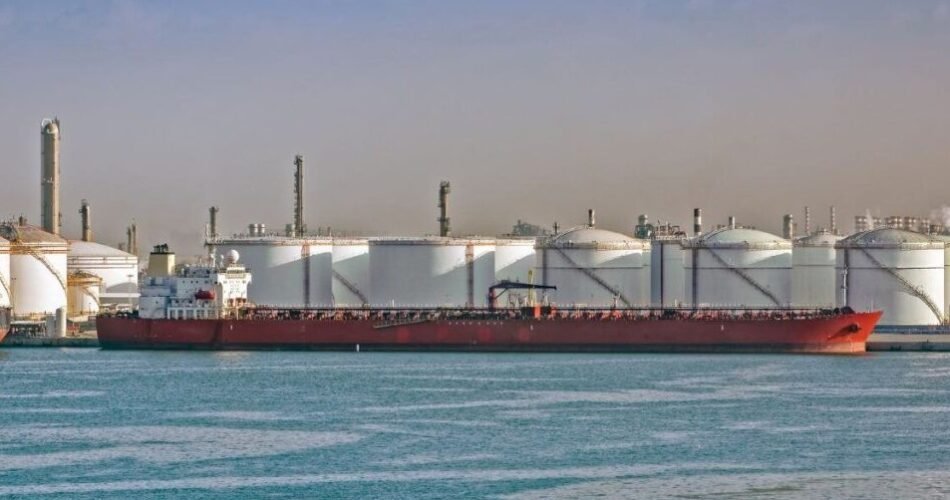
Venezuela has plenty of oil buyers again. What it does not have is enough functioning port infrastructure to get them their crude.
Tankers are waiting as long as 30 days to load Venezuelan oil as aging terminals, power outages and crude-quality problems create a de facto ceiling on exports, according to Reuters.
That ceiling appears to be around 1.25 million barrels per day.
PDVSA and its partners have been unable to push exports meaningfully above that level in recent months despite rising production, inventory drawdowns and strong demand for Venezuelan heavy crude.
The bottleneck is particularly awkward for Washington, which has been pushing to revive Venezuelan production and exports following the removal of Nicolas Maduro in January.
More than 500,000 bpd of Venezuelan crude is already heading to U.S. refineries, according to U.S. Energy Department officials, much of it to Gulf Coast plants designed specifically to process the country’s heavy, sour barrels.
Traders Vitol and Trafigura have exported more than 140 million barrels of Venezuelan crude and fuel since January under an agreement with Washington.
Getting additional barrels onto ships is becoming the problem.
Jose, which handles roughly 70% of Venezuela’s exports, has suffered loading interruptions caused by equipment failures, power outages and quality problems. At nearby Guaraguao, only two of seven docks were fully operational in mid-August.
Some berth space is even occupied by old sanctioned tankers that arrived during Venezuela’s years in the shadows and never left.
Customers are now fighting over terminal access while PDVSA racks up demurrage charges for vessels stuck waiting beyond their loading windows. The state company has agreed to pay some of those penalties in crude.
The constraint could become more severe as PDVSA partners begin independently marketing their production under Venezuela’s new oil contract rules.
Washington is simultaneously promoting a $100 billion reconstruction of Venezuela’s energy sector, but the emphasis so far has been on increasing crude production.
That creates an obvious problem: producing another barrel does considerably less good when the port needed to export it is already occupied.
By Julianne Geiger for Oilprice.com
Author

- Ytv Market News
- Share-market news writer and analyst with deep experience covering equities, commodities, forex, and cryptocurrencies for readers in the USA, UK, Canada, and Australia. Ytv Market News delivers timely market updates, practical trading insights, and clear explanations of macro and company-level catalysts that move prices. Combines on-the-ground financial reporting with technical analysis, using concise charts and actionable ideas to help investors and traders make smarter decisions.
Latest entries
 IndiaAugust 24, 2026Skyways Air Services IPO opens with 0.90x subscription on day 1
 Company Press ReleasesAugust 24, 2026New Contract Win – Acuity RM Group Plc
 Company NewsAugust 24, 2026Die Deere-&-Co.-Aktie steigt nach starken Quartalszahlen und Konflikt mit der UAW
 Stock Market VideosAugust 24, 2026Why Romantasy May Soon Be a Billion-Dollar Business


