
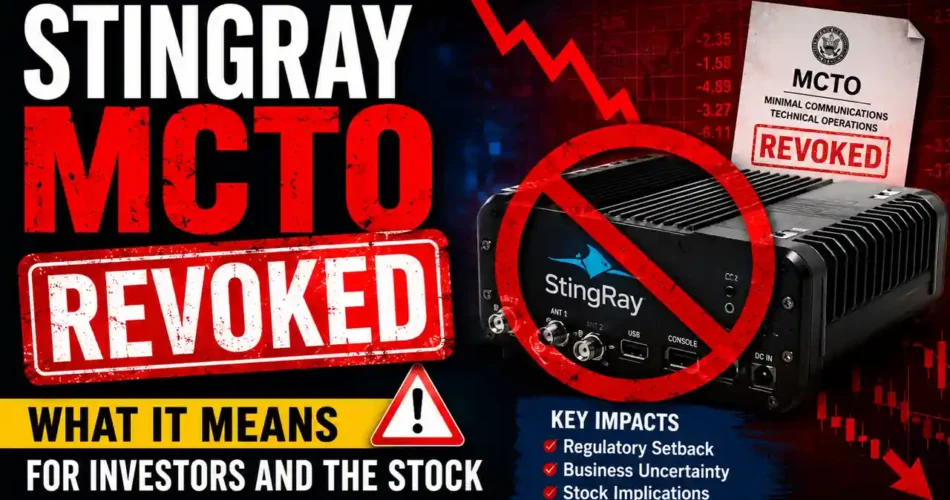
Stingray Announces Revocation of Management Cease Trade Order: Market Impact and What It Means for Investors
Stingray Group Inc. has secured the revocation of its temporary management cease trade order (MCTO), a regulatory step that clears the way for insiders to trade again and removes a lingering governance overhang on the stock. The move follows the company’s completion of delayed annual filings tied to audit complexities from recent acquisitions, and it is likely to be read by the market as a positive normalization signal rather than a catalyst for a sharp re-rating.
Background: What the MCTO Was and Why It Mattered
The regulatory trigger
In late June 2026, the Autorité des marchés financiers (AMF) in Quebec issued a temporary management cease trade order against Stingray (TSX: RAY) after the company missed its deadline to file audited consolidated financial statements for the year ended March 31, 2026, along with related management discussion and analysis and CEO/CFO certificates. The order was issued under National Policy 12‑203, which allows regulators to impose targeted trading restrictions on directors and specified officers when annual filings are delayed, while generally leaving public trading unaffected.
Who was restricted
The MCTO applied specifically to Stingray’s chief executive officer, interim chief financial officer, and directors, prohibiting them from trading the corporation’s securities until the required filings were completed. The order did not halt trading in Stingray shares for the broader market, but it did restrict the company from issuing new securities or acquiring securities from insiders and employees, except under pre‑existing binding obligations.
Why filings were delayed
Stingray attributed the delay primarily to audit complexities arising from the integration of recent acquisitions, including TuneIn Holdings, Inc. Management characterized the situation as a compliance and timing issue rather than a fundamental deterioration in the business, and provided bi‑weekly updates in line with regulatory requirements while working toward an end‑August target for completing filings.
The Revocation: What Changed on August 11, 2026
Filing completion and regulatory relief
On August 11, 2026, Stingray announced that the AMF had revoked the temporary MCTO after the company filed its audited consolidated financial statements for the year ended March 31, 2026, the associated MD&A, CEO and CFO certificates, and its annual information form. With those “Required Filings” now in place, the regulatory condition that triggered the MCTO has been satisfied, and the trading restrictions on insiders are lifted.
Scope of the revocation
The revocation applies across Canadian jurisdictions where Stingray is a reporting issuer, removing the prohibition or restriction on trading to the same extent as in Quebec, in line with national cease‑trade frameworks. For practical purposes, this means:
- Directors and specified executives can again buy or sell Stingray securities, subject to normal insider‑trading rules and blackout periods.
- The company regains full flexibility to issue securities or conduct equity‑based transactions with insiders and employees, which can be relevant for compensation, financing, or M&A‑related issuances.
Market Impact: How Investors Are Likely to Read This News
Governance overhang removed
From a market perspective, the most direct impact is the removal of a governance and compliance overhang. During the MCTO period, some investors may have discounted the stock slightly due to:
- Uncertainty around the timing and content of the delayed filings.
- Concerns, even if unfounded, about underlying financial or audit issues beyond integration complexity.
- The symbolic negative of a regulatory order, regardless of its narrow, procedural nature.
With the filings now public and the MCTO revoked, that uncertainty is largely resolved. The market can now evaluate Stingray on its reported results and forward guidance rather than on filing status.
Limited fundamental re‑rating expected
The MCTO itself was always framed as a regulatory compliance event rather than a fundamental business shock, and early commentary suggested the market had largely “priced in” the situation with a relatively muted reaction. Unless the newly filed financials contain major surprises—such as significant impairments, unexpected losses from TuneIn integration, or a sharp deterioration in cash flow—the revocation alone is unlikely to trigger a dramatic re‑rating.
Instead, the likely market impact is more subtle:
- A modest reduction in the perceived governance risk premium, which can support a gradual multiple recovery over time.
- Improved liquidity dynamics if insiders were previously hesitant to trade or if certain institutional mandates had internal restrictions around companies under cease‑trade orders.
- Greater flexibility for corporate actions, such as equity issuances or incentive grants, which can be important for a growth‑oriented media company pursuing further integrations or content investments.
Sentiment and technicals
In the short term, the announcement may provide a mild positive sentiment boost, especially for investors who monitor regulatory headlines closely. However, because public trading was never halted and the core business narrative (connected streaming media, TuneIn integration, subscription and advertising dynamics) remains unchanged, any price reaction is likely to be driven more by:
- The actual numbers and commentary in the newly filed annual results and MD&A.
- Broader market conditions and sector rotation within media and technology.
- Any concurrent updates on guidance, integration milestones, or capital allocation.
Implications for Different Investor Groups
Long‑term shareholders
For long‑term holders, the revocation is primarily a de‑risking event:
- It confirms that the filing delay was resolved without escalation to a full failure‑to‑file cease trade order, which would have had more severe trading consequences.
- It allows management and the board to operate with normal flexibility around equity compensation and potential financings, which can be important for executing strategy.
Investors can now focus on fundamentals such as subscriber trends, advertising revenue, integration costs and synergies from TuneIn, and cash‑flow generation, rather than regulatory process.
Active and institutional investors
Active traders and institutions that screen for regulatory flags may now re‑include Stingray in models or mandates that previously excluded companies under any form of cease‑trade order. The restored ability of insiders to trade also means:
- Insider transactions (Form 55‑102F2 filings in Canada) can resume, providing an additional signal channel for the market.
- Potential for more normal patterns of insider selling or buying around earnings, which can affect short‑term supply/demand dynamics.
Credit and counterparties
While the MCTO was equity‑focused, lenders and counterparties often monitor regulatory status as part of ongoing covenant and risk reviews. The resolution of the MCTO and timely filing of audited financials:
- Reinforces compliance with typical reporting covenants in credit agreements.
- Reduces the risk of technical defaults or heightened scrutiny tied to late filings.
What to Watch Next
The newly filed financials
Investors should now turn to the content of the filings themselves:
- Revenue growth and margin trends in Stingray’s core connected media segments.
- Integration progress and costs related to TuneIn and other acquisitions.
- Cash flow, leverage, and any changes in accounting policies or audit qualifications.
These fundamentals will matter far more for valuation than the procedural MCTO episode.
Forward guidance and integration milestones
Management’s commentary on:
- Subscriber and user metrics, especially for integrated platforms.
- Advertising market conditions and pricing power.
- Expected synergies, cost savings, and any remaining integration risks
will be key to assessing whether the stock can sustainably trade at a higher multiple.
Regulatory track record
While this MCTO appears to have been a one‑off tied to audit timing, some investors will watch whether Stingray maintains a clean filing record going forward. Consistent, on‑time reporting helps cement credibility and can gradually lower the company’s cost of capital.
FAQ
What is a management cease trade order (MCTO)?
An MCTO is a targeted regulatory order that restricts specified insiders—typically directors and certain officers—from trading a company’s securities when the company fails to file required annual disclosures on time. It is designed to protect investors while allowing public trading to continue, unlike a full issuer cease trade order that can halt all trading.
Why did Stingray receive an MCTO in June 2026?
Stingray received an MCTO because it did not file its audited consolidated financial statements, MD&A, and related certificates for the year ended March 31, 2026 by the regulatory deadline. The delay was attributed to audit complexities linked to integrating acquisitions such as TuneIn.
What does the revocation mean for insiders?
The revocation lifts the trading restrictions on Stingray’s CEO, interim CFO, and directors, allowing them to trade the company’s securities again, subject to normal insider‑trading rules and blackout periods. It also restores the company’s ability to issue or acquire securities from insiders and employees outside of pre‑existing obligations.
Did the MCTO stop public trading in Stingray shares?
No. The MCTO applied only to specified insiders and did not halt trading in Stingray securities for the general market. Public investors could continue to buy and sell shares on the TSX throughout the MCTO period.
How significant is this for Stingray’s stock price?
The revocation is generally positive but is unlikely, by itself, to cause a major price move. It removes a governance and compliance overhang and may slightly reduce the stock’s risk premium, but the longer‑term valuation will depend on the underlying financial results, integration progress, and growth outlook disclosed in the filings.
What should investors focus on now?
Investors should focus on the newly filed annual financials and MD&A, including revenue trends, profitability, cash flow, and management’s discussion of integration and strategy. The MCTO episode is now largely a background issue; fundamentals and forward guidance will drive the next phase of performance.
- Ontario Securities Commission (OSC) – News Releases
- Canadian Securities Administrators (CSA) – Home Page
- British Columbia Securities Commission (BCSC) – Home Page
This article is for informational purposes only and does not constitute investment advice. Investors should review Stingray’s official filings and consult their own advisors before making investment decisions.

