

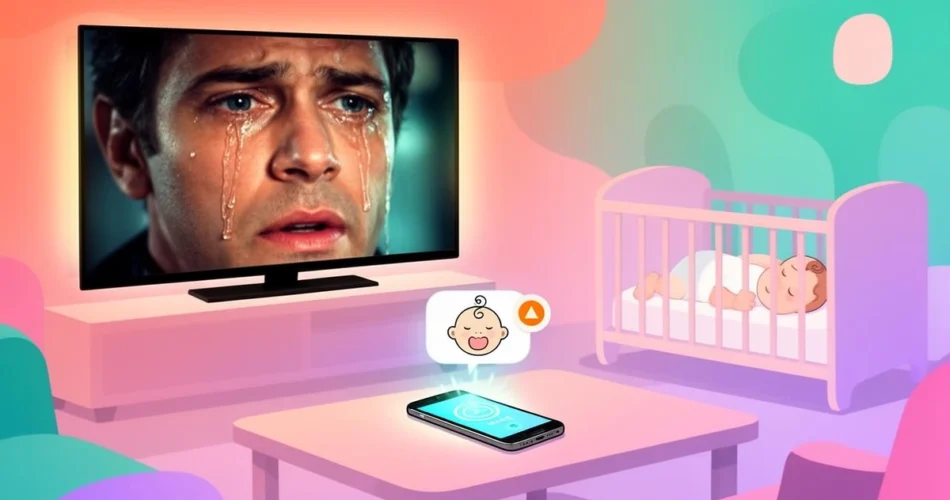
South Korea’s Samsung Electronics (005930.KS) is discontinuing its “baby cry detection” service, which it touted as a flagship AI TV feature last spring, just 18 months after launch. The feature used the TV’s built-in far-field voice recognition microphone to analyze ambient frequencies, distinguish a baby’s cries, and send alerts to users’ mobile devices.
Samsung Electronics recently announced that the feature will be terminated on the 22nd of next month. The company explained the move as “aimed at concentrating resources on core features with higher customer utility”—an acknowledgment that despite the ambitious rollout, actual usage frequency fell short of expectations.
Industry observers point to accuracy problems as the primary reason for the feature’s demise. When users watched movies or TV dramas, the system frequently misidentified crying sounds or screams from on-screen content as real infant cries in the home, triggering false alerts. The technology also struggled to distinguish between a baby’s cries and other household noises such as a pet dog barking.
Samsung Electronics had aggressively promoted the feature last spring as a signature example of its “AI Home” vision during the launch of new smart TVs including the Neo QLED lineup. Yong Seok-woo, head of Samsung Electronics’ Visual Display Business, said at the time that “the TV is no longer just a viewing device—it serves as a companion that helps make daily life easier, more comfortable, and more reassuring.”
The service’s termination reflects the reality of the AI home appliance market. The key challenge has shifted from simply demonstrating technical capability to identifying services that can be sustainably integrated into everyday life. Samsung Electronics plans to redirect development resources toward other AI features with higher usage frequency instead of the cry detection function.
Meanwhile, Samsung Electronics has officially confirmed development of its next-generation wearable device, the “Galaxy Ring 2,” signaling a strategic emphasis on software innovation and ecosystem integration. The Galaxy Ring 2 is expected to feature enhanced connectivity with smartphones, smartwatches, and smart home devices, along with AI-powered health analysis capabilities. Samsung’s simultaneous move to discontinue the TV cry detection feature while strengthening its wearable and smart home ecosystem suggests a strategic pivot in its AI home appliance roadmap.
Source link
Author

- Ytv Market News
- Share-market news writer and analyst with deep experience covering equities, commodities, forex, and cryptocurrencies for readers in the USA, UK, Canada, and Australia. Ytv Market News delivers timely market updates, practical trading insights, and clear explanations of macro and company-level catalysts that move prices. Combines on-the-ground financial reporting with technical analysis, using concise charts and actionable ideas to help investors and traders make smarter decisions.
Latest entries
 AustraliaAugust 24, 2026Mithril Silver and Gold Targeting High-Grade Expansion in Mexico’s Sierra Madre
 AustraliaAugust 24, 20263 reasons why the Zip share price could be a great buy
 Crypto NewsAugust 24, 2026Super League secures $2.3M through first ATM offering
 Politics News TodayAugust 24, 2026NFL Sunday Ticket is no longer worth the price | Bobby Burack

