RTX‘s (RTX -1.12%) backlog is key to the investment case for the stock, because what’s in the backlog and how it’s growing are strong leading indicators of future growth. In a nutshell, investors want to see order growth feed into high-quality backlog growth, and then into higher-margin revenue growth through execution. As long as that’s happening, investors can feel confident in the company’s prospects.
RTX backlog
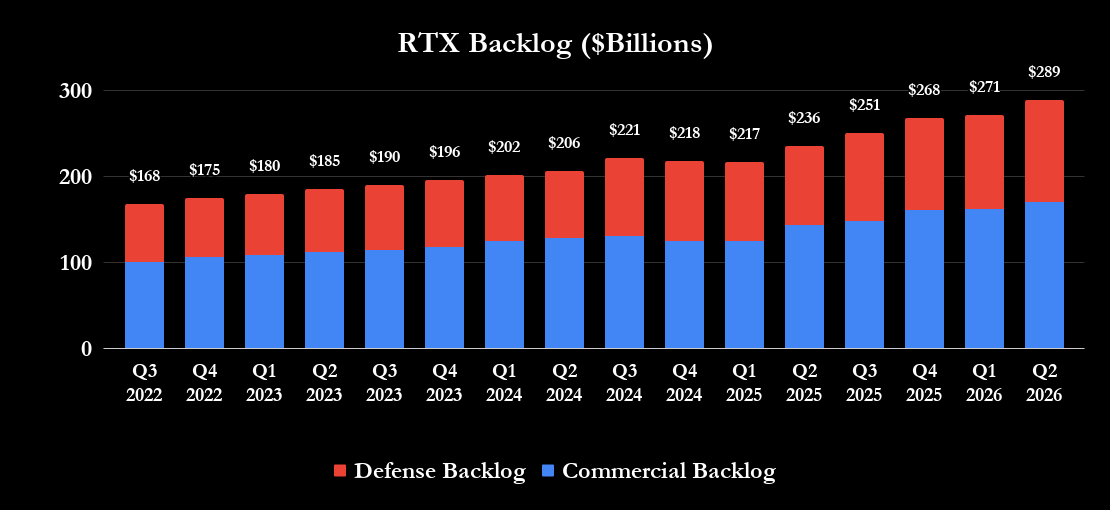
I’ll cut straight to the chase. RTX’s backlog continues to grow amid surging orders, and this applies to both its commercial aerospace and defense businesses. To put the backlog into perspective, management’s recently upgraded estimate for adjusted sales in 2026 is $95 billion to $96 billion.
Image source: Getty Images.
However, backlog growth isn’t just about securing a few years of sales; ongoing order growth above sales growth will drive it. In addition, backlog growth helps de-risk the company from short-term economic weakness that might impact its earnings and cash flow — a key argument for a company that needs to spend billions developing long-cycle solutions such as aircraft engines, aerospace systems, missiles, defense technology, space, and intelligence technologies.
Data source: Company presentations, Chart by author.
Fuelling RTX’s long-term growth
It’s important to understand that RTX’s commercial aerospace equipment backlog drives long-term growth in services through highly profitable aftermarket sales — for example, aftermarket parts for Pratt & Whitney commercial engines on Airbus A320 planes. Also, Collins Aerospace’s systems backlog leads to high-margin recurring revenue as the systems (commercial aerospace and defense) are utilized. Meanwhile, the defense backlog across RTX, Collins Aerospace, and Pratt & Whitney creates a steady stream of government-backed revenue.

Today’s Change
(-1.12%) $-2.38
Current Price
$209.91
Key Data Points
Market Cap
Day’s Range
$209.85 – $213.52
52wk Range
$150.61 – $226.88
Volume
4.8M
Avg Vol
5.2M
Gross Margin
20.35%
Dividend Yield
1.34%
As such, backlog growth enhances earnings visibility, de-risks the businesses, and drives long-term earnings and cash flow growth tied to servicing a growing installed base of commercial aerospace and defense equipment. That said, RTX still has to execute on that backlog and ensure it’s taking on profitable work. That’s not always easy in the defense sector, where governments are pushing harder to obtain advantageous contracts.
Consequently, investors should always look for management’s pronouncements on margin expansion when evaluating backlog growth, as the two ideally go hand in hand.
Source link