By: Quiver LegislationRadar
Posted: 16 hours ago / Aug. 20, 2026 3:40 p.m. UTC
We have received text from H.R. 10112: Empowering States to Protect Seniors from Bad Actors Act. This bill was received on 2026-08-17, and currently has 1 cosponsor.
Here is a short summary of the bill:
This bill would create a federal grant program to help states fight financial fraud aimed at older adults and certain insurance policyholders. It amends an existing Dodd-Frank provision so the Securities and Exchange Commission (SEC) would award competitive grants to state securities regulators and state insurance departments.
Who could receive the grants
Eligible recipients would be:
- State securities commissions or similar state agencies
- State insurance departments or similar state agencies
For this bill, a
senior
is defined as anyone age 62 or older.
What counts as “senior financial fraud”
The bill defines senior financial fraud broadly. It includes fraudulent, illegal, unauthorized, or improper acts involving a senior’s money, assets, benefits, or belongings, including misuse by a caregiver or fiduciary. It also covers conduct against seniors that falls under the federal wire fraud statute.
How the grant money could be used
State agencies receiving funds could use them to:
- Hire staff to identify, investigate, and pursue cases of senior financial fraud
- Buy technology, equipment, and training for regulators, prosecutors, and law enforcement
- Provide education and training materials to seniors about fraud
- Develop broader state plans to combat senior financial fraud
- Strengthen state laws to better protect seniors from fraud
The money could not be used for indirect or general overhead costs such as rent or utilities unless those costs are directly tied to the grant purpose.
Application, oversight, and reporting
States would have to apply to the SEC and describe:
- The scope of the fraud problem in the state
- How the proposed activities would help identify victims, support investigations and prosecutions, and reduce fraud
- How the work would coordinate with other state efforts
The SEC could set performance goals and reporting requirements. Grant recipients would have to provide detailed accounting of how funds were used. The SEC would also have to:
- Report to Congress within 2 years and again within 5 years after enactment
- List recipients, describe funded programs, and evaluate effectiveness
- Conduct annual audits to make sure funds are used as intended
Grant limits and funding
Each eligible state entity could receive up to $500,000 per year. If a state entity serves as both the securities regulator and the insurance department, the cap would be $1,000,000 per year.
The bill authorizes $10 million per year for fiscal years 2025 through 2030 to fund the program.
Relevant Companies
None found
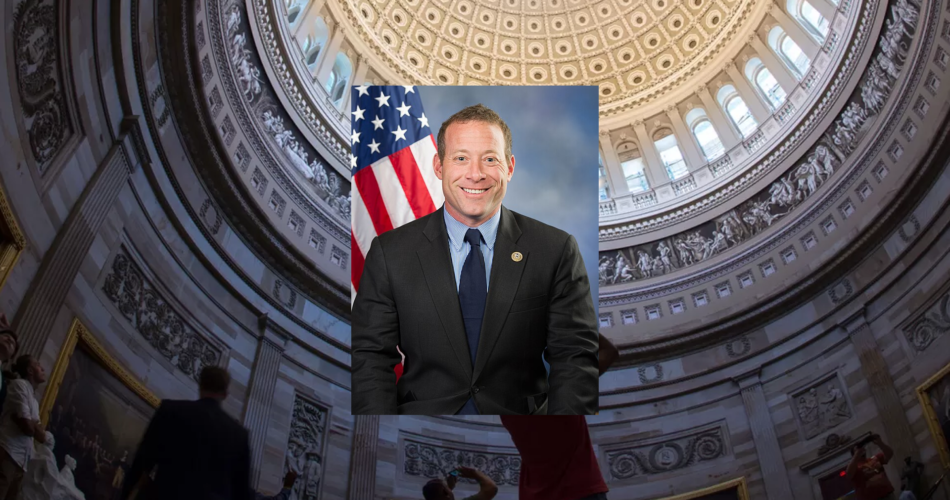
Representative Josh Gottheimer Bill Proposals
Here are some bills which have recently been proposed by Representative Josh Gottheimer:
- H.R.10112: Empowering States to Protect Seniors from Bad Actors Act
- H.R.9982: Polisario Front Terrorist Designation Act of 2026
- H.R.9981: Foodborne Illness Rapid Response Act
- H.R.9706: Facial Recognition to Protect Children Act
- H.R.9626: To amend the Internal Revenue Code of 1986 to eliminate the State and local tax deduction marriage penalty.
- H.R.9578: Spot the Fakes Act
You can track bills proposed by Representative Josh Gottheimer on Quiver Quantitative’s politician page for Gottheimer.
Representative Josh Gottheimer Net Worth
Quiver Quantitative estimates that Representative Josh Gottheimer is worth $38.1M, as of August 20th, 2026. This is the 37th highest net worth in Congress, per our live estimates.
Gottheimer has approximately $28.1M invested in publicly traded assets which Quiver is able to track live.
You can track Representative Josh Gottheimer’s net worth on Quiver Quantitative’s politician page for Gottheimer.
Representative Josh Gottheimer Stock Trading
We have data on up to $570.2M of trades from Representative Josh Gottheimer, which we parsed from STOCK Act filings. Some of the largest trades include:
- A February 12th, 2024 sale of up to $5M of $MSFT. The stock has risen 16.63% since then.
- A May 18th, 2020 sale of up to $100K of $AMZN. The stock has risen 119.14% since then.
- A October 28th, 2021 sale of up to $50K of $MELI. The stock has risen 25.83% since then.
- A April 9th, 2026 sale of up to $50K of $PFGC. The stock has risen 16.36% since then.
- A April 9th, 2026 sale of up to $50K of $SYF. The stock has risen 9.84% since then.
You can track Representative Josh Gottheimer’s stock trading on Quiver Quantitative’s politician page for Gottheimer.
2026 New Jersey’s 5th Congressional District Election
There has been approximately $7,513,012 of spending in New Jersey’s 5th congressional district elections over the last two years, per our estimates.
Approximately $11,355 of this has been from outside spending by PACs and Super PACs. Some of the groups who are spending money in this race include:
The rating for this race is currently “Solid D”.
You can track this election on our matchup page for the 2026 New Jersey’s 5th congressional district election.
This article is not financial advice. See Quiver Quantitative’s disclaimers for more information.
Source link