

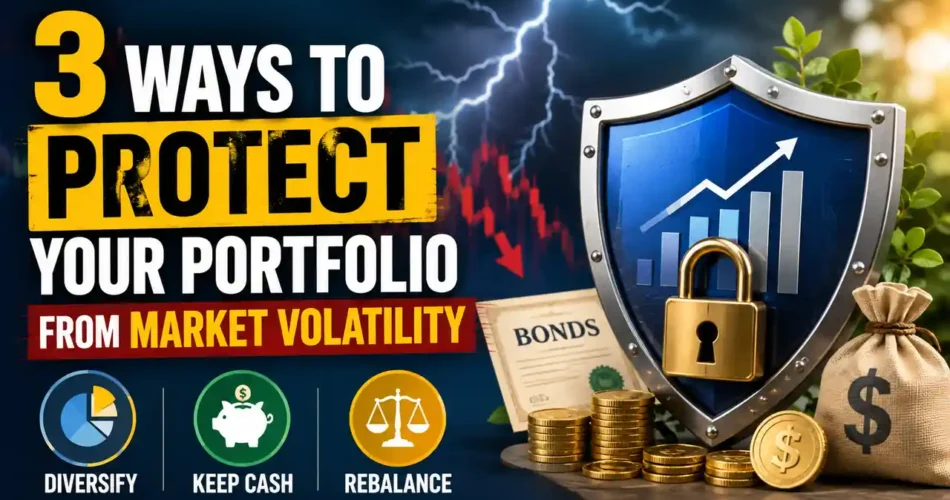
3 Ways to Protect Your Portfolio From Volatility
Market volatility is an unavoidable part of investing. Stock prices can move sharply because of inflation data, interest-rate decisions, geopolitical developments, corporate earnings, economic uncertainty, or changes in investor sentiment. While volatility can create opportunities, sudden declines can also put pressure on investors who are not prepared for large price swings.
The good news is that investors do not necessarily need to predict the next market downturn to manage risk. A better approach is to build a portfolio designed to withstand different market conditions. Diversification, appropriate cash reserves, and disciplined portfolio management can all help reduce the impact of short-term turbulence.
Here are three practical strategies investors can consider when seeking greater resilience during volatile markets.
1. Diversify Across Assets and Sectors
One of the most effective ways to reduce portfolio risk is diversification. The basic principle is straightforward: avoid depending too heavily on one company, industry, asset class, or geographic market.
A portfolio concentrated in a handful of technology stocks, for example, could experience significant losses if the technology sector suddenly falls out of favor. A more diversified portfolio might combine stocks from different industries with bonds, cash equivalents, and other assets that may respond differently to economic conditions.
Why Diversification Matters
Different investments do not always move in the same direction at the same time. When one portion of a portfolio declines, another portion may remain relatively stable or potentially rise. This can reduce the overall effect of a market shock.
Investors can diversify their equity holdings by considering companies from sectors such as healthcare, consumer staples, financial services, industrials, energy, utilities, and technology. Geographic diversification can also reduce reliance on the economic performance of a single country.
Asset allocation is equally important. Depending on an investor’s objectives and risk tolerance, a portfolio might contain a combination of equities, high-quality fixed-income investments, cash, and other suitable assets.
However, diversification does not eliminate losses. During severe market sell-offs, many assets can decline simultaneously. Its primary purpose is to avoid excessive exposure to any single source of risk.
2. Keep an Appropriate Cash and Defensive Allocation
Another way to prepare for volatility is to maintain enough liquid assets to avoid becoming a forced seller during a market decline. Investors who need money immediately may be more likely to sell investments at unfavorable prices when markets are falling.
Holding some cash or short-term, relatively liquid investments can provide flexibility. It can help cover planned expenses, meet near-term financial needs, or provide capital that can potentially be deployed when attractive opportunities appear.
Cash Can Provide Flexibility
The appropriate amount of cash depends on an individual’s circumstances. Someone with predictable income and a long investment horizon may have different liquidity needs from a person approaching retirement or expecting a major expense.
The key is to distinguish between money needed in the near term and money intended for long-term investment. Funds required for upcoming expenses generally should not be exposed to the same level of market risk as money that will not be needed for many years.
A defensive allocation can also include investments designed to provide greater stability than highly volatile equities. High-quality bonds, for example, may play a role in portfolios where reducing overall fluctuations is an important objective, although bonds themselves carry interest-rate, credit, inflation, and market risks.
Investors should also remember that holding excessive cash has a downside. If markets rise substantially, a large cash position may reduce portfolio growth. The goal is therefore not necessarily to avoid risk altogether, but to maintain a level of liquidity that matches financial needs and risk tolerance.
3. Rebalance Instead of Reacting Emotionally
Volatile markets can test even experienced investors. Large daily price movements can encourage people to abandon carefully designed investment plans and make decisions based on fear or excitement.
One way to reduce this emotional pressure is to establish a portfolio allocation in advance and periodically rebalance it.
How Rebalancing Works
Suppose an investor has established a target allocation of 60% stocks and 40% bonds. If stocks perform strongly for an extended period, the portfolio could eventually become 70% stocks and 30% bonds. The investor is then taking more equity risk than originally intended.
Rebalancing involves bringing the portfolio closer to its intended allocation. This may mean reducing exposure to investments that have grown beyond their target and adding to areas that have become underrepresented.
The opposite can happen during a market decline. If stocks fall substantially, their portfolio weight may drop below the target. A disciplined rebalancing strategy can prevent investors from automatically selling after prices have already fallen simply because the market is frightening.
Rebalancing does not guarantee profits and can have tax or transaction consequences. Investors should consider account type, tax implications, trading costs, and their overall financial plan before making changes.
Volatility Is Not the Same as Permanent Loss
It is important to distinguish between short-term volatility and permanent impairment of capital. Markets can experience substantial declines and later recover, although there is no guarantee that every individual investment will recover.
A company’s business fundamentals may change even when the broader market remains healthy. Conversely, a strong company can experience temporary price declines because of broader market conditions.
This is why investors should evaluate both their portfolio construction and the quality of the underlying investments. A diversified portfolio built around an appropriate time horizon can make it easier to remain disciplined when markets become unpredictable.
What Investors Should Avoid During Turbulent Markets
Volatile periods often produce dramatic headlines and rapid changes in market sentiment. Investors should be cautious about making major portfolio decisions solely because of short-term news.
Trying to consistently sell before every decline and buy before every recovery is extremely difficult. Missing even a relatively small number of strong market days can affect long-term investment results.
Investors should also be careful about excessive leverage, concentrated positions, and speculative investments that do not fit their financial objectives. Risk management begins with understanding how much loss an investor can realistically tolerate without abandoning a long-term plan.
A Long-Term Approach Can Help Manage Market Stress
Portfolio protection does not mean attempting to eliminate every market decline. Instead, it means creating a financial strategy that can withstand periods of uncertainty.
Diversification can reduce concentration risk. Maintaining appropriate liquidity can provide flexibility. Regular rebalancing can help keep risk aligned with an investor’s original objectives.
These strategies work best when established before volatility becomes extreme. Once markets are falling sharply, changing an investment plan under emotional pressure can make it harder to make rational decisions.
Investors should consider their time horizon, financial objectives, income needs, tax situation, and tolerance for risk when deciding how their portfolios should be structured. Professional financial advice may also be appropriate for investors who are uncertain about asset allocation or risk management.
Frequently Asked Questions
What is portfolio volatility?
Portfolio volatility refers to the degree to which the value of a portfolio fluctuates over time. Higher volatility generally means larger and more frequent price movements, while lower volatility indicates relatively smaller changes.
Does diversification protect against market losses?
Diversification can reduce the impact of losses in a particular investment, sector, or asset class, but it cannot guarantee that a portfolio will not lose value. During major market events, many investments can decline together.
How much cash should an investor keep?
There is no universal amount that works for everyone. Cash requirements depend on factors such as income stability, upcoming expenses, emergency needs, investment horizon, and risk tolerance.
Should investors sell stocks when markets become volatile?
Not necessarily. Selling solely because of short-term volatility can cause investors to lock in losses or miss a subsequent recovery. Investment decisions should be based on the individual’s financial plan and the underlying reasons for owning an investment.
How often should a portfolio be rebalanced?
There is no single schedule suitable for every investor. Some investors review allocations periodically, while others rebalance when an asset class moves significantly away from its target. Taxes, transaction costs, and investment objectives should be considered before rebalancing.
Can bonds reduce portfolio volatility?
Depending on the type of bonds and market conditions, fixed-income investments may help diversify a portfolio and reduce reliance on equities. However, bonds are not risk-free and can lose value because of interest-rate changes, credit concerns, inflation, or other factors.
Final Thoughts
Market volatility is part of investing, but investors can take practical steps to make their portfolios more resilient. Diversifying investments, maintaining suitable liquidity, and periodically rebalancing can help keep portfolio risk under control.
The most important principle is to build the portfolio around your own financial objectives rather than around predictions about the next market move. A disciplined strategy can make it easier to navigate periods of uncertainty without allowing short-term market movements to dictate long-term financial decisions.
Disclaimer: This article is original educational content and is not a reproduction of or a substitute for the Barron’s article referenced in the topic. It is intended for general information only and does not constitute investment, tax, or financial advice.
External References:

