

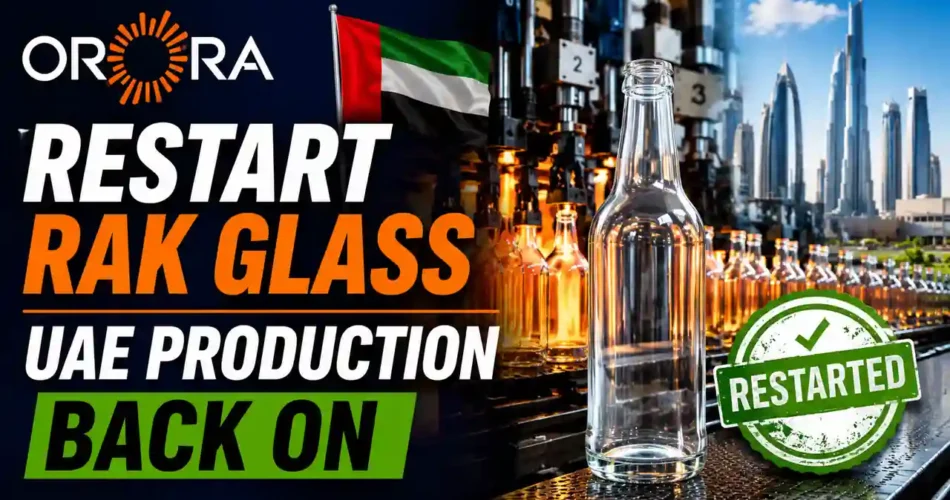
Orora Begins Restarting RAK Glass Production Facility in the United Arab Emirates
Orora Ltd. has started the process of restarting production at the RAK Glass manufacturing facility in Ras Al Khaimah, United Arab Emirates (UAE). The move marks a significant step for the Australian packaging and glass manufacturer as it seeks to restore operations following a period of suspension. This article explains what the restart means, why Orora is taking this action, the likely timeline and implications for the market, and what stakeholders should watch next.
Background: RAK Glass and Orora’s Strategic Position
RAK Glass is a prominent glass container manufacturer in the Middle East, historically supplying beverage, food and pharmaceutical customers across the region. Orora, an Australian company with broad packaging interests, acquired assets and rights related to RAK Glass as part of its expansion strategy into international glass manufacturing. The Ras Al Khaimah facility has been an important regional asset given its geographic reach, production capacity and proximity to key markets in the Gulf Cooperation Council (GCC) and South Asia.
The facility’s prior suspension of production had been driven by a mix of market conditions, operational restructuring and broader industry headwinds, including fluctuating demand, raw-material price volatility and the need to upgrade processes to meet stricter quality and sustainability standards. Restarting a large glass plant is complex: it requires re-establishing supply chains, ensuring workforce readiness, validating equipment, and securing customer contracts.
Why Orora Is Restarting the Facility
Orora’s decision to restart RAK Glass is driven by several strategic reasons:
- Demand recovery: After a period of softer consumption and inventory corrections, end-market demand — especially for beverage containers — has shown signs of recovery in several markets served by RAK Glass. Orora is positioning to capture renewed order flow.
- Regional supply resilience: Global supply chain tensions and shipping cost volatility have made local production more attractive to beverage and food companies wanting shorter lead times and lower logistics risk.
- Asset utilization and cost efficiency: Bringing an idle facility back online helps Orora recover fixed-cost investments and improve overall production footprint efficiency.
- Strategic growth and diversification: Strengthening presence in the Middle East helps diversify Orora’s geographic revenue base beyond Australia and established markets.
- Sustainability upgrades and compliance: Restarting offered an opportunity to implement efficiency improvements and environmental controls consistent with industry trends toward lower emissions and higher recycled-content glass.
What Restart Involves: Operations, Workforce and Supply Chain
Restarting a glass manufacturing plant happens in phases:
- Technical recommissioning: Engineers and technicians inspect furnaces, cullet handling systems, forming lines and quality-control equipment. Controlled furnace heat-up, refractory inspections and trial runs are essential to achieve stable production.
- Workforce ramp-up: Skilled operators, maintenance staff and quality teams must be rehired or retrained. Orora will likely phase hiring to match production ramp, balancing labour costs with operational readiness.
- Supplier re-engagement: Raw-material suppliers (soda ash, silica, limestone), packaging component vendors and logistics partners need contractual arrangements and schedules. Orora will prioritize reliable local and regional suppliers to shorten lead times.
- Customer recovery and order book: Orora will coordinate with existing customers to confirm specifications, volumes and timing. Pilot production runs help validate product quality and packaging compatibility before full-scale deliveries resume.
- Regulatory and safety checks: Environmental permits, workplace safety audits and emissions monitoring must be validated before commercial production resumes to ensure compliance with UAE regulations and international standards.
Timeline and Expectations
Orora’s restart is a staged process and timelines depend on technical, workforce and market variables. Typical timelines for a cold-start restart of a sizable glass plant range from several weeks for initial commissioning to a few months before reaching full production capacity. Early-stage output often focuses on standardized containers while more complex or custom lines are ramped up gradually.
Market observers should expect a phased increase in shipments rather than an immediate return to historical volumes. Orora will likely prioritize high-margin product lines and strategic customer contracts as production scales up.
Market and Competitive Implications
- Regional supply balance: Increased output from RAK Glass will add supply to the regional glass container market, which could ease tightness in some product categories and shorten lead times for customers.
- Pricing pressure: As capacity returns, short-term pricing pressure may arise in segments where supply currently tightens demand. However, pricing impacts will depend on overall regional demand growth and competitors’ capacity responses.
- Improved service for local customers: Local beverage and food companies may benefit from shorter logistics chains, lower freight costs and faster product development cycles when working with a nearby manufacturer.
- Competitive dynamics: The restart could prompt rivals to adjust their regional strategies, invest in efficiency upgrades, or pursue their own supply partnerships to defend market share.
- Sustainability signaling: If Orora emphasizes recycled content and energy efficiency upgrades, this can influence customer procurement choices, particularly among multinational brands with strict sustainability procurement criteria.
Risks and Challenges
Restarting production is not without risks:
- Technical setbacks: Furnace commissioning can reveal refractory or equipment issues that extend downtime or require capital expenditure.
- Workforce availability: Finding experienced glass plant operators and skilled maintenance personnel in the right timeframe can be challenging.
- Cost inflation: Energy costs, natural gas prices (if used for furnaces), and raw-material prices affect operating margins and can erode anticipated financial benefits.
- Market demand uncertainty: If end-market demand weakens again, Orora could face the challenge of ramping capacity into a soft market, impacting utilization and margins.
- Regulatory scrutiny: Emissions management and environmental compliance require ongoing attention; any lapses could result in fines or operational restrictions.
Strategic Opportunities
If managed well, the restart offers several opportunities for Orora:
- Customer wins: Faster lead times and local support can convert regional customers to longer-term contracts.
- Product innovation: On-site capabilities enable quicker development and testing of new glass formats, premium finishes and specialized pharmaceutical containers.
- Sustainability leadership: Implementing higher recycled content, energy-efficient furnaces or waste-heat recovery can lower costs and meet customer ESG goals.
- Regional partnerships: Collaborations with beverage companies, packaging converters, and logistics providers could create integrated supply-chain solutions that increase switching costs for customers.
What Stakeholders Should Watch
Key indicators to monitor include:
- Production milestones: updates on furnace light-up, first-glass output and phased capacity percentages.
- Customer confirmations: new or renewed supply agreements and order announcements from beverage or food brands.
- Financial disclosures: Orora’s quarterly reports detailing capital spend, ramp timelines and expected revenue contribution.
- Regulatory filings: environmental permit updates or compliance reports relevant to operational risk.
- Regional market prices: shifts in glass-container pricing and freight rates showing supply-demand dynamics.
Quick illustration: staged ramp example
- Month 0–1: Technical recommissioning, furnace heat-up, initial trial batches.
- Month 2–3: Partial commercial runs for high-volume standard SKUs, workforce ramping.
- Month 4–6: Scaling toward targeted utilization, additional product lines brought online.
FAQ
Is Orora fully reopening the RAK Glass plant immediately?
No — the restart is staged. Initial commissioning and trial runs come first, with production ramping over weeks to months before full capacity is achieved.
Why did the facility stop production earlier?
The suspension reflected a mix of market conditions, operational restructuring needs and industry headwinds such as demand fluctuations and the need for equipment or process upgrades.
Will the restart create new jobs in the UAE?
Yes. Recommissioning requires hiring or rehiring plant operators, maintenance technicians, quality staff and administrative roles, although hiring will likely be phased to match production needs.
How will this affect glass container prices in the region?
As capacity returns, there could be downward pressure on prices in specific segments if supply outpaces demand. Actual effects depend on regional demand growth and competitors’ actions.
Are there environmental or regulatory concerns with restarting a glass plant?
Glass production has emissions and energy intensity considerations. Orora must meet UAE environmental regulations and is likely implementing efficiency or emissions controls as part of the restart to ensure compliance.
When will customers see regular deliveries again?
Some customers may receive limited commercial shipments during initial ramp phases; broader, consistent deliveries typically follow once production stabilizes and quality validations are complete — often several months after initial restart.

