
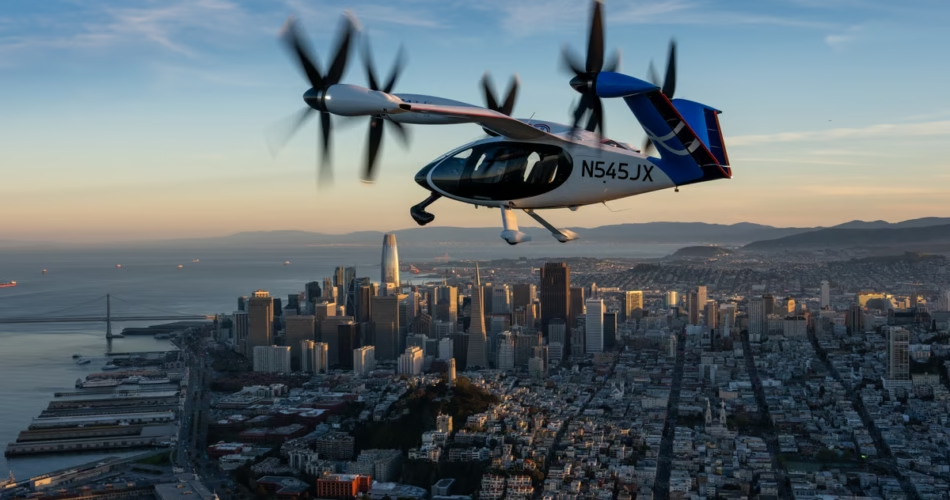
Joby Aviation (JOBY +0.72%) has always had a bold, and seemingly sci-fi, vision. In a nutshell, it wants to operate flying taxis to cut down travel and commuting time in busy, congested cities. And while that vision still very much belongs to the future, it is getting close enough to touch.
Joby recently reported what it called “its strongest quarterly progress yet” in the fifth and final stage of the Federal Aviation Administration’s type certification process. This fifth stage is the “Show & Verify” stage, and Joby has started doing exactly that: demonstrating, through FAA-reviewed testing, that its aircraft meet the requirements needed for certification. As of July 31, the company completed 20% of this fifth-stage work, whereas the FAA had finished 10% of of its corresponding labor.
Don’t miss the importance of this achievement. When Joby finishes this fifth stage, it will be in a position to receive FAA type certification for S4 — the company’s flagship electric vertical takeoff and landing (eVOTL) aircraft. In effect, completion of the process will clear one of the biggest hurdles toward commercializing its air taxi service in the U.S.
That is one reason growth investors might want to pick up some shares of Joby. But there’s another — and it’s just as significant.
Joby is already preparing for life after certification
The second reason to consider Joby is that it’s already working on — and making significant progress solving — its next major challenge: manufacturing a fleet of eVTOLs.
Since 2019, Joby has made a significant manufacturing partner out of Toyota Motor. Over the years, Toyota has committed almost $900 million to Joby. It has also contributed invaluable knowledge capital to Joby by helping it think through different parts of the production process, like manufacturing methods, tooling design, and supply chain management.

In June 2026, this partnership deepened when Joby and Toyota launched the first phase of a strategic manufacturing alliance. The purpose of this alliance is to first lay the groundwork for the commercial production of Joby’s eVTOLs. Henceforth, Toyota will also help Joby build more aircraft, faster, so it can get through certification and be ready to produce when eVTOL demand takes off.
Right now, Joby has produced five flying aircraft, and it has 12 more in production. The company will likely need hundreds, if not thousands, to support a dense network of air taxis across and beyond the U.S. Similarly, it needs to produce aircraft at a low enough cost to keep fares attractive and make each flight profitable.
This partnership is all the more valuable because Joby is building its aircraft largely in-house. In other words, instead of handing the work to an outside manufacturer, Joby has to master the mass production process itself. Toyota’s expertise, therefore, could be the difference between Joby designing a certifiable aircraft and actually building a sizable fleet of them.
Joby still has plenty of execution challenges to work out beyond manufacturing; it is not a safe stock. Likewise, it’s not cheap, trading at about 62 times sales. Still, given that urban air mobility could represent a trillion-dollar opportunity in the coming decades, Joby’s progress on multiple fronts positions it as one of the better speculative plays on that opportunity.
Source link