

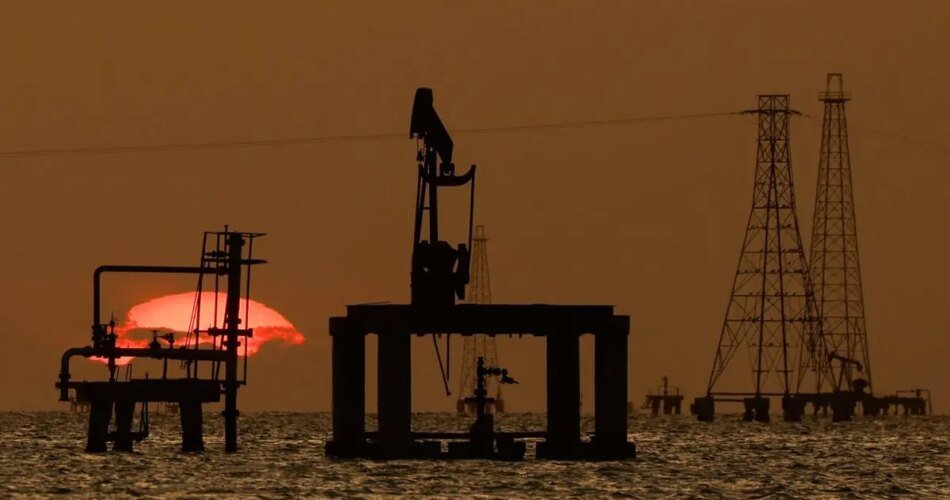

In August, Venezuela was India’s fourth largest supplier of crude with supplies touching 444,000 barrels per day,
| Photo Credit:
Leonardo Fernandez Viloria
The easing of US sanctions on Venezuela has provided a window for India to source crude from the South American country, and Indian refiners are likely to continue purchases as long as the exemption remains in place and the economics are favourable, sources said.
“New Delhi does not want to make many long-term strategies around crude sourcing from Venezuela because one does not know when the US could reimpose sanctions. But as long as there is a window of opportunity and Indian banks can transact without the fear of sanctions, Venezuela widens India’s sourcing options amid the West Asia crisis,” a source tracking the matter told businessline.
In April this year, the US eased sanctions on Venezuela’s central bank and several other state-run financial institutions, three months after US forces seized former Venezuelan leader Nicolás Maduro in Caracas and an interim government led by Delcy Rodríguez took charge. The easing of financial restrictions helped facilitate Venezuela’s oil trade by allowing greater access to US dollars and easing the processing of payments through the international financial system.
India has already stepped up purchases significantly from Venezuela over the last few months. In fact, in August, Venezuela was India’s fourth largest supplier of crude with supplies touching 444,000 barrels per day, which was more than more than the volumes India took from Iraq or the United States.
However, Venezuelan crude comes with logistical and processing costs that will have to be weighed against its price, the source noted. Unlike lighter grades from the Gulf and Iran, Venezuelan crude is particularly heavy and requires specialised refining capabilities. The voyage to India can take five to six weeks, involving a long journey across the Atlantic and Mediterranean, through the Suez Canal and across the Arabian Sea.
“Given the distance, refiners will have to calculate the cost of transporting Venezuelan crude against supplies available from other sources. There is the freight cost as well as the processing cost, and refineries may also need to be retooled to handle the heavier crude,” the source said.
The economics, however, cannot be assessed simply by comparing the price of a barrel of Venezuelan crude with other grades. Its heavy composition tilts the product slate toward more heavy fuel oil and bitumen, alongside diesel, kerosene, naphtha and other refined products.
“The product slate changes depending on the type of crude. Everything has a market value, although heavy fuel oil is among the lower-value products. So the refinery will have to look at how much of each product it can extract from a barrel and what those products are worth,” the source said.
Published on August 20, 2026
Source link


