
Multiple licensed banks in Hong Kong have recently launched a source-of-funds declaration process for existing mainland Chinese investor accounts, involving institutions such as HSBC Hong Kong and the Hong Kong branches of Chinese banks, primarily targeting long-dormant accounts. Under the arrangement, August 20 and September 12 are two critical deadlines; accounts that fail to submit declarations as required may face suspension or even termination of investment services.
An HSBC spokesperson responded that the bank follows relevant regulatory requirements in managing investment client relationships, inviting relevant mainland Chinese investors to provide self-declarations confirming that the information they provided during “Know Your Customer” (KYC) and “Customer Due Diligence” processes is current and valid. The spokesperson emphasized that this latest declaration requirement applies only to investment services clients.
According to information gathered by reporters from multiple sources, the above measures remain based on the circular issued simultaneously by the Hong Kong Monetary Authority and the Hong Kong Securities and Futures Commission on May 22, rather than any new policy or regulatory guidance. The circular proposed three additional measures for opening and managing investment accounts of mainland investors: first, closing investment accounts opened with suspicious or forged documents; second, closing zero-balance dormant investment accounts; and third, obtaining written declarations when opening new investment accounts.
The written declaration includes four items, with the core one being “confirmation that all funds used to support investment activities and related settlements originate from legitimate sources outside mainland China.” The circular requires that if a client’s source of funds is subsequently found to be illegitimate, or in violation of any mainland capital control regulations, the registered institution should close the investment account.
Dormant Account Verification and Reactivation Process
A “zero-balance dormant investment account” refers to an investment account held by a mainland investor that had no asset balance as of the reference date of May 22, 2026, and had no client-initiated activity in the 12 months preceding the reference date.
According to the circular’s requirements, to mitigate unnecessary risks associated with zero-balance dormant investment accounts, registered institutions should adopt five specific measures. Among them, verification should be conducted within three months of the circular to identify all zero-balance dormant investment accounts, with advance notice given to clients of identified accounts. Unless the registered institution can satisfactorily complete the relevant reactivation process, any new transactions on identified accounts should be suspended.
The key step in the reactivation process is obtaining a written declaration from the mainland investor. This means that once an existing investment account is identified as “dormant,” the client must sign a supplementary written declaration to reactivate the account’s investment function. For existing mainland investor accounts that are in normal use and active status, they are theoretically unaffected for the time being.
According to HSBC Hong Kong customer service staff, for mainland Chinese investors who opened integrated accounts with the bank after the new rules took effect, an additional written declaration is required when activating the account’s investment function. Based on the new regulatory requirements, both existing and newly opened mainland investor accounts may receive “pop-up” prompts to sign declarations. Particularly for certain existing accounts that have activated investment functions but have been unused for a long time, the bank will also prompt for declaration signing; if such investors remain logged out, ignore the prompt, or choose not to sign, the account’s investment function may be suspended after September.
Account Closure Timeline
According to regulatory requirements, for accounts identified as “dormant,” if the registered institution fails to satisfactorily complete the reactivation process, unless there are special circumstances (such as the client having a reasonable explanation), the identified accounts should be closed within six months of the circular’s issuance. Furthermore, if such dormant accounts are found during account-opening verification to have been opened with suspicious or forged documents, the accounts will be closed within six months with no opportunity for reactivation.
| Key Deadline | Item |
|---|---|
| May 22, 2026 | HKMA and SFC issue circular, setting reference date |
| August 20, 2026 | Failure to submit declaration may result in suspension of investment services |
| August 22, 2026 | Three-month deadline for dormant account verification expires |
| September 12, 2026 | Failure to submit declaration may result in termination of investment services |
| November 22, 2026 | Deadline for closing dormant accounts that fail to complete reactivation process |
Note: Timeline is calculated based on circular requirements; actual implementation is subject to each bank’s specific arrangements.
Nature of Declaration and Compliance Responsibility
It is worth noting that signing the declaration is solely a customer self-certification and does not equate to the bank having completed substantive verification or validation of the source of funds. The circular does not require banks or other registered institutions to verify the legitimacy and compliance of client fund sources through any specific means, but it does not rule out different banks imposing additional requirements based on KYC and other factors according to clients’ different risk profiles.
HSBC Hong Kong staff emphasized that the bank only provides the written declaration for clients to choose whether to sign, and does not involve verification or proof of fund sources. However, once a client agrees to and signs the declaration, the bank will cooperate with regulatory authorities’ verification needs based on regulatory requirements.
This means that clients are responsible for the accuracy, authenticity, and completeness of the declaration content, while institutions are responsible for procedural matters. The Hong Kong Monetary Authority requires registered institutions to maintain proper records of each client’s dormant account reactivation process in an easily accessible manner for compliance review and audit purposes, and to submit reports to the HKMA on account-opening verification and dormant account verification as required. For registered institutions found to have failed to satisfactorily conduct relevant verification or handle account closures and client inquiries and complaints, the HKMA will consider whether to take appropriate risk mitigation measures and regulatory actions to restrict the registered institution’s regulated activities, including but not limited to solicitation and account-opening activities.
Source link
Author

- Ytv Market News
- Share-market news writer and analyst with deep experience covering equities, commodities, forex, and cryptocurrencies for readers in the USA, UK, Canada, and Australia. Ytv Market News delivers timely market updates, practical trading insights, and clear explanations of macro and company-level catalysts that move prices. Combines on-the-ground financial reporting with technical analysis, using concise charts and actionable ideas to help investors and traders make smarter decisions.
Latest entries
 GermanyAugust 24, 2026Thames Water’s creditors line up new board under proposed rescue deal
 Crypto NewsAugust 24, 2026Bitcoin: Mining Difficulty Is Only 0.7% Above Its 2026 Low
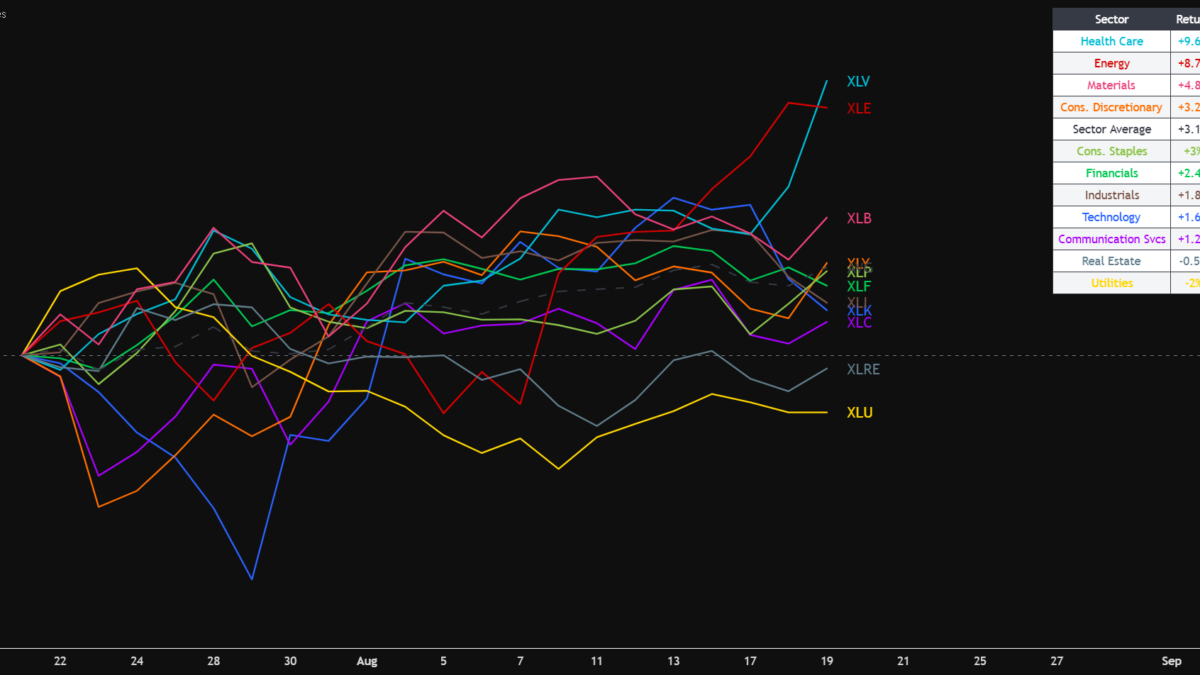 Trading IndicatorsAugust 24, 2026SF Raw Anchored Return Lines — Indicator by Stephen_F — TradingView
- UkAugust 24, 2026European Stocks Hold Near Three-Week Lows as Investors Await Iran Sanctions: DAX, CAC, FTSE100