

Two of the most anticipated Android flagships are now in reviewers’ hands, and the early verdicts paint a starkly divided picture of Google’s hardware ambitions. While the Galaxy S26 Ultra continues to lean into raw performance and multitasking muscle, the Pixel 11 Pro XL leans on software polish and AI integration. A separate durability assessment of the Pixel 11 Pro Fold, meanwhile, suggests Google’s foldable line still carries structural baggage that four generations have failed to resolve.
In a head-to-head speed test conducted by tech reviewer Nick Ackerman, the Galaxy S26 Ultra consistently outpaced the Pixel 11 Pro XL in app launches, gaming loads, and multitasking scenarios. The Galaxy’s newer chipset delivered higher Geekbench and 3DMark scores, reinforcing its position as the more powerful device for users who push their phones hard. The Pixel held its own in everyday navigation, thanks to a lightweight build of Android and Google’s emphasis on fluid, minimal software, but it could not match Samsung’s flagship when resource-intensive workloads came into play.
RAM management emerged as another differentiator. The Galaxy S26 Ultra held multiple apps in memory without forcing reloads, a key advantage for heavy multitaskers. The Pixel 11 Pro XL, despite packing 12GB of RAM, showed occasional stutters and more frequent app reloads under sustained use. Gaming performance followed a similar pattern: Samsung’s device maintained cooler temperatures and smoother frame rates during extended sessions, while the Pixel struggled with demanding titles over time.
Camera performance was closer than the speed results suggested. Samsung’s flagship captured sharper detail in certain conditions, while Google leaned on its computational photography strengths to produce balanced, natural-looking images. Neither phone excelled at shutter speed, leaving fast-moving subjects as a shared weak point. Biometric security was effectively a draw, with both devices offering reliable face unlock and fingerprint sensors.
Design philosophies diverge sharply. The Galaxy S26 Ultra is wide, tall, and built for utility, complete with an integrated S Pen. The Pixel 11 Pro XL opts for a more compact frame with polished edges and a premium feel that prioritizes comfort during extended use. Neither approach is objectively superior, but the trade-offs are clear: productivity and screen real estate on one side, ergonomics and elegance on the other.
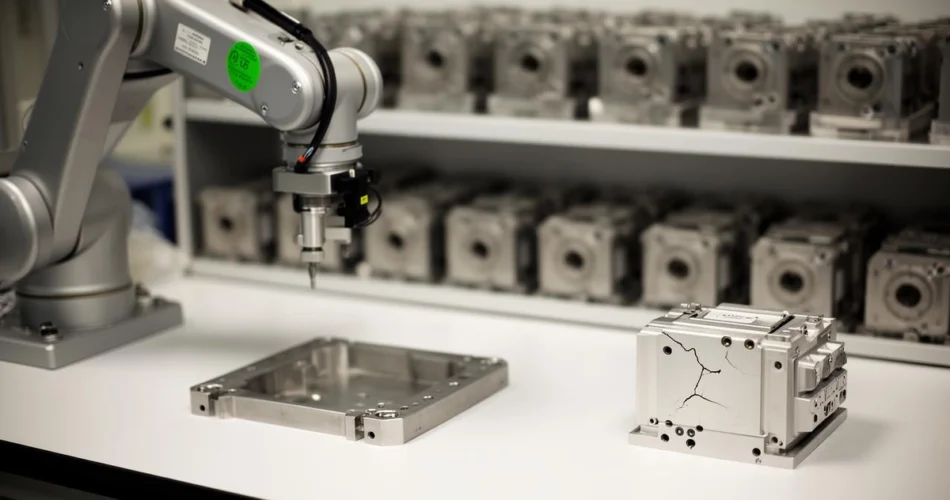
While the Pixel 11 Pro XL’s performance gaps are notable, a separate durability test on Google’s foldable raises broader questions about the company’s hardware engineering. The Pixel 11 Pro Fold, put through a series of stress tests by JerryRigEverything, exhibited the same structural weakness that has followed the line for years: an antenna line positioned near the hinge that cracks under pressure. In severe cases, the front screen detaches entirely.
Google claims the Fold’s hinge can withstand up to 83 million folds in laboratory conditions, but real-world testing tells a different story. The exterior display scratched at level 6 on the Mohs scale, with deeper grooves at level 7, suggesting the device may not hold up well to daily wear. The use of recycled aluminum in the frame is a commendable sustainability effort, but the composite glass fiber back panel, while marketed as shatterproof, lacks the premium feel of traditional glass.
Dust resistance remains a concern as well. The Fold’s IP68 rating covers water submersion, but fine particles can still infiltrate the hinge mechanism, a limitation that competitors have worked to address. Samsung’s modular hinge design, by contrast, allows for easier repairs and has demonstrated greater long-term durability in similar tests.
The Fold does have strengths. Its camera system, featuring a 48 MP main sensor, a 10.8 MP telephoto lens, and a 10.5 MP ultrawide, delivers the computational photography quality Google is known for. A copper vapor chamber helps the Tensor G6 chip maintain stable performance under load, and 45W wired charging with 25W wireless charging meets current industry standards. But these features are overshadowed by the recurring structural flaws and a design that has seen minimal evolution over four years.
For consumers weighing the Pixel 11 Pro XL against the Galaxy S26 Ultra, the decision comes down to priorities. The Galaxy wins on speed, multitasking, gaming, and benchmark scores. The Pixel counters with a cleaner software experience, stronger Google ecosystem integration, and a more comfortable design. The Fold, meanwhile, remains a device of unrealized potential: capable in photography and cooling, but held back by the same hinge-area vulnerability that has dogged the series since its inception.
The broader implication for Google is clear. As Samsung continues to refine both its slab and folding flagships, the performance and durability gaps become harder to ignore. Google’s AI-driven approach has carved out a loyal niche, but the company’s hardware execution, particularly in the foldable segment, still trails the competition in ways that matter to buyers spending flagship money.
Source link
Author

- Ytv Market News
- Share-market news writer and analyst with deep experience covering equities, commodities, forex, and cryptocurrencies for readers in the USA, UK, Canada, and Australia. Ytv Market News delivers timely market updates, practical trading insights, and clear explanations of macro and company-level catalysts that move prices. Combines on-the-ground financial reporting with technical analysis, using concise charts and actionable ideas to help investors and traders make smarter decisions.
Latest entries
 Forex NewsAugust 27, 2026Taiwan Dollar: Consolidation range with upside risks against US Dollar – Commerzbank
 Company Press ReleasesAugust 27, 2026Swedish company Frost Unmanned signs Commercial Agreement with French Alta Ares regarding Advanced Unmanned Systems
 Crypto NewsAugust 27, 2026+521% Increase on XRP Ledger: Payment Volumes Grow at Enormous Rate
 Stock Market VideosAugust 27, 2026Europe’s Heat Wave Disrupts Key River Shipping Route

