A former Meta Platforms engineering director testified on Wednesday that CEO Mark Zuckerberg cultivated a corporate environment where child safety was treated as secondary to user engagement and corporate growth across Facebook and Instagram.
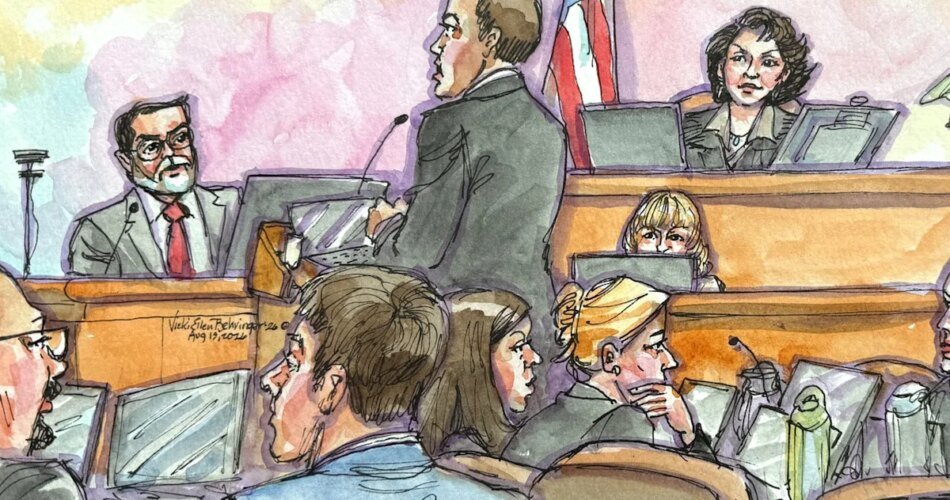
Arturo Bejar, a prominent critic of the company, made the statement during his second day of testimony in a pivotal legal battle. Brought by a broad state coalition, the trial could fundamentally alter two of the world’s most popular applications.
California, Colorado, Kentucky and New Jersey charge Meta with crafting its products to hook children, sparking depression, anxiety and suicide while deceiving consumers regarding platform safety.

Those states and 25 others also accuse Meta of violating federal law by improperly collecting and using personal data of children under 13 while they used its platforms. The trial began on Tuesday and is expected to last six weeks. Zuckerberg is expected to testify.
Bejar, the states’ first witness, said Zuckerberg was closely involved in much decision-making, and the company’s top-down culture ensured that product design changes would occur only if he ordered them.
“If Mark makes something a priority, mountains move in months,” Bejar said.
Bejar also disputed an October 2021 response Zuckerberg made to allegations by whistleblower Frances Haugen that Meta knew its products were unsafe for children and knew how to make them safe, but did nothing in order to pursue higher profits. Zuckerberg said at the time that Meta constantly used research to improve its products.
“It’s so false, every part of it,” Bejar said. “You just cannot trust Mark Zuckerberg with kids.”
Misogynistic comments toward daughter
Bejar worked at Meta from 2009 to 2015, and helped examine the well-being of teenage Instagram users while employed as an independent contractor from 2019 to 2021. He said he was not working directly with Zuckerberg at the time, and as an outside contractor lacked access to some resources.
Bejar has been outspoken in criticizing Meta’s safety record for children, and testified before a U.S. Senate committee in 2023 that Meta was aware of harassment and other harms facing teenagers on its platforms but failed to address them.

Under cross-examination from Meta’s lawyer Brian Stekloff, Bejar acknowledged he was unaware of the risks his daughter would face in 2021 when he helped her set up an Instagram account she still has.
Bejar said his daughter was 16 at the time and wanted a space where women could discuss cars, but came to experience misogynistic comments, including about her breasts.
Source link