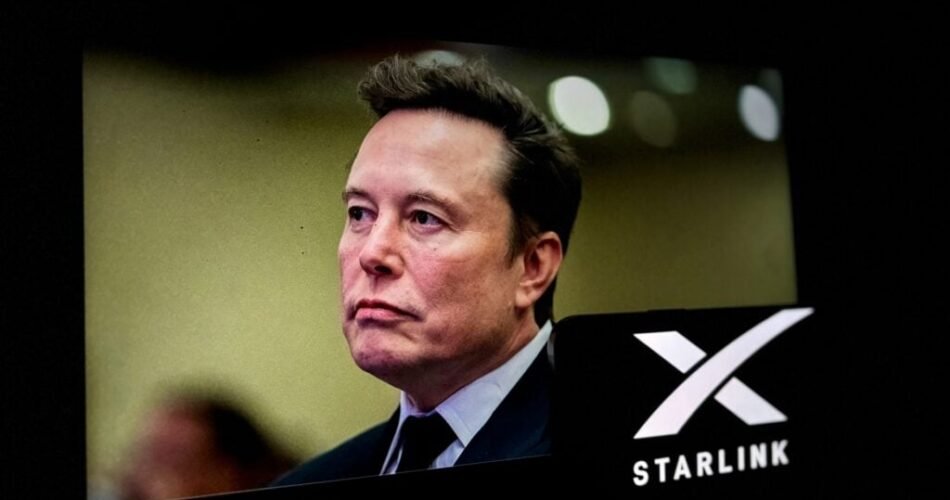
Elon Musk made a fresh pitch for Starlink in India on Friday, saying the Space Exploration Technologies Corp. (NASDAQ:SPCX) satellite service could help close rural connectivity gaps as the company renews its push for satellite approval.
Musk Targets India’s Rural Connectivity Gap
“Starlink would help the least served in India, especially in rural areas,” Musk wrote on X, responding to a post highlighting villages without 4G access and India’s urban-rural internet divide.
Official data highlights that gap. The Telecom Regulatory Authority of India, the country’s telecommunications sector regulator, said India had 1.093 billion internet subscriptions at the end of March, including 440.87 million in rural areas and 651.93 million in urban areas. Rural internet subscription density stood at 48.31 per 100 people, compared with 126.80 in urban India.
Starlink Renews Push For India Approval
Musk’s comment came a day after Reuters reported that Starlink reapplied to India’s space regulator for approval to deploy its Gen 2 constellation, including direct-to-device connectivity. Reuters could not independently verify the Economic Times report, which said the application covers nearly 30,000 satellites.
The filing adds another chapter to Starlink’s India push. The company received its telecom license in June 2025 and later secured IN-SPACe approval for its Gen 1 constellation. Starlink also signed agreements with telecom giants Bharti Airtel and Reliance Jio to distribute its service in remote areas.
BharatNet Progress Leaves Last-Mile Gaps
India has simultaneously invested heavily in rural broadband. The government said this month that BharatNet had made 221,000 Gram Panchayats service-ready by June and laid more than 850,000 route-kilometers of optical fiber. However, a July parliamentary response said BharatNet Points of Presence were operational at only 80,472 Gram Panchayats.
The government’s Digital Bharat Nidhi also funds 4G expansion in remote locations where terrain makes conventional deployment challenging. The government says its saturation program targets uncovered villages in remote and difficult areas.
That is the gap Musk is targeting. Low-Earth-orbit satellites can reach places where towers and fiber are costly or slow to deploy, while direct-to-device technology could eventually connect compatible phones beyond terrestrial coverage.
Starlink’s India ambitions have faced repeated regulatory hurdles over security and local infrastructure requirements. The company previously said it remained in “active and productive discussions” with the government as it worked toward commercial service.
According to Benzinga Edge Rankings, SPCX provides a negative price trend in the Short, Medium and Long term.
Price Action: SpaceX shares traded 0.52% lower at $133.30 during after-market trading on Thursday.
Photo courtesy: Shutterstock
© 2026 Benzinga.com. Benzinga does not provide investment advice. All rights reserved.
Source link