

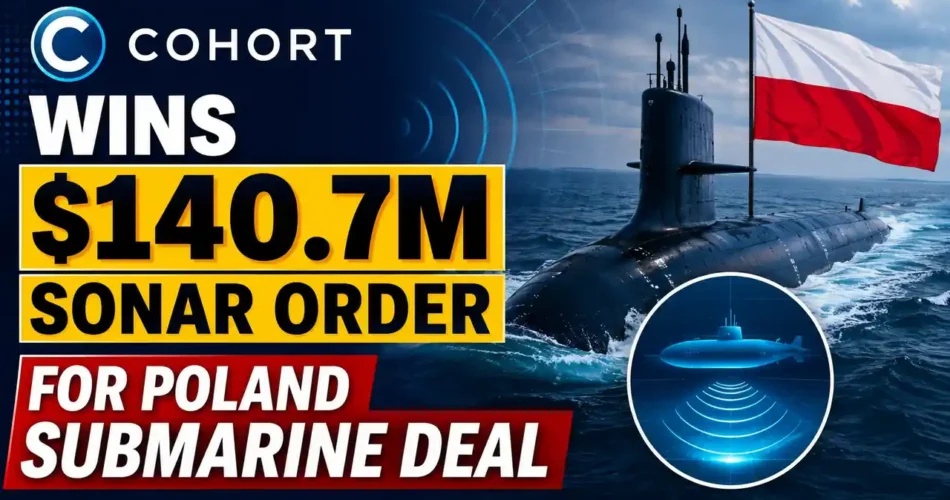
Cohort Wins $140.7 Million Sonar Order on Poland’s Submarine Deal
Cohort has secured a major sonar contract valued at approximately $140.7 million, strengthening its position in the European naval defense market and highlighting the growing demand for advanced underwater surveillance technology. The order is connected with Poland’s submarine modernization program and represents a significant business opportunity for the company.
The agreement is particularly important because submarine warfare is increasingly dependent on sophisticated sensors, sonar systems, underwater communications and electronic technologies. As European countries expand maritime security capabilities, suppliers with specialized underwater technology are attracting greater attention from defense customers.
For Cohort, the order provides both a substantial revenue opportunity and an important reference point for future international defense contracts. It also demonstrates how long-term submarine programs can create opportunities for technology companies beyond the initial construction of the vessels.
What the $140.7 Million Sonar Order Means
The value of the order makes it a meaningful contract for Cohort and underscores the scale of Poland’s investment in its naval capabilities. Sonar technology is a critical component of modern submarines because it allows crews to detect, identify and track underwater objects while operating in environments where conventional surveillance technologies have limited effectiveness.
The contract is expected to contribute to Cohort’s order book and provide greater visibility over future business activity. Defense contracts of this type can also support recurring relationships with customers, particularly when systems require upgrades, maintenance, training and technical support throughout their operational lives.
Why Sonar Is Critical to Modern Submarines
Sonar systems use sound waves to detect objects underwater. Depending on the system, sonar can support navigation, target detection, classification, tracking and situational awareness.
Modern naval forces increasingly require sonar systems capable of processing large amounts of information quickly. Advances in digital signal processing, software and sensor technology have made modern sonar considerably more sophisticated than earlier generations of underwater detection equipment.
For submarine operators, these capabilities can be central to maintaining awareness while attempting to remain difficult to detect. That makes sonar technology strategically important rather than simply another onboard component.
Poland’s Submarine Program Creates a Major Opportunity
Poland has been strengthening its armed forces as part of a broader effort to improve national and regional security. Its geographic position on the Baltic Sea makes maritime surveillance and naval capabilities particularly important.
The country’s submarine ambitions are therefore part of a wider modernization strategy. New submarine capabilities can improve underwater surveillance, maritime deterrence and the ability to protect important sea routes and infrastructure.
The sonar order demonstrates that the economic benefits of a submarine program can extend across a broad defense supply chain. Shipbuilders may receive the largest headline contracts, but specialist companies can benefit from providing sensors, communications systems, electronic equipment and other technologies.
The Baltic Sea Security Environment
The Baltic Sea has become increasingly important to European defense planning. NATO members and other regional governments have placed greater emphasis on monitoring maritime activity and protecting critical infrastructure.
Underwater threats can be difficult to detect because the marine environment creates unique challenges for surveillance. Sonar therefore plays an important role in helping naval forces understand what is happening beneath the surface.
For defense technology suppliers, this environment could support sustained demand for advanced underwater systems.
Cohort’s Position in Defense Technology
Cohort operates across specialist areas of defense technology, including electronic systems and technologies used in demanding military environments. Its business model benefits from supplying highly specialized products where technical expertise, reliability and established customer relationships are important.
A large sonar contract can strengthen the company’s credibility with international defense customers. Successful delivery of a major program can potentially lead to follow-on opportunities, particularly when customers expand fleets or seek additional capabilities.
International Defense Contracts Can Improve Visibility
Defense companies often operate with long sales cycles. Governments may spend years evaluating requirements, selecting suppliers and negotiating contracts before production begins.
Once an agreement has been secured, however, the resulting order book can provide greater visibility than many commercial markets. Large programs can extend over several years, helping suppliers plan manufacturing capacity, engineering resources and investment.
The $140.7 million sonar order therefore matters not only because of its headline value but also because of what it can mean for Cohort’s forward revenue visibility.
Potential Benefits for Cohort
The immediate benefit is the addition of a substantial order to Cohort’s backlog. A larger backlog can provide investors with greater confidence about future sales, although the timing of revenue recognition will depend on contract milestones and delivery schedules.
The contract may also generate opportunities for additional services and support. Defense electronics typically require testing, integration, maintenance and technical assistance, creating the potential for longer-term customer relationships.
Strengthening the European Customer Base
Winning business connected to Poland’s submarine program could also strengthen Cohort’s presence in European defense markets. Governments across the continent have been reviewing military capabilities and increasing investment in areas such as maritime surveillance, air defense, electronic warfare and communications.
A successful Polish program could therefore become an important reference for Cohort when pursuing other European opportunities.
What Investors Should Watch
Although a large defense contract is positive news, investors should look beyond the headline order value. The most important considerations include contract execution, delivery schedules, margins, cash generation and the pace at which the order is converted into reported revenue.
Investors should also monitor whether additional orders emerge from Poland or other international customers. Follow-on contracts could demonstrate that the sonar award is part of a broader growth opportunity rather than a one-off transaction.
Execution Remains Important
Large defense programs can be technically complex. Delays in manufacturing, integration, testing or customer acceptance can affect the timing of revenue and cash flow.
For that reason, Cohort’s ability to execute the program efficiently will be an important factor in determining the contract’s ultimate financial impact.
Why Underwater Defense Technology Is Gaining Attention
Underwater surveillance has become increasingly important as governments focus on protecting maritime infrastructure and monitoring activity below the surface. Submarine cables, pipelines, ports and other infrastructure can be strategically significant, while underwater environments remain challenging for conventional monitoring systems.
This has created a growing market for technologies capable of detecting and identifying activity underwater. Sonar is one of the core technologies supporting that mission.
For companies such as Cohort, the trend could create opportunities across multiple programs as governments modernize naval fleets and improve maritime-domain awareness.
The Broader Defense Investment Trend
European defense spending has been undergoing a structural shift. Governments are reassessing military readiness and investing in modern equipment after years in which some defense programs received comparatively limited attention.
This environment can benefit specialist defense suppliers. While major platforms such as submarines, aircraft and ships attract significant attention, the electronic systems installed on those platforms can represent a substantial part of their overall capability.
As military systems become more connected and software-driven, advanced sensors and electronic technologies are likely to remain important components of defense procurement.
Conclusion
Cohort’s $140.7 million sonar order linked to Poland’s submarine program represents a significant development for the company and reinforces the strategic importance of underwater defense technology.
The award provides Cohort with a substantial order opportunity, strengthens its exposure to the European defense market and potentially creates a platform for future international business. At the same time, investors should focus on execution, margins, delivery timing and follow-on orders rather than treating the headline contract value as immediate revenue.
Poland’s naval modernization and the broader focus on Baltic Sea security could support continued demand for advanced underwater surveillance technologies. If Cohort successfully delivers the program, the contract could become an important reference in its efforts to expand its international defense business.
FAQ
What is the value of Cohort’s sonar order?
Cohort has secured a sonar-related order valued at approximately $140.7 million in connection with Poland’s submarine program.
Why is the sonar contract important?
The contract adds significant value to Cohort’s order book and strengthens its position in the European naval defense market. It also demonstrates demand for advanced underwater surveillance technology.
Why does Poland need advanced submarine sonar?
Sonar helps submarines detect, classify and track underwater objects. For Poland, advanced underwater capabilities can contribute to maritime surveillance and broader naval modernization.
Could the contract lead to additional business for Cohort?
Potentially. Successful delivery of a major defense program can strengthen customer relationships and provide an important reference when pursuing future contracts. However, additional orders are not guaranteed.
What should investors monitor after the contract announcement?
Investors should monitor contract execution, delivery milestones, revenue recognition, margins, cash flow and any additional orders associated with Poland or other international defense customers.
Does a $140.7 million order mean Cohort immediately receives $140.7 million in revenue?
No. The contract value represents the overall value of the order. Revenue is generally recognized according to the company’s accounting policies and the progress or delivery of the contracted work.
What is the broader investment significance?
The order highlights the growing importance of specialist defense technologies as European countries modernize their armed forces. Companies supplying sensors, electronics and underwater systems may benefit from increased defense procurement over the longer term.

