In 2005, Boeing (BA +0.48%) sold its commercial airplane operations in Kansas and Oklahoma to the investment firm Onex for about $900 million in cash. The business became Spirit AeroSystems, the world’s largest independent supplier of aircraft structures — including the fuselage of the 737.
In December, Boeing paid $4.7 billion in stock to take it back. Counting Spirit’s debt, the deal was valued at about $8.3 billion.
That history is worth holding onto, because Boeing is selling again. On Aug. 10, the aerospace giant agreed to sell three of its future-flight businesses (Wisk Aero, Insitu, and SkyGrid) to Archer Aviation (ACHR -1.01%).
Is Boeing letting go of something it will eventually have to buy back?

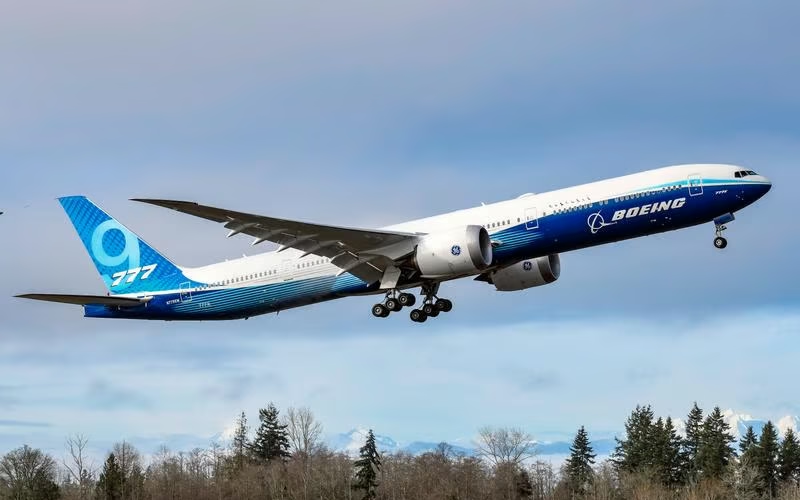
Image source: Boeing.
The Spirit lesson
The Wichita plant Boeing sold kept building 737 fuselages, now as a supplier, shipping them by rail to Boeing’s factory in Renton, Washington. For years, that looked like ordinary industry practice: aerostructures were something an airplane maker could buy rather than own.
But Spirit’s problems became Boeing’s problems, because the fuselages were Boeing’s product no matter whose name was on the plant. Boeing framed the repurchase as a commitment to aviation safety and a way to improve quality in its commercial airplane business. The company agreed in July 2024 to bring Spirit back inside, and the deal closed on Dec. 8, 2025.
“This is a pivotal moment in Boeing’s history and future success,” CEO Kelly Ortberg said in the company’s press release on the closing.
The purpose was control. And a business sold for about $900 million came back at $4.7 billion, plus assumed debt, two decades later — after the quality problems had already done their damage.
This time, Boeing kept the technology
I’d argue the Archer deal is built differently, and deliberately so.
Archer is acquiring Wisk Aero, Boeing’s autonomous air-taxi unit with more than 1,700 test flights behind it, along with Insitu, a maker of unmanned aircraft with operations in 35 countries, and SkyGrid, an air-traffic-management software company. Archer has pitched the combination as bringing artificial intelligence (AI) into aerospace and defense hardware.
Of course, Boeing isn’t simply exiting. It is taking a stake in Archer, and the two companies agreed to a technology-sharing arrangement that preserves Boeing’s access to Wisk’s autonomous-flight technology for future commercial and defense aircraft. The deal is expected to close by the end of 2026, pending antitrust review.
In 2005, Boeing sold a piece of its own product and kept a supply contract. This time it is selling businesses that don’t build any part of a Boeing airplane, and keeping both an ownership interest and rights to the technology it might need later.
The sale fits a pattern. Late last year, the company also closed the sale of its Jeppesen and ForeFlight software businesses to Thoma Bravo, an all-cash deal valued at $10.55 billion. Boeing is sorting what it must own from what it only needs access to.
A $715 billion reason to focus
The selling has a clear reason: the core business finally has momentum worth funding, and it still carries the debt of the bad years.
The quarter backs that up. Revenue rose 8% year over year to $24.6 billion in the second quarter, on 171 commercial deliveries, up 14% from 150 a year earlier.
The same goes for cash. Free cash flow came in at $631 million, compared with an outflow of $200 million in the year-ago quarter, and the first half’s $823 million outflow was a big improvement from the $2.5 billion that went out in the first half of 2025.

Today’s Change
(0.48%) $1.01
Current Price
$212.09
Key Data Points
Market Cap
Day’s Range
$209.66 – $212.60
52wk Range
$176.77 – $254.35
Volume
4.4M
Avg Vol
5.9M
Gross Margin
4.71%
To be fair, the company is still losing money. On a core, non-GAAP (adjusted) basis, the loss came to $0.76 per share, narrowed from $1.24 a year earlier.
And the backlog says demand isn’t the constraint. Boeing ended the quarter with a record $715 billion backlog, including more than 6,200 commercial airplanes. Building them fast enough is the constraint, with $45.9 billion of consolidated debt sitting against $20 billion of cash and investments. Air taxis and drones, however promising, compete for capital with that job.
So, is Boeing repeating its 2005 mistake? I don’t think so. The Spirit lesson was about control of Boeing’s own product, and nothing in the Archer package touches a Boeing airplane today.
The longer-term risk is different. If autonomous flight becomes central to aerospace someday, a stake and shared rights to technology are not the same as owning the business. Sure, that could make this deal look bad in a decade. But Boeing already paid $4.7 billion to learn what it has to keep inside. At about $211 as of this writing, roughly 17% below its 52-week high, the stock’s valuation is arguably a bet on the recovery of the core business. Selling what sits outside that core is consistent with the bet.
Source link
Author

- Ytv Market News
- Share-market news writer and analyst with deep experience covering equities, commodities, forex, and cryptocurrencies for readers in the USA, UK, Canada, and Australia. Ytv Market News delivers timely market updates, practical trading insights, and clear explanations of macro and company-level catalysts that move prices. Combines on-the-ground financial reporting with technical analysis, using concise charts and actionable ideas to help investors and traders make smarter decisions.
Latest entries
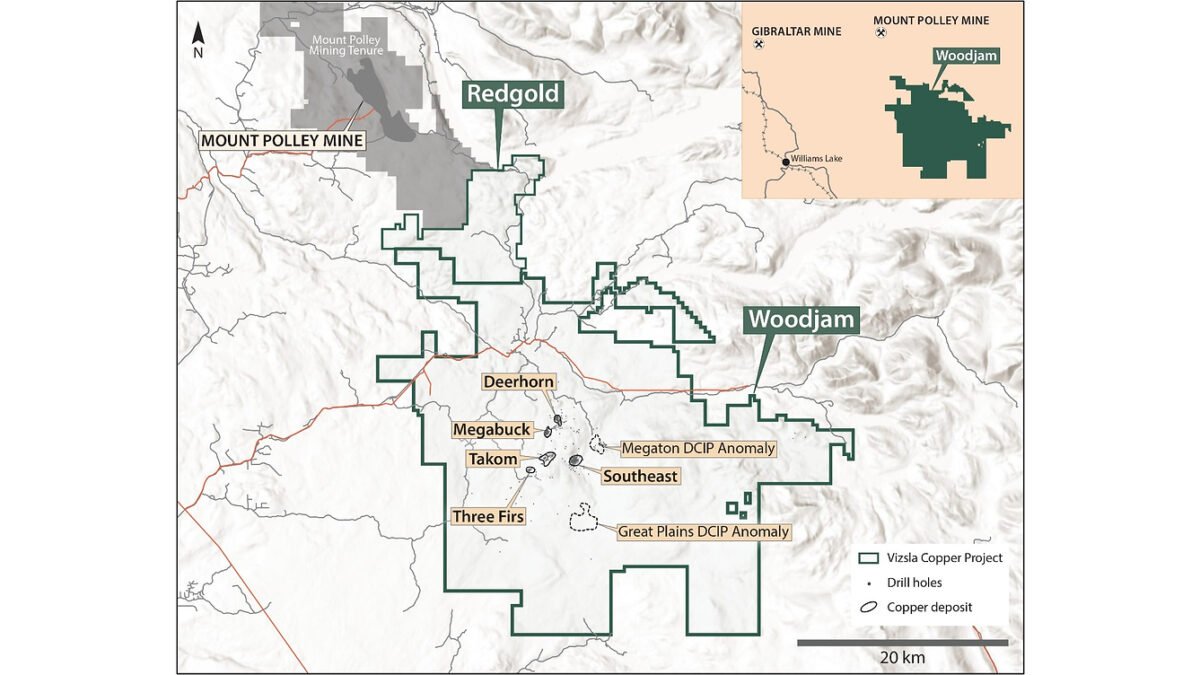 CanadaAugust 27, 2026VIZSLA COPPER DRILLS 48.5 METERS OF 3.32% COPPER WITHIN 266.0 METERS OF 0.97% COPPER AT THE DEERHORN DEPOSIT, WOODJAM PROJECT, CENTRAL BRITISH COLUMBIA
 Crypto NewsAugust 27, 2026First Quantum-Resistant Bitcoin Transaction Confirmed on Mainnet Without Protocol Change
 Crypto NewsAugust 27, 2026August 27 Cryptocurrency: Bitcoin May Reach New Highs Next Year, Potentially Hitting $1 Million by 2033
 Stock Market VideosAugust 27, 2026Why Central Banks Are Accumulating Gold Right Now (And What It Means for You)