

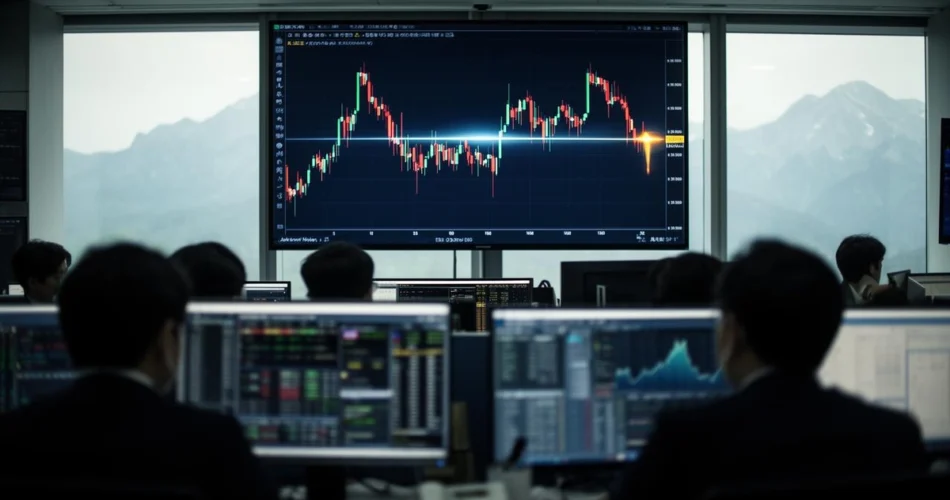
The won-dollar exchange rate is expected to trade in a limited range around 1,380 won on the 28th. Market participants are likely to adopt a wait-and-see stance ahead of Federal Reserve Chair Kevin Warsh’s Jackson Hole speech scheduled for that evening.
According to Seoul Money Brokerage Services, the one-month won-dollar contract traded in the overnight New York non-deliverable forward (NDF) market was last quoted at 1,381.7 won. Taking into account the recent one-month swap point (-0.25 won), the exchange rate is expected to open 1.05 won higher than the previous session’s close of 1,380.9 won (as of 3:30 p.m.).
What signals Warsh sends on inflation and additional rate hikes will be the biggest variable for the exchange rate today. With recent U.S. inflation indicators coming in higher than expected, the probability of a Fed rate hike in September has fallen to the 30% range. If Warsh emphasizes vigilance on inflation, expectations for U.S. rate hikes could revive, strengthening the dollar and putting downward pressure on the won. Conversely, if he does not signal stronger tightening, the dollar could weaken and drive won strength.
Overnight, the dollar remained range-bound as markets awaited Warsh’s speech. The Dollar Index, which measures the greenback against six major currencies, moved around the 99.1 level. U.S. initial jobless claims fell to 203,000, demonstrating labor market resilience, which supported the dollar and could act as a headwind for the won.
The overnight rally in New York stocks is expected to support the won. Nvidia surged 8.7% on earnings that beat market expectations and an optimistic revenue outlook. If foreign buying continues in South Korean equities, particularly semiconductor stocks, increased dollar-selling and won-buying demand could exert downward pressure on the exchange rate.
Domestically, the aftereffects of the Bank of Korea’s consecutive rate hike from the previous day are expected to continue. The BOK’s decision to raise its benchmark rate from 2.75% to 3.00% per annum narrowed the interest rate differential between South Korea and the U.S., which is a positive factor for the won. However, as the future rate hike path was interpreted as more dovish than expected, the exchange rate retraced its decline from the 1,377 won range to the 1,380 won range during the previous session. Since the rate hike itself has already been priced into the market, the won-strengthening effect is likely to be limited today.
On the supply-demand front, month-end dollar-selling (negotiation) by South Korean exporters is expected to cap the upside. With steady dollar-selling inflows centered on semiconductor companies, expanded negotiation volumes could drive won strength and push the exchange rate lower. Conversely, below the 1,380 won level, importer settlements and bargain-hunting dollar purchases are expected to limit the extent of won appreciation.
Meanwhile, the U.S. July personal consumption expenditures (PCE) inflation rate rose 3.7% year-over-year, exceeding the market expectation of 3.6%. Core PCE inflation rose 3.3% year-over-year, in line with expectations. The revised U.S. second-quarter GDP grew at an annualized rate of 1.5% quarter-over-quarter, matching expectations, but private consumption spending grew at an annualized 3.4% quarter-over-quarter, exceeding forecasts. This reinforced the assessment that U.S. domestic demand remains robust, supporting dollar strength.
In the Japanese foreign exchange market, participants are also searching for direction ahead of Warsh’s speech. FX experts noted that the dollar-yen exchange rate has been moving within its recent multi-week range, and with the probability of a September Fed rate hike remaining below 40%, market participants are waiting to confirm the content of the speech. While the Bank of Japan deputy governor made positive remarks about additional rate hikes, the impact was limited as the market has already substantially priced in a September hike.
The key factor determining the exchange rate’s direction today is how hawkish a tone Warsh adopts on inflation. With recent U.S. inflation indicators exceeding expectations and concerns growing that the Fed’s tightening stance could be prolonged, any hint from Warsh of additional measures for price stability could turn the dollar stronger. Conversely, any mention of adjusting the pace of rate hikes could trigger dollar weakness and won strength.
Market participants expect the exchange rate to move between the late 1,370s and early 1,390s depending on the content of Warsh’s speech. Before the speech, the rate is likely to fluctuate within a narrow range centered on 1,380 won without a clear directional bias.
Source link
Author

- Ytv Market News
- Share-market news writer and analyst with deep experience covering equities, commodities, forex, and cryptocurrencies for readers in the USA, UK, Canada, and Australia. Ytv Market News delivers timely market updates, practical trading insights, and clear explanations of macro and company-level catalysts that move prices. Combines on-the-ground financial reporting with technical analysis, using concise charts and actionable ideas to help investors and traders make smarter decisions.
Latest entries
 Credit Cards USAAugust 28, 2026Amex Tops Credit Card Satisfaction as Financial Stress Deepens
 UsaAugust 28, 2026NuScale Wouldn’t Own a Reactor in the Deal Driving Its Stock
 AustraliaAugust 28, 2026Why these 3 top ASX dividend shares are my biggest holdings
 Crypto NewsAugust 28, 2026Brazil central bank prepares crypto monitoring system after $180M cyberattack

