
The Trump administration has revealed the details of its “economic D-Day” campaign against Iran, expanding secondary sanctions that threaten foreign companies with exclusion from the U.S. financial system for continuing to do business with Tehran and targeting nearly 60 individuals, entities and vessels in the first round of new measures.
Treasury Secretary Scott Bessent on Monday formally launched “Operation Economic Outcast,” giving countries a defined, but unspecified, timeline to shut down Iran-related activity identified by Washington. The Treasury said countries that fail to comply will face U.S. action, while entities facilitating Iranian money laundering or sanctions evasion risk being cut off from the U.S. financial system.
OFAC issued new sanctions covering Iran’s digital assets, technology, gold, aviation and shipping sectors, allowing the Treasury to sanction foreign persons operating in or providing services to those sectors. Those authorities add to existing sanctions covering Iran’s financial, petroleum and petrochemical industries.
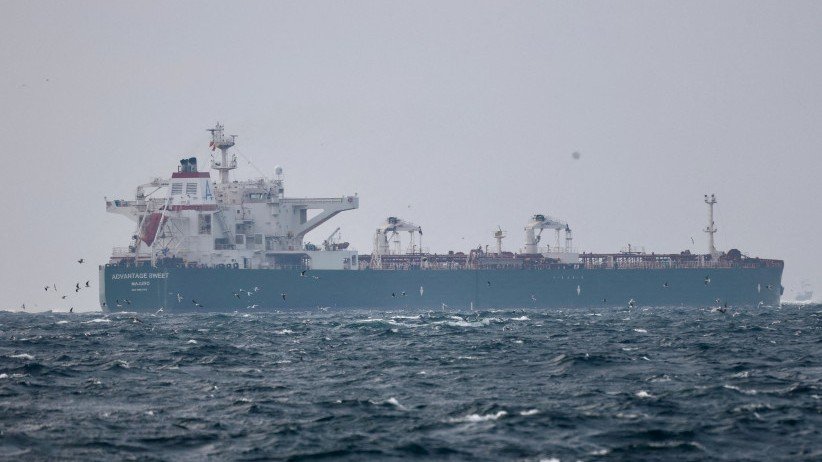
The oil trade remains one of the campaign’s primary targets. Treasury said Monday’s designations include brokers, companies and shadow-fleet vessels operating across the UAE, Hong Kong, China, Singapore, Switzerland and Europe that transport Iranian oil and channel revenues to the IRGC-Quds Force and other Iranian entities. OFAC also sanctioned international companies operating in Iran’s petroleum sector and facilitating the movement and sale of Iranian crude and petroleum products.
China is now being tested. Beijing buys more than 80% of Iran’s seaborne oil, but Washington stopped short Monday of sanctioning the larger Chinese banks that may facilitate those purchases. Iranian crude availability in China is already declining under the U.S. blockade, with Chinese imports estimated at 534,000 barrels per day in August, down from 823,000 bpd in July, according to Reuters.
Iran’s available offshore crude stocks are also shrinking. On Friday, Iranian crude outside the Persian Gulf and Gulf of Oman had fallen to roughly 83 million barrels from more than 100 million barrels before Washington reinstated its blockade in mid-July. About 40 million barrels were sitting in floating storage near Singapore, with market participants estimating that only around 4 million barrels remained unsold.
Oil prices fell more than 2% earlier Monday as traders took profits ahead of Bessent’s announcement, with WTI at $85.18 and Brent at $92.32 in early Asian trading after both benchmarks gained more than 5% last week. Just shortly after the Treasury reveal, at 2:17 p.m. ET on Monday, Brent crude was trading down 2.56% at $91.97, with WTI down 2.58% at $84.81.
By Charles Kennedy for Oilprice.com
Author

- Ytv Market News
- Share-market news writer and analyst with deep experience covering equities, commodities, forex, and cryptocurrencies for readers in the USA, UK, Canada, and Australia. Ytv Market News delivers timely market updates, practical trading insights, and clear explanations of macro and company-level catalysts that move prices. Combines on-the-ground financial reporting with technical analysis, using concise charts and actionable ideas to help investors and traders make smarter decisions.
Latest entries
 Investing InsightsAugust 24, 2026Samsung Electronics to Discontinue AI TV ‘Baby Cry Detection’ Feature After 18 Months — BigGo Finance
 GermanyAugust 24, 2026Shares dip with pressure from technology, yields and oil fall
 Crypto NewsAugust 24, 2026Bitcoin: eCash launches its testnet as the risk of a split remains intact
 CanadaAugust 24, 2026Thomson Reuters Leverages its World-Class Data Assets to Launch Its Own Frontier Model