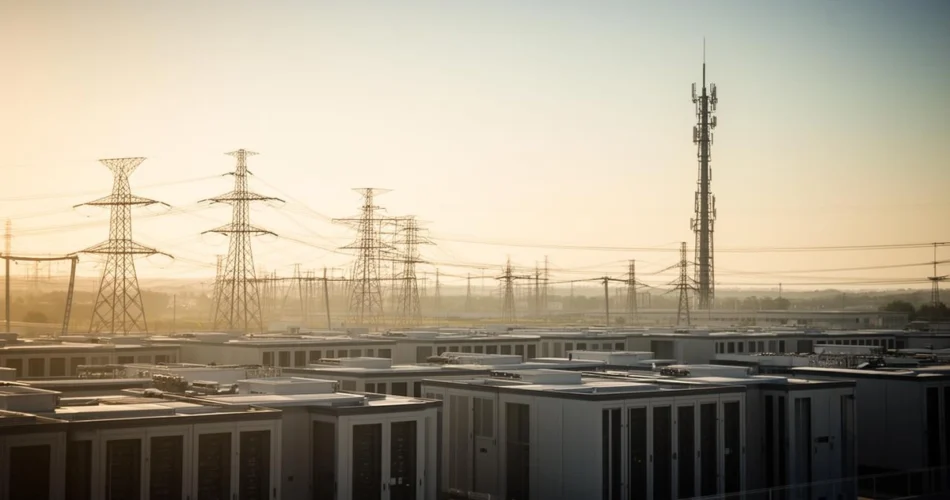
Samsung Electronics is shifting the center of gravity of its U.S. policy engagement from traditional semiconductor subsidies and trade to next-generation growth areas including artificial intelligence (AI), data center power grids, and other emerging sectors. Until early last year, immediately after the launch of the second Donald Trump administration, the company concentrated its lobbying firepower on semiconductor supply chain issues. But starting around mid-last year, when generative AI services like ChatGPT began gaining serious traction, Samsung Electronics redirected its lobbying resources toward AI research and development (R&D) and sixth-generation (6G) mobile communications. This year, the company has put data center power issues front and center.
As AI infrastructure investment accelerates across the United States, Samsung Electronics’ government affairs strategy is expanding beyond “semiconductor factories” to encompass the broader AI ecosystem, analysts say.
From AI and 6G to Data Center Power: A Widening U.S. Policy Front
According to a lobbying activity report filed with the U.S. Congress by Samsung Electronics America (SEA) on the 23rd, Samsung Electronics has been rapidly expanding its AI-related lobbying agenda.
In its second-quarter manufacturing sector lobbying disclosures this year, Samsung Electronics newly listed “power grid and energy legislation affecting data centers.” While the company’s lobbying had previously centered on U.S. investment, CHIPS and Science Act implementation, and the National Defense Authorization Act (NDAA), data center power-related language was added starting in the second quarter.
Intellectual property (IP) also emerged as a new lobbying area in the same quarter. Samsung Electronics registered “IP policy, including litigation funding transparency” as a separate agenda item and identified the Senate, House of Representatives, and the U.S. Patent and Trademark Office (PTO) as contact agencies.
In the telecommunications sector, lobbying had previously focused on 5G, spectrum, and wireless broadband, but “6G” was added starting in the fourth quarter of last year. Since then, through the first and second quarters of this year, both 5G and 6G have been listed together as policy response targets. The U.S. lobbying agenda is thus becoming increasingly granular, extending beyond semiconductor support and trade response to AI, power, 6G, and IP.
As the U.S. government accelerates its AI industry promotion policies, Samsung Electronics is raising its response level accordingly. A prime example: after the White House unveiled its “American AI Action Plan” in July last year, Samsung Electronics began managing AI-related policy as a separate lobbying agenda item starting in the fourth quarter of the same year.
Wider Agenda, Yet Lobbying Spending Down 7%: Base Effect from Abrupt Trade Policy Shifts
Despite the broadened policy response scope, lobbying expenditures actually declined.
| Period | Lobbying Expenditure (USD) | Year-over-Year |
|---|---|---|
| Q1 this year | 1.48 million | -5.7% |
| Q2 this year | 1.18 million | -8.5% |
| H1 cumulative | 2.66 million | -7.0% |
Note: Based on lobbying activity reports filed with the U.S. Congress by Samsung Electronics America. Last year’s figures were $1.57 million in Q1, $1.29 million in Q2, and $2.86 million cumulative for the first half.
Cumulative lobbying spending for the first half of this year totaled $2.66 million (approximately 3.7 billion won), down about 7.0% from $2.86 million (approximately 4.0 billion won) in the same period last year. Second-quarter spending came to $1.18 million (approximately 1.6 billion won), down 8.5% from $1.29 million (approximately 1.8 billion won) a year earlier. First-quarter spending of $1.48 million (approximately 2.1 billion won) represented a 5.7% decline from $1.57 million (approximately 2.2 billion won) in the prior-year period.
The reduction in lobbying scale appears to partly reflect base effects from last year’s elevated policy uncertainty. In April of last year, the Trump administration unveiled plans to impose a 10% baseline tariff on most imports along with country-specific reciprocal tariffs, triggering a dramatic shift in global trade policy. Major corporations’ lobbying expenditures hit record highs at the time. This year, with policy uncertainty relatively eased, lobbying costs have declined—but responses to core industrial policies continue unabated, analysts note.
In particular, existing industrial policy responses—including the CHIPS and Science Act, supply chain issues, and tax matters—have become permanent management areas. Samsung Electronics lists CHIPS Act implementation, U.S. investment, and supply chain as key lobbying agenda items every quarter, and has continuously managed the semiconductor investment tax credit known as “48D” since last year.
An industry source explained: “As the U.S. government’s policy focus rapidly expands from semiconductor supply chains and trade to AI infrastructure, power, and next-generation communications, corporate government affairs activities inevitably have to become more granular to match.”
Source link
Author

- Ytv Market News
- Share-market news writer and analyst with deep experience covering equities, commodities, forex, and cryptocurrencies for readers in the USA, UK, Canada, and Australia. Ytv Market News delivers timely market updates, practical trading insights, and clear explanations of macro and company-level catalysts that move prices. Combines on-the-ground financial reporting with technical analysis, using concise charts and actionable ideas to help investors and traders make smarter decisions.
Latest entries
 GermanyAugust 24, 2026Europe EV market share tops 25% in July as France, Germany drive growth
 JapanAugust 24, 2026US-Canada trade talks collapse over new tariffs
 Crypto NewsAugust 24, 2026Cardano Targets One Billion Users by Betting on Hydra and Ouroboros Leios
 Crypto NewsAugust 24, 2026Could Solana price surpass $100?