
10h05 ▪
4
min read ▪ by
International tax rules still see only a small part of on-chain crypto activity. Chainalysis estimates potentially taxable flows observed in 2025 across six major blockchains at at least 457 billion dollars. The OECD’s CARF would directly cover only 14%. The remaining 86% notably go through DeFi, peer-to-peer transfers, staking, or payments.

In brief
- Chainalysis estimates potentially taxable crypto activity at 457 billion dollars in 2025.
- The CARF would directly cover only 14% of the studied on-chain flows.
- DEXs, P2P, staking, and many payments remain largely outside the framework.
Crypto Already Represents 457 Billion Dollars
The CARF is indeed beginning to take shape in several countries. France is preparing, for example, the extension of DAC8 with the new international tax framework on cryptos. Chainalysis looked at what directly circulates on the blockchains.
Its estimate reaches 457 billion dollars for 2025. The figure includes realized capital gains, certain incomes from mining, staking or lending, as well as payments made in crypto.
The United States leads with 112.6 billion dollars. The European Union totals 125.1 billion. France represents about 9.4 billion dollars, split between 1.7 billion in income, 2.5 billion in gains, and 5.2 billion in payments.
Six networks are included in the calculation: Bitcoin, Ethereum, Solana, Tron, BNB Smart Chain, and Base. So part of the market is missing. Operations performed within centralized exchanges do not appear in these 457 billion. Chainalysis therefore considers its estimate as a floor.
The CARF Mainly Sees What Passes Through Intermediaries
The Crypto-Asset Reporting Framework was created by the OECD to automate the exchange of tax information between countries. Dozens of jurisdictions are beginning to collect data this year. The first international exchanges should arrive in 2027. France is among the countries engaged in the scheme, which had already gathered 47 states at its political launch.
The system works quite well when a user goes through an exchange or broker. These companies generally know their clients’ identities. They can record sales, purchases, and transfers, then transmit this information to tax authorities.
The problem starts when the activity leaves these platforms.
According to Chainalysis, only 14% of potentially taxable on-chain flows studied correspond to operations directly covered by the CARF. The remaining 86% include exchanges on DEXs, peer-to-peer transfers, income generated directly on-chain, and many payments.
A private wallet has no compliance service. Neither does a decentralized protocol, in many cases. Authorities therefore obtain part of the puzzle. Not necessarily all the pieces.
Private Wallets Remain Difficult to Track for Tax Purposes
The problem doesn’t come only from DeFi. A user can buy bitcoin on a platform, send it to their own wallet for several years, then sell it elsewhere.
The exchange receiving the BTC knows the sale price. It does not always know the initial purchase price. Calculating the capital gain becomes less straightforward.
CARF is not retroactive either. Old transactions, some staking income, mining rewards, or crypto loans may thus be missing from data received by tax authorities.
Chainalysis does not ask for the system to be removed. The company instead believes that tax authorities will need to supplement platform declarations with direct blockchain analysis.
The issue is already sensitive in Europe. In France, Bull Bitcoin filed a complaint with the Council of State against DAC8 implementation, notably due to data collected on crypto holders. Authorities want to see more. Crypto still allows moving a significant part of activity outside traditional intermediaries.
Maximize your Cointribune experience with our “Read to Earn” program! For every article you read, earn points and access exclusive rewards. Sign up now and start earning benefits.

Fascinated by Bitcoin since 2017, Evariste has continuously researched the subject. While his initial interest was in trading, he now actively seeks to understand all advances centered on cryptocurrencies. As an editor, he strives to consistently deliver high-quality work that reflects the state of the sector as a whole.
DISCLAIMER
The views, thoughts, and opinions expressed in this article belong solely to the author, and should not be taken as investment advice. Do your own research before taking any investment decisions.
Author

- Ytv Market News
- Share-market news writer and analyst with deep experience covering equities, commodities, forex, and cryptocurrencies for readers in the USA, UK, Canada, and Australia. Ytv Market News delivers timely market updates, practical trading insights, and clear explanations of macro and company-level catalysts that move prices. Combines on-the-ground financial reporting with technical analysis, using concise charts and actionable ideas to help investors and traders make smarter decisions.
Latest entries
 IndiaAugust 27, 2026Skyways, Symbiotec, Hy Tech Engineers IPOs see strong subscription on final day
 Company Press ReleasesAugust 27, 2026Net Asset Value(s) – Janus Henderson USD AAA CLO Active Core UCITS ETF
 Company NewsAugust 27, 2026Kohl’s Aktie: Der Zoll-Bonus trügt
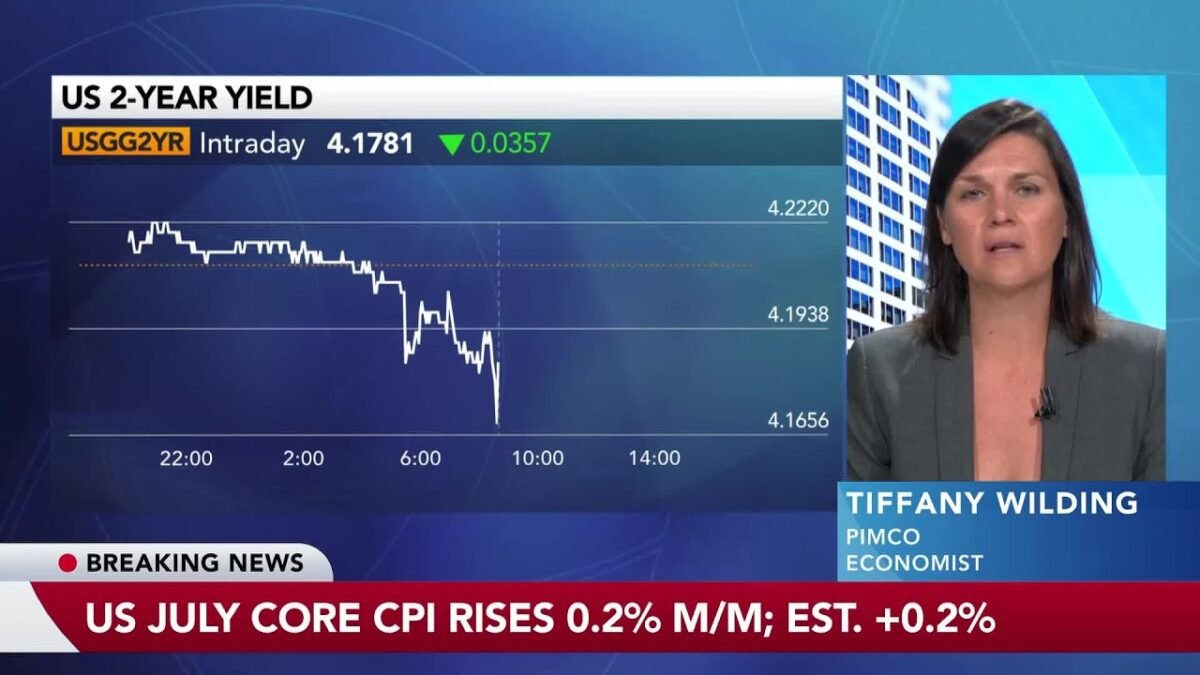 Stock Market VideosAugust 27, 2026Fed Will Stay on Hold in September, Pimco’s Wilding Says