


It’s been a pretty good year so far for the overall market. But Rivian Automotive‘s (RIVN -3.19%) stock has been a clear exception to this broad trend. Shares of this electric vehicle maker are down 22% year-to-date, extending lethargy that has lingered since 2023 despite the recent launch of its ballyhooed R2 battery-electric SUV with a palatable starting price of under $60,000.
The company expects this particular vehicle to become a major profit center over time. Indeed, although the R2 accounted for only a small portion of the 12,194 EVs it delivered last quarter, it’s eyeing an annual production capacity of more than 400,000 R2 vehicles, plus the eventual R3. This may well be the automobile that not only puts Rivian on the map, so to speak, but gets it over the profit hump.
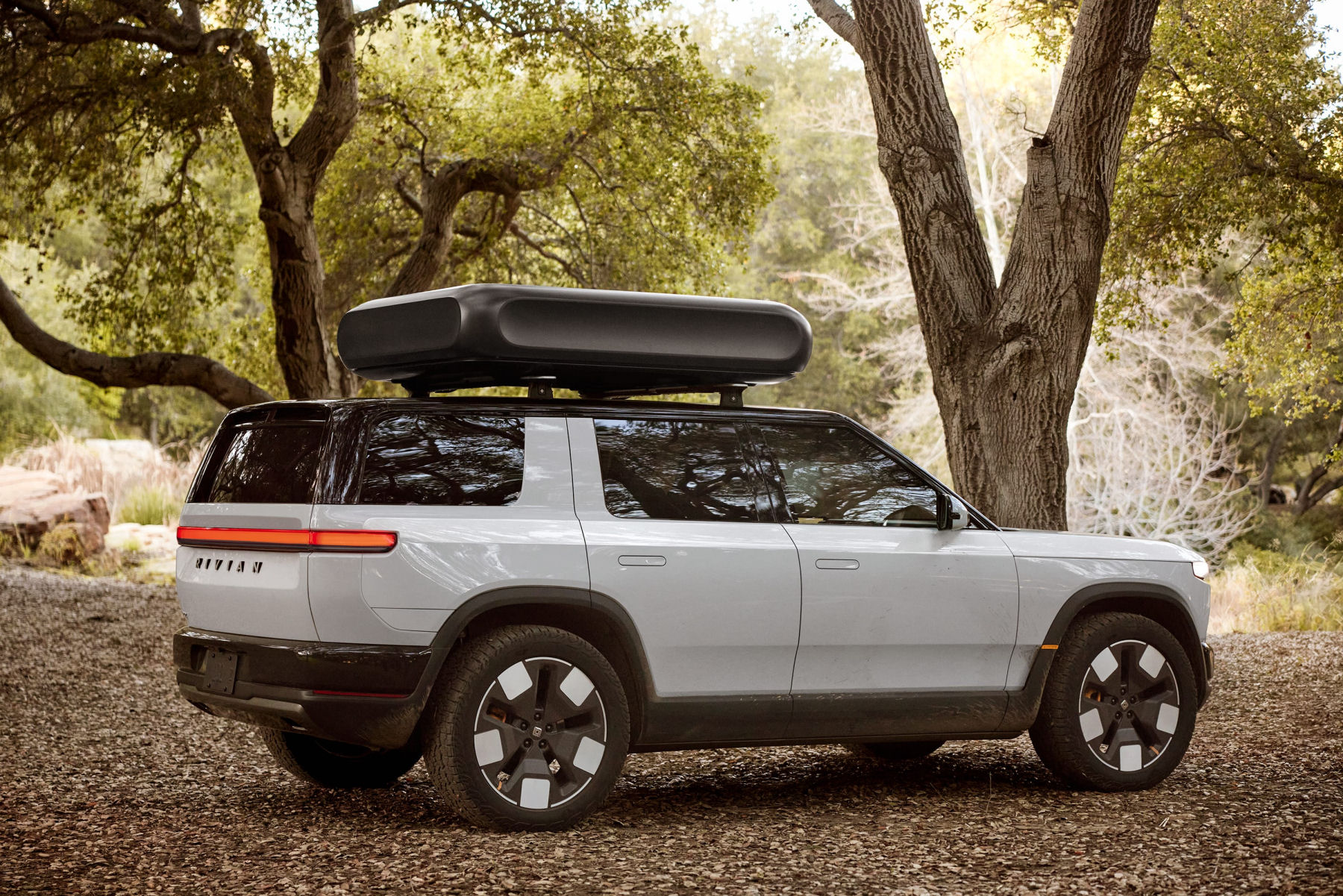
Image source: Rivian Automative.
It could also be the catalyst that finally shakes RIVN stock out of its rut.

Today’s Change
(-3.19%) $-0.49
Current Price
$14.87
Key Data Points
Market Cap
Day’s Range
$14.72 – $15.36
52wk Range
$11.84 – $22.69
Volume
46.9K
Avg Vol
33.2M
Gross Margin
2.06%
Rivian is on the right path
It’s not the biggest name in the EV business — that honor still belongs to Tesla (TSLA -0.87%) in terms of market cap, and China’s BYD Company (BYDDY +1.60%) in terms of total automobile production.
There’s room for more than one name in the business, though, even within the United States, where interest in electric vehicles remains tepid. And Rivian is doing the most American of things to ensure it penetrates the domestic market. That’s exclusively making all-electric pickup trucks and SUVs that look like their combustion-powered counterparts.
Rivian’s plan is working too. Although it’s taken some time to establish some meaningful production capacity (which is still being added), consumers and institutions alike are buying as many of its electric vehicles as it can make. Last quarter’s revenue of $1.66 billion was up 27% year over year, driven by a 14% increase in total deliveries. Perhaps most encouragingly, the company swung from a gross loss of $206 million in the second quarter of 2025 to a gross profit of $179 million in Q2 of this year, hinting that more scale can and does bring Rivian closer to fiscal viability.
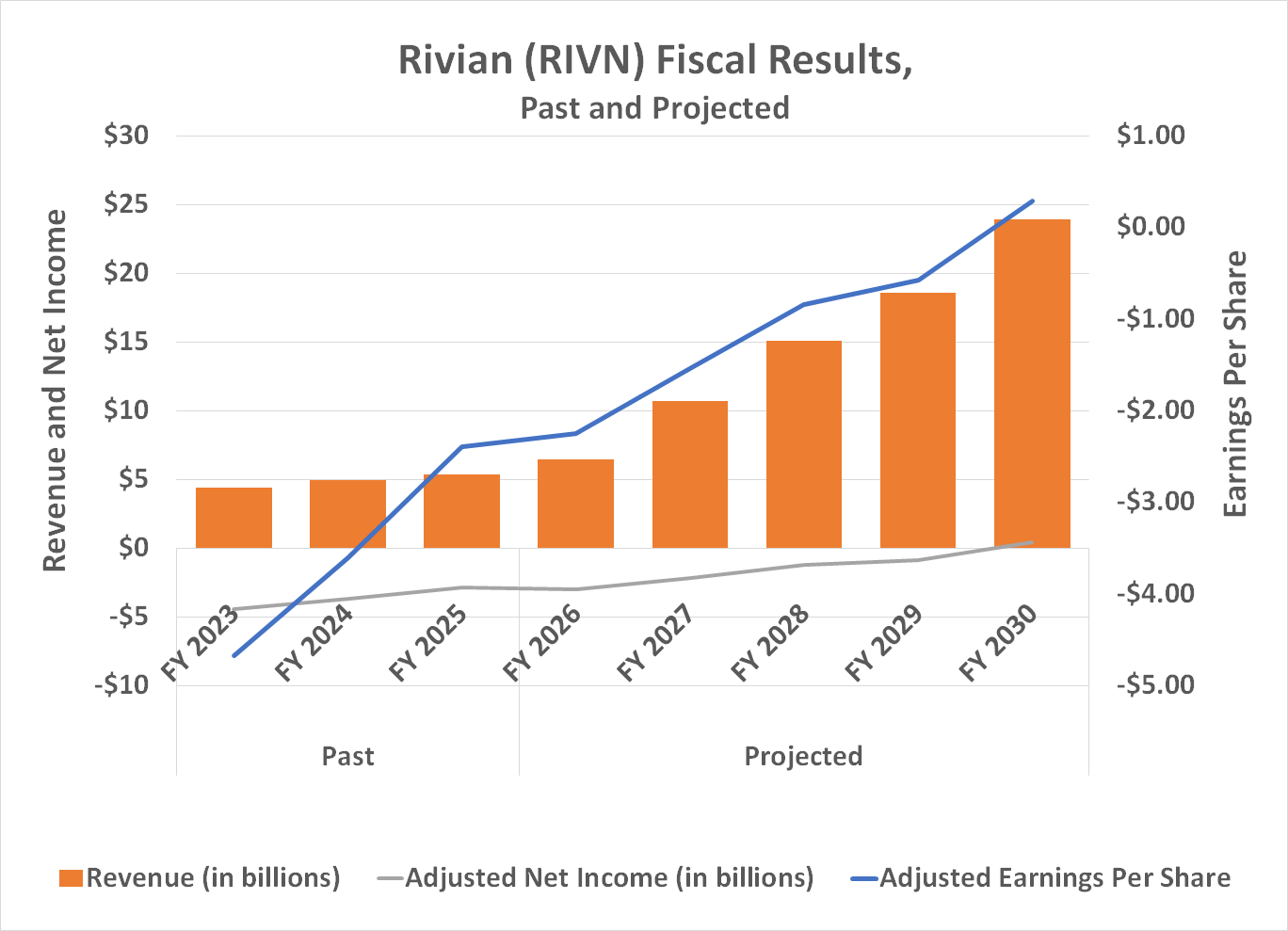
Data source: Morningstar. Chart by author.
This is still only the beginning, though. Analysts expect full-year revenue growth to accelerate to 38.4% before rising to more than 59% next year, cutting into its net losses as Rivian taps into a seemingly tepid market that may simply be waiting for more mainstream battery-powered pickup trucks and SUVs. To this end, the U.S. Bureau of Transportation Statistics says sport utility vehicles and pickups still account for the vast majority of the nation’s automobile sales.
Only a long-term, philosophical bet
This doesn’t mean Rivian will be swinging to an actual net profit in the immediate future. Indeed, it probably won’t be doing so anytime soon.
It doesn’t necessarily need to reach a profit right away to begin rewarding patient shareholders, though. It can start doing that just by proving it’s on the right trajectory, and it is. Interested investors will simply need to remember this stock is a long-term bet that the U.S. electric vehicle market will eventually firm up, and that Rivian itself stands ready to deliver the EVs that this market wants. It could remain uncomfortably volatile in the interim.
Source link

