
After a stint on the high-yield desk at Goldman Sachs, David Tepper launched the hedge fund Appaloosa Management in the early 1990s. Over the last couple of decades, Tepper has generated an average annual return in the mid to high 20% range — highlighted by an outsize performance in 2009 after he bought distressed bank securities near their lows during the financial crisis.
Combined with his ownership of the Carolina Panthers football team, Tepper’s fortune has made him an investment personality whose moves are dissected for clues about the market’s direction. During the second quarter, Appaloosa’s 13F filing with the Securities and Exchange Commission showed that the firm fully exited its position in Lyft (LYFT +0.40%) while simultaneously adding more than 1.3 million shares of its ride-hailing rival, Uber Technologies (UBER +0.32%). Uber is now one of Appaloosa’s five largest positions, representing about 7% of the portfolio.
Investors watching Tepper closely see this transaction as more than a simple rotation. Rather, it reflects a calculated judgment about relative competitive strength and long-term value creation in an intense ridesharing and delivery landscape.
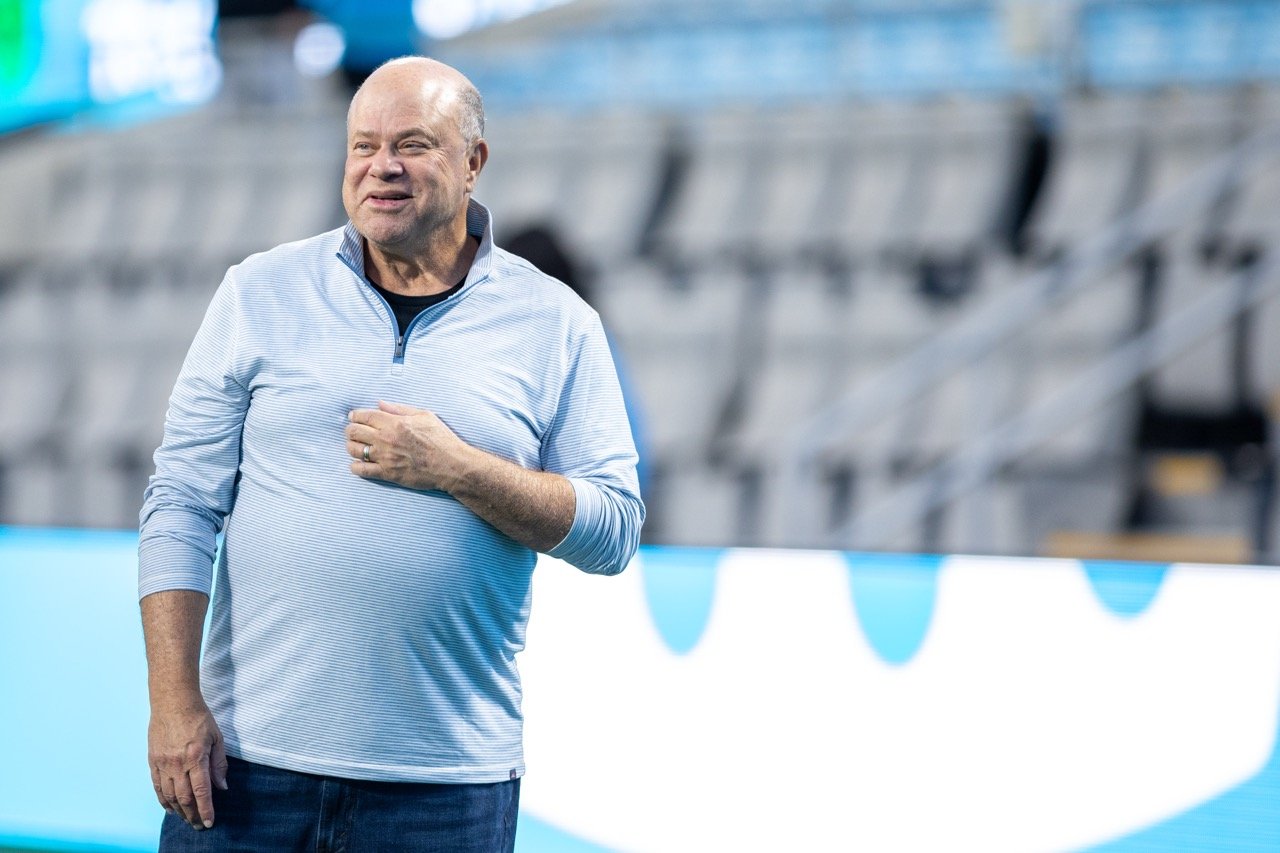
David Tepper. Image source: Getty Images.
Breaking down Tepper’s Lyft trade
According to filings, Appaloosa initiated its stake in Lyft during the first quarter of 2024, buying 467,618 shares. Throughout the rest of the year, its position grew to 13.5 million shares. While Tepper held the stock for roughly two years, his fund steadily pruned the position throughout 2025 and fully exited during the second quarter of this year.

Today’s Change
(0.32%) $0.25
Current Price
$78.80
Key Data Points
Market Cap
Day’s Range
$77.85 – $80.22
52wk Range
$65.41 – $101.99
Volume
12.8M
Avg Vol
20.7M
Gross Margin
35.42%
I think the decision to exit was influenced less by any problems at the company and more by a broader desire for sharper focus in the industries in which Lyft operates. The company continues to post respectable growth in rides and gross bookings, but it remains a much narrower service provider whose scale lags that of Uber.
Analyzing Uber’s business results
Uber and Lyft compete in overlapping markets, yet Uber’s more-diversified platform and stronger financial momentum make it a more compelling long-term holding. During the second quarter, it reported gross bookings of $58 billion, up 24% year over year. The number of trips grew 18% to 3.9 billion, driven by robust growth in monthly active platform consumers (MAPCs).
These performance metrics translated to 33% growth in earnings before interest, taxes, depreciation, and amortization. Free cash flow for the quarter totaled $2.8 billion, lifting Uber’s trailing-12-month free cash flow above $10 billion for the first time. This performance proves Uber commands impressive operating leverage across its mobility and delivery segments, both of which are supported by the company’s expanding higher-margin advertising services.
Should you buy Uber stock right now?
The consensus price target for Uber among Wall Street analysts is $101, implying roughly 30% upside to current trading levels. This disconnect between the share price and Wall Street’s forecast can largely be explained by persistent anxiety over the disruption promised by autonomous vehicle (AV) fleets.
Expanding services from Alphabet‘s Waymo and Tesla‘s Robotaxi have come with a perception of increased competitive pressures. This has resulted in significant multiple compression relative to Uber’s historical valuation profile. Nevertheless, management is quietly scaling up its own AV partnerships and targeting several cities for launches over the coming quarters.
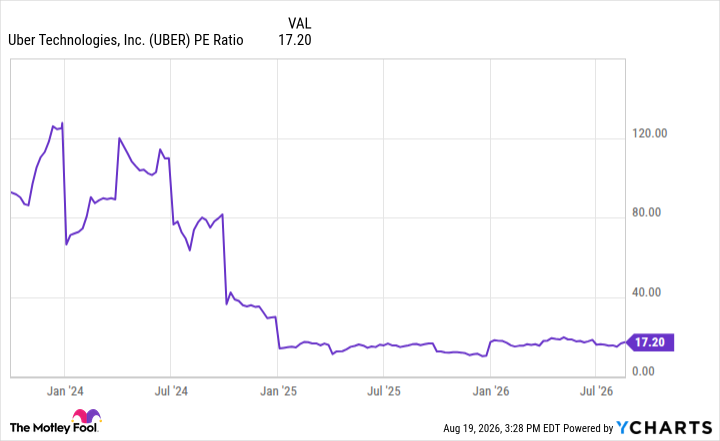
UBER PE Ratio data by YCharts; PE = price to earnings.
Uber’s network effects, global footprint, and proven ability to convert rider and order volumes into expanding margins provide a durable foundation that robotaxi fears shouldn’t erode overnight (if at all). The combination of accelerating free cash flow, an attractive valuation, and its model for adapting to embrace autonomous vehicles creates an asymmetric opportunity most investors appear to be overlooking.
Source link