


The S&P/ASX 200 (XJO) finished 30.0 points higher at 9,083.8, smack–bang at the mid-point of the session’s 0.6% range. Importantly, despite the mediocre performance at benchmark level, in the broader-based S&P/ASX 300 (XKO) advancers beat decliners by a solid 187 to 98.
The US Treasury Department announced it would expand its government-debt buyback program from next month — a move that sent the yields on benchmark 30-year and 10-year US Treasury bonds tumbling nearly 10 and 7 basis points respectively, pulling the 30’s yield back from the 22-year high reached just the day before.
The program, originally launched in 2024 under then-Treasury Secretary Janet Yellen, absorbs older, less-liquid Treasury bonds from the market — reducing supply pressure and pushing prices up, which mechanically drives yields down.
The immediate beneficiaries were gold, silver, and bitcoin, all of which surged overnight as lower risk-free yields reduced the opportunity cost of holding non-yielding assets. Equity markets globally responded in kind, with the rotation into growth and commodity stocks running in near-perfect inverse to the bond yield move.
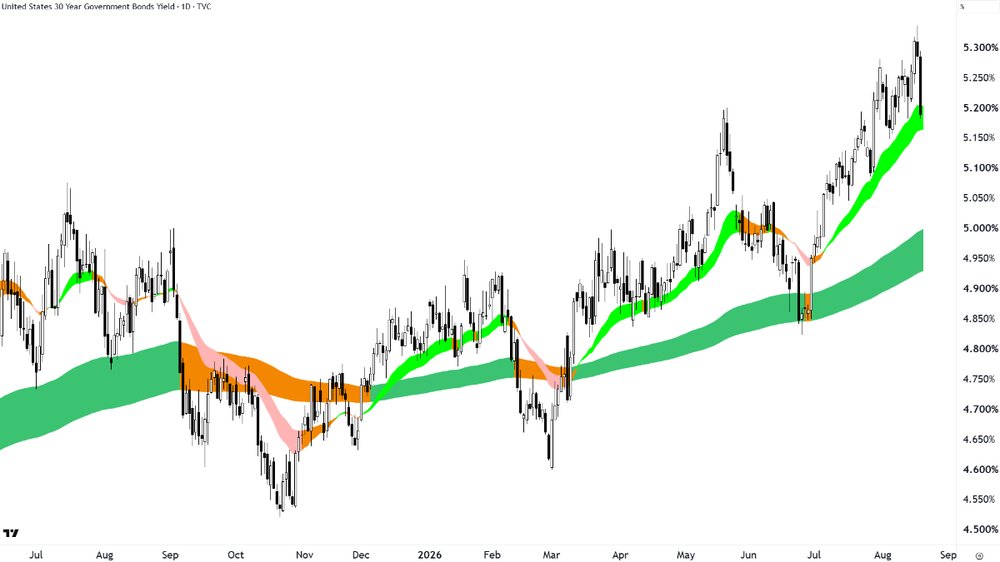
US 30-Year T-Bond Yield
Lower benchmark yields reduce the opportunity cost of holding non-yielding gold, since bonds now offer less competition as income-generating alternatives. COMEX gold futures surged 2.8% overnight before adding a further 0.2% to US$4,552.50/oz in Asian trade, while COMEX silver futures also gained 2.8% overnight before adding a further 2.0% to US$67.18/oz.
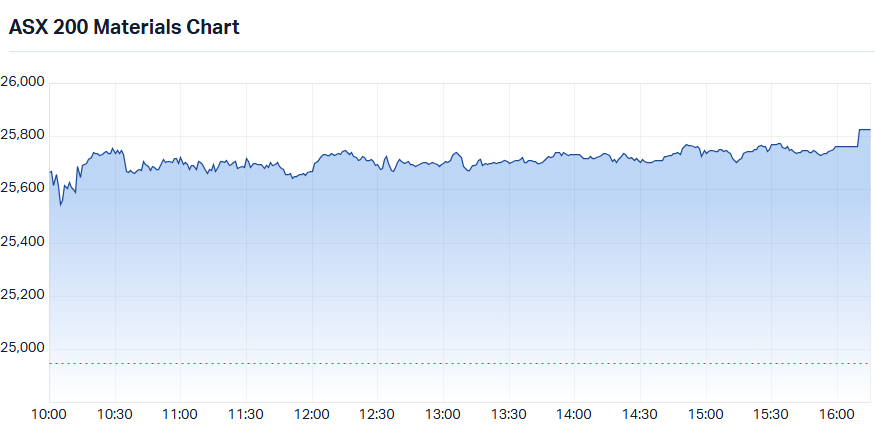
The scale of the equity response exceeded even the commodity price move — a sign that short-covering and fresh positioning amplified the fundamental signal. Ora Banda Mining (OBM) (+14.0%), Alkane Resources (ALK) (+11.0%), Regis Resources (RRL) (+10.9%), Genesis Minerals (GMD) (+10.3%), Capricorn Metals (CMM) (+10.3%), and Evolution Mining (EVN) (+10.2%) all surged.
S&P-ASX 200 Materials Sector Index
Materials (XMJ) (+3.5%) was the next major beneficiary of the yield retreat — lower benchmark rates reduce the cost of capital for capital-intensive mining operations and ease the global growth headwinds that weigh on commodity demand expectations. Notably, the equity gains ran well ahead of underlying commodity prices — COMEX copper fell 0.2% to US$6.483/lb in Asian trade after declining 1.1% on the LME overnight, and SGX iron ore futures eased 0.3% to US$95.75/t.
Arguably, the buying was backed by sentiment, not commodity price leads. Capstone Copper (CSC) (+3.7%), BHP (BHP) (+3.2%), South32 (S32) (+2.7%), Sandfire Resources (SFR) (+2.7%), and Rio Tinto (RIO) (+1.8%) all surged in a session where the macro tailwind clearly overwhelmed the underlying commodity signals.
Information Technology (XIJ) (+2.5%) was the third direct beneficiary of the yield retreat — long-duration, high-P/E growth stocks benefit from lower discount rates with mathematical directness, since their earnings are weighted further into the future.
Codan (CDA) (+12.4%) led after posting a strong operational result. WiseTech Global (WTC) (+9.1%) staged a remarkable rebound from yesterday’s -8.7% governance-related collapse, despite no new information emerging beyond yesterday’s ACCC search warrant announcement — perhaps the market simply decided that it had overreacted. Appen (APX) (+6.1%) and Xero (XRO) (+2.4%) also advanced.
S&P-ASX 200 Health Care Sector Index
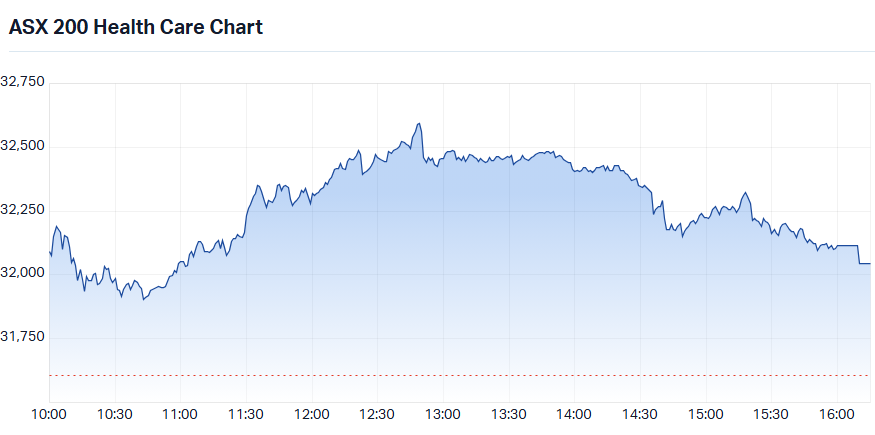
Health Care (XHJ) (+1.4%) extended its extraordinary recent run. Lower benchmark yields directly lift the present value of the sector’s premium long-duration earnings multiples, and the sector is also attracting rotational flows from investors exiting the banks.
Small-cap health technology names were the standouts: Artrya (AYA) (+8.6%), Polynovo (PNV) (+6.7%), and 4DMedical (4DX) (+6.1%) all surged. Among the large-cap names, Pro Medicus (PME) (+3.6%), Telix Pharmaceuticals (TLX) (+3.2%), CSL (CSL) (+2.8%), and ResMed (RMD) (+2.8%) all continued higher.
S&P-ASX 200 Financials Sector Index
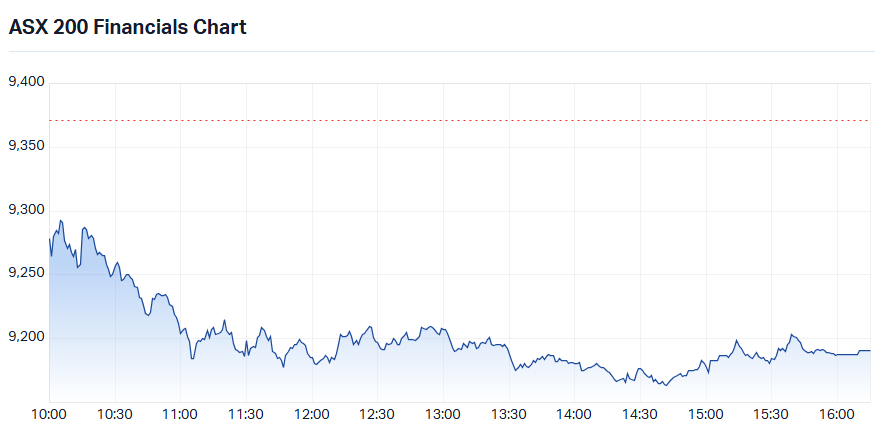
Financials (XFJ) (-1.9%) extended what is becoming a defining feature of August’s market — the sector is now down 8.7% from its August 6 peak even after accounting for dividends paid across the period.
Today’s decline had no clear single catalyst — usually lower bond yields would help the banks. This move is about the ongoing repricing of earnings expectations following a week of results confirmation that mortgage application volumes are in deep structural retreat. Commonwealth Bank (CBA) (-2.7%), Westpac (WBC) (-1.8%), ANZ (ANZ) (-1.6%), and National Australia Bank (NAB) (-1.3%) all declined.
Energy (XEJ) (+0.5%) remained well-supported as ICE Brent crude futures held near US$91.90/bbl — up 0.3% in Asian trade and firmly above the US$90 level that has provided support since last week. SGX Australian Premium Coking Coal futures gained 2.7% to US$244.50/t, with coal stocks responding — Whitehaven Coal (WHC) (+1.1%) and New Hope Corp. (NHC) (+0.7%) were firmer. Among the oil and gas names, Santos (STO) (+1.7%) was the standout.
Consumer Staples (XSJ) (-1.2%) found no buyers on a risk-on day — the sector’s defensive character, which attracts capital when anxiety is high, works in reverse when optimism returns. Metcash (MTS) (-2.9%), Woolworths (WOW) (-1.8%), and Coles (COL) (-1.2%) were all lower as capital rotated toward growth and resources.
Real Estate (XPJ) (+0.1%) was the most internally divided sector of the day. Goodman Group (GMG) (-1.5%) extended its post-results drift, dragging on the sector’s performance. Meanwhile, the lower benchmark yield environment did attract buyers to some of the sector’s retail and residential names — Vicinity Centres (VCX) (+3.2%), Mirvac (MGR) (+2.7%), and Stockland (SGP) (+2.4%) all advanced as investors moved capital back in to bond proxies.
Source link


