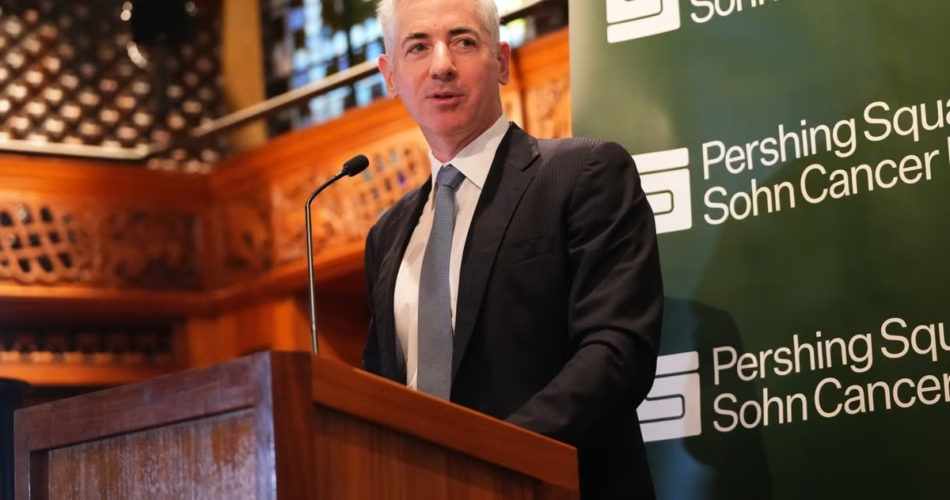
A $1,000 stake in Bill Ackman‘s hedge fund, Pershing Square Capital Management, at its 2004 launch would have been worth roughly $26,000 as of August 2026, according to Pershing Square’s own fund disclosures. That’s about 15.6% a year for nearly 23 years.
Compare that to the roughly 11% a year for the S&P 500 (^GSPC -0.87%) over the same stretch.
Ackman’s 15.6% annual return more than doubled the S&P 500’s result
An average gap of nearly 5% every year over that stretch makes a massive difference in the end. Take a look at just how different your results would be based on where you put your $1,000.
| 2004–2026 | Value of $1,000 | Annualized return | Total return |
|---|---|---|---|
| Pershing Square | $26,000 | 15.6% | 2,500% |
| S&P 500 | $11,000 | 11% | 1000% |
| Nasdaq Composite | $13,300 | 12.1% | 1232% |
A quick note: You couldn’t have actually put $1,000 in back in 2004. Pershing Square Capital Management was a private hedge fund, open only to large accredited investors with minimums far beyond that.
Ackman earned his returns by buying large stakes and pushing for change
So how did he do it?
Ackman is an activist investor. That means he takes a large stake in a company and then pushes management to change something like sell off a division, cut staff, replace the CEO, or otherwise shift the strategic vision of the company.
Some of his biggest wins came from investing in companies like Canadian Pacific, Chipotle, and General Growth Properties.
Individual investors can copy Ackman’s conviction, not his activism
Obviously, you and I will never have the chance to reshape how the companies we invest in are run, so what can we learn from Ackman?
Well, first and foremost, you cannot be an activist investor without conviction. Ackman buys into companies he believes can win. He’s not trading stocks based on hype and sentiment. He’s evaluating the business underneath, and he’s only investing if he likes what he sees.

Image source: Getty Images.
Even if there are aspects of the business he wants to improve, Ackman is looking for durable competitive advantages, predictable cash flows, and solid balance sheets. And he’s not spreading himself too thin. Pershing Square usually holds a dozen or fewer names at any given time.
Now, that’s a smaller portfolio than we recommend here at the Motley Fool — and it has to be, given the active role Ackman takes in his investments — but it’s still born of the same underlying philosophy that you need to believe in the companies you invest in. You can’t know enough about 100 companies to have real conviction about them all.
Ackman’s strategy comes down to three rules for individual investors
So, while you probably won’t ever get the chance to reshape a company’s C-suite, here’s how you can apply Ackman’s winning strategy:
- First, own businesses you can actually understand, value, and believe in.
- Second, prioritize cash flow, competitive advantages, and financial strength over whatever is popular.
- Third, be patient without becoming stubborn.
Johnny Rice has no position in any of the stocks mentioned. The Motley Fool has positions in and recommends Canadian Pacific Kansas City and Chipotle Mexican Grill. The Motley Fool recommends the following options: short September 2026 $35 calls on Chipotle Mexican Grill. The Motley Fool has a disclosure policy.
Source link