
Despite fears by economists and consumers that the U.S. economy is on the brink of a recession, the stock market has been booming for years. And this election season, every politician wants to tell you that this boom is happening only because of their policies, and not because of policies favored by their opponent.
Since President Donald Trump’s reelection on Nov. 5, 2024, the S&P 500 (^GSPC +0.21%) has risen 33.5%, a better-than-average return. And that’s in spite of a number of (mercifully brief) pullbacks following the “Liberation Day” tariff announcements and the onset of the war with Iran.
But as the midterm elections draw nearer, smart shareholders are wondering how the results could impact their holdings. Here’s what investors should do to prepare their portfolios for the midterms and their aftermath.
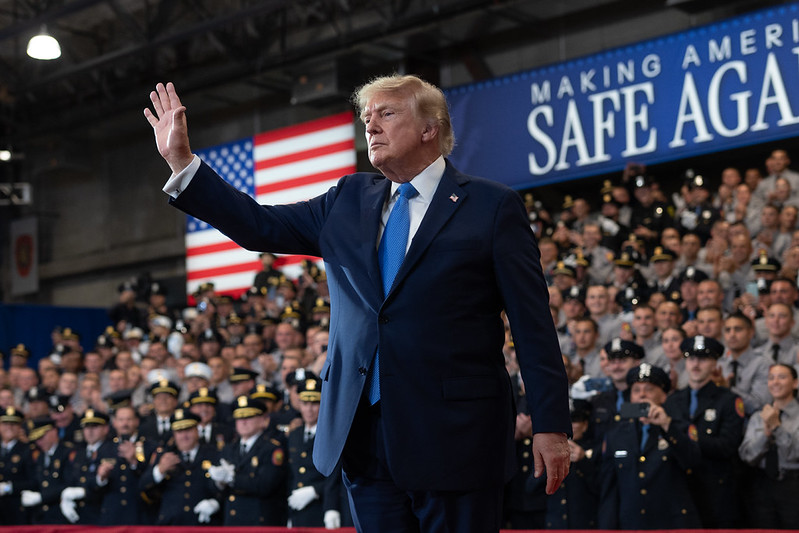
Image source: Official White House Photo by Molly Riley.
Midterm madness
Even though the stock market has done well over the last two years, it would be a mistake to assume that its outperformance guarantees a particular electoral outcome in November.
During the four years of Trump’s first term, for example, the S&P 500 generated an overall return of 81.3%. That was its fourth-best performance during any four-year presidential term since 1980 (Bill Clinton’s two terms and Barack Obama’s first term occupy the top three slots). But that didn’t translate to electoral victory for Trump in 2020. Neither did Clinton’s nor Obama’s strong first-term markets keep their parties from losing seats in their first-term midterm elections.
In other words, investors shouldn’t try to adjust their portfolios for any particular electoral outcome in November. Instead, they should optimize them for success regardless of the results.
Today’s Change
(0.21%) +16.22
Index Level
7,707.98
Key Data Points
Day’s Range
7,700.07 – 7,743.93
52wk Range
6,316.91 – 7,816.70
The real impact
The market hates uncertainty, so as we get within 60 days of the election, if it starts to look as if one party has a lopsided advantage in most races, markets will likely remain fairly stable. If polling seems inconclusive, investors should expect stock volatility. More volatility is likely if control of the House or Senate remains in limbo due to delayed or contested results.
Such volatility is likely to be temporary. But it likely won’t have a major impact on the big drivers of the S&P 500’s recent outperformance: rising corporate profits, strong business investment (particularly in artificial intelligence), and steady consumer spending. Payrolls seem to be rebounding from their 2025 lows, and layoffs remain low. Although inflation remains a persistent concern for consumers and businesses alike, it doesn’t seem to have dampened spending by either group.
Ultimately, the stock market has succeeded in spite of tariffs and the rising energy prices caused by the Iran war. Those conditions are now the status quo. If that status quo changes as a result of the midterm elections, it would likely lead to fewer tariffs and lower energy prices, rather than vice versa.
In other words, the likeliest post-midterm scenario is a continuation of current growth conditions. That means the best strategy for investors right now is to stay the course.
Source link