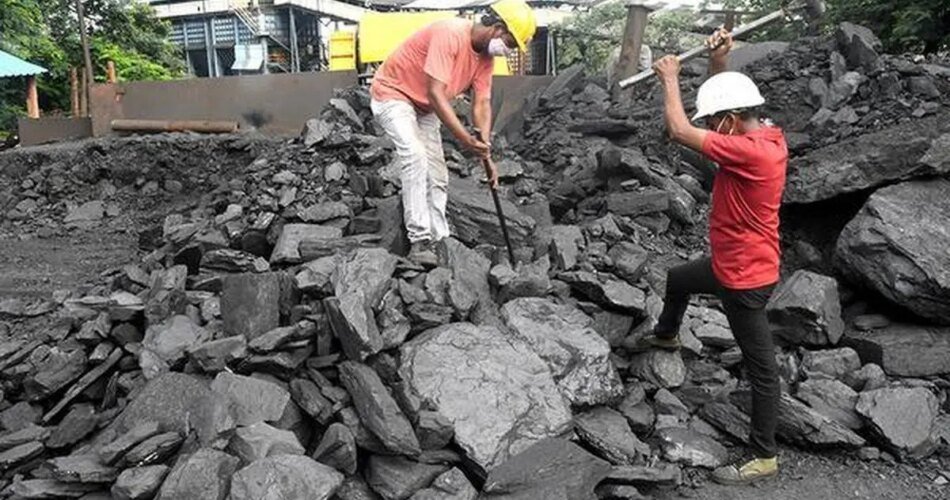
The global coking coal market will likely be volatile in the short-term as a decline in steel production and two rounds of the commodity’s price cuts will be offset by strict safety inspections of mines by China, analysts said. This is despite futures rising by 15 per cent in a week.
“In the short term, coking coal lacks a clear directional trend and is expected to remain range-bound with wide fluctuations,” said China commodity data group Sunsirs.
An explosion in Liushenyu coal mine in China’s Shanxi province in late May killed 82 people and triggered a State Council investigation into mine safety and regulatory compliance. Shanxi is central to China’s coking coal supply.
Research agency BMI, a unit of Fitch Solutions, said China has implemented the new Chinese Standards for Determining Major Accident Hazards in Coal Mines from July 1.
Output below capacity
“In our view, this will make it harder for Chinese coking coal mines to lift output aggressively in response to higher prices, keeping domestic supply tighter than it would otherwise be. Major Chinese producers are also likely to shift towards more conservative operating practices following the Liushenyu accident… As a result, even where mines have formally resumed operations, actual output is likely to remain below nameplate capacity in some areas,” it said.
This will keep Chinese coke plants active in the seaborne market through Q3, said the research agency.
Rasing its price forecast for 2026 by $15 a tonne, BMI said the upward revision reflected the residual impact of the Liushenyu coal mine explosion.
Price forecast
“We are lifting our 2026 price forecast for Australian premium hard coking coal to $225/tonne… Prices averaged $227 in Q1 and $238 in Q2, lifting the H1 average to $233,” it said.
BMI expects prices to ease slightly in Q3, averaging $220, before easing again to $215/tonne in Q4.
On Wednesday, coking coal on the Dalian Commodity Exchange in China was quoted at 1,392 Chinese yuan ($206) a tonne for September contracts.
Australia’s Office of the Chief Economist (AOCE) said coking coal prices are expected to be supported by continuous demand growth from India.
Strict oversight
Australian premium hard coking coal spot prices surged in early 2026 as disruptions to production from wet weather and Cyclone Koji coincided with elevated demand from India.
“Prices peaked at around$250 per tonne in early February, before easing to around $220 by the end of the March quarter. Prices firmed through April and held around $240 per tonne in May, supported by elevated diesel costs,” it said.
Sunsirs said in Shanxi, routine safety oversight remains strict, and 57 mines across the cities of Lüliang, Linfen, Changzhi, Taiyuan, and Jinzhong remain shut. This has affected a combined capacity of 72.5 million tonnes.
“High-pressure safety regulation persists; even for mines that have resumed operations, extraction intensity is tightly controlled, making it difficult for capacity utilisation rates to return to previous levels. There is limited room for an overall rebound in domestic coking coal production,” it said.
Mongolian check
On the other hand, upstream mines are maintaining prices, limiting the downside for spot prices and establishing a floor for the market.
“We expect production discipline to remain tighter (in China) in H2,” said BMI.
AOCE said while the weak Chinese property sector is expected to continue to weigh on steel demand, manufacturing’s share of demand has grown in recent years and will provide some upside going forward.
Sunsirs said strict safety inspections in Shanxi, slow mine resumptions, and a deep futures discount provide strong price support, making a sharp decline unlikely.
BMI said against uncertain domestic supply backdrop, demand for Australian cargoes will remain well-supported, although robust Mongolian exports will limit the upside for prices.
The Indian scenario
“Lower iron ore prices should give mills more flexibility to optimise raw material blends, although we do not view this as a standalone driver of coking coal demand given weak steel margins and soft end-use consumption,” it said.
On India, the research agency expects Indian crude steel production to rise by 9.3 per cent to 180 million tonnes in 2026, with H1 output already up 7.4 per cent y-o-y at 86 million tonnes. “India’s coking coal imports will rise in 2026 due to steel capacity additions and limited domestic supply of high-quality metallurgical coal,” it said.
El Niño offers a modest upside risk to Indian steel demand outlook, as drier-than-normal monsoon conditions should reduce disruption to construction activity during Q3, particularly across infrastructure, housing and industrial projects, it said.
Published on August 20, 2026
Source link