(Bloomberg) — President Donald Trump said US regulators are working to bring Hyperliquid, a fast-growing crypto platform, into the country, offering one of the clearest signals yet that the White House wants to pull a major piece of the industry’s offshore market infrastructure onshore.
Most Read from Bloomberg
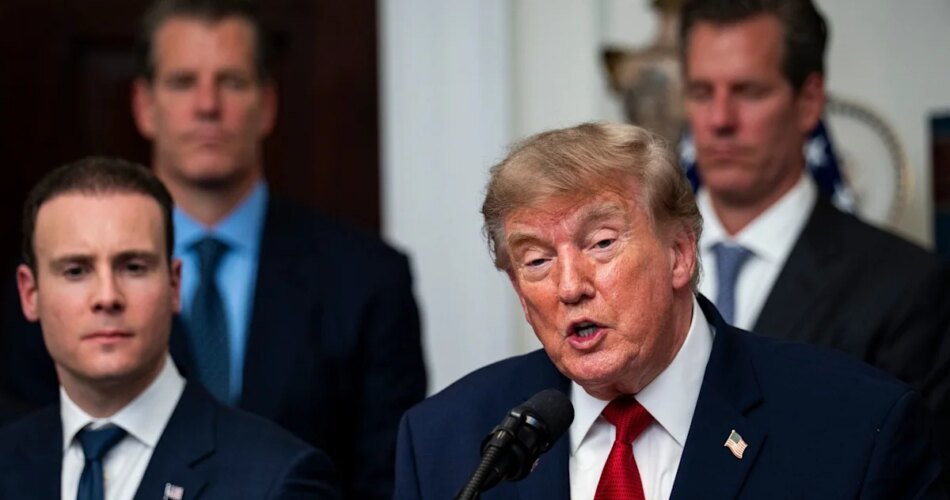
“I understand that Mike is also working to bring Hyperliquid into the United States in a fully compliant and legal fashion. Working very hard on that,” Trump said at a White House event, referring to Commodity Futures Trading Commission Chairman Michael Selig.
The comments immediately rippled through an ecosystem of assets tied to Hyperliquid, including HYPE, the platform’s cryptocurrency, and Hyperliquid Strategies Inc., a publicly traded company whose strategy is built around holding the token.
Shares of Hyperliquid Strategies, which trades under the ticker PURR, jumped as much as 31% Wednesday. The company is a digital-asset treasury, essentially a listed vehicle that accumulates cryptocurrency, and its focus on HYPE gives traditional equity investors an indirect way to bet on Hyperliquid’s growth.
Shares of mainstream US exchange operators fell to session lows. Cboe Global Markets declined as much as 6.1% while CME Group Inc. fell as much as 3.4%.
Hyperliquid is a crypto exchange best known for perpetual futures, leveraged contracts that allow traders to speculate on cryptocurrency prices without an expiration date. It’s captured Wall Street’s attention this year after drawing demand for contracts tied to real-world assets, including equities and commodities. The platform, which runs on its namesake blockchain, has grown into a major venue for a kind of trading that historically flourished largely outside the US because of regulatory restrictions.
“Trump’s comments on Hyperliquid and the immediate reaction in HYPE are another indication of how quickly the regulatory and political backdrop for digital assets is shifting,” said Ayesha Kiani, chief operating officer at Monarq Asset Management. “What’s notable isn’t just the price move but it’s that decentralized market infrastructure is increasingly entering mainstream policy conversations.”