
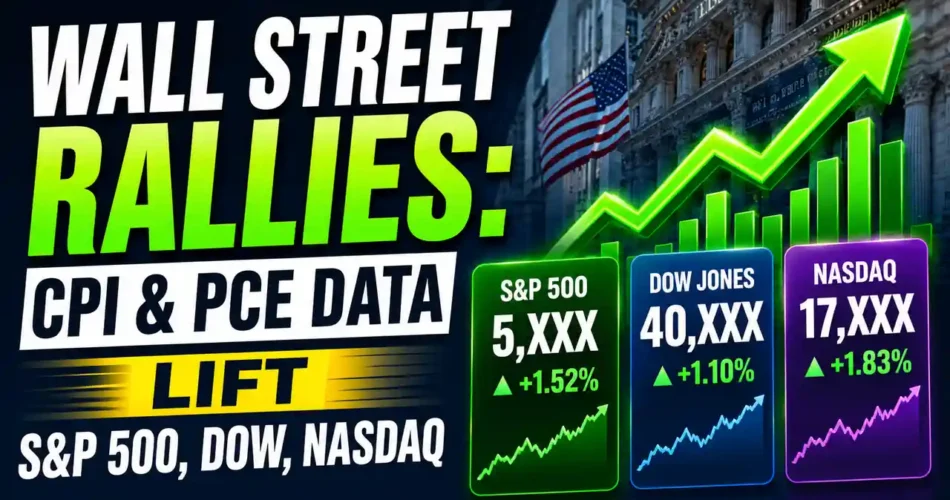
Wall Street Moves Higher After Mixed CPI and PCE Inflation Readings
U.S. stock markets climbed after mixed July 2026 inflation data, as investors parsed both the Consumer Price Index (CPI) and the Personal Consumption Expenditures (PCE) report for clues about the Federal Reserve’s next steps. The S&P 500, Dow Jones Industrial Average and Nasdaq Composite all posted gains as markets reacted to signs that headline inflation is easing in some areas while core pressures remain stubborn.
Markets react: gains across major indices
On the session, the S&P 500 led broad-market gains as investors favored cyclical and rate-sensitive sectors. The Dow posted steady gains driven by heavyweight industrial and financial names, while the Nasdaq climbed as technology and growth stocks recovered from recent volatility. Traders welcomed data showing cooling in several goods categories, which reduced the odds of immediate aggressive Fed action.
Index performance snapshot
- S&P 500: advanced on broad-based buying, with strength in consumer discretionary and financials.
- Dow Jones Industrial Average: rose as industrials and banks outperformed.
- Nasdaq Composite: climbed as large-cap tech and growth names regained momentum.
Daily moves reflect short-term positioning, but the reaction underscores how sensitive equities remain to inflation metrics and Fed policy expectations.
What the CPI and PCE reports showed
The headline Consumer Price Index (CPI) for July 2026 rose by a smaller-than-expected margin year-over-year, reflecting softer readings in energy and used-car prices. The Personal Consumption Expenditures (PCE) index, the Fed’s preferred gauge, showed a similar pattern: headline PCE cooled, while core PCE — which excludes food and energy — stayed above the Fed’s 2% target.
Key takeaways:
- Headline inflation: moderation in headline CPI and PCE eased fears of runaway inflation.
- Core inflation: persistent core readings indicate services and wage-driven components continue to pressure prices.
- Shelter and services: housing-related costs and certain service categories remained the hardest to tame.
Together, the CPI and PCE readings deliver a nuanced message: disinflation in several goods categories, but sticky prices in services that keep policymakers vigilant.
Why stocks rose despite mixed signals
Equities moved higher because markets focused on two themes: slower goods inflation and the possibility the Fed is approaching the end of its tightening cycle. Even with core measures elevated, a softer headline print allowed investors to trim the probability of near-term rate hikes.
- Repricing Fed expectations: futures markets reduced the odds of additional rate increases after the data.
- Earnings resilience: corporate results have been resilient in many sectors, supporting valuations.
- Flows and positioning: bargain hunting and momentum-driven buying after recent sell-offs boosted demand.
Investors are not assuming a rapid return to 2% inflation; instead, they’re betting on gradual easing that lowers the urgency for further tightening while keeping the Fed ready to act if inflation accelerates again.
Sector winners and losers
Sectors reacted unevenly. Financials gained on the prospect of stable yields supporting bank margins. Industrials and consumer discretionary outperformed as input-cost pressures eased. Utilities and some long-duration growth stocks lagged as yields stabilized and investors rotated into cyclicals.
- Winners: financials, industrials, consumer discretionary.
- Laggards: utilities, certain long-duration tech plays, defensive staples sensitive to yield moves.
This rotation reflects markets recalibrating risk and reward given slower goods inflation alongside persistent service-sector pressures.
Fed implications and the path ahead
The Federal Reserve faces a delicate balancing act. Mixed CPI and PCE readings complicate policy choices: cooling headline inflation allows flexibility, but elevated core measures keep officials vigilant. Policymakers will likely emphasize data dependence, waiting for clearer signs of disinflation in services before committing to rate cuts.
- Near-term Fed moves: market-implied odds for additional hikes fell, but cuts remain contingent on sustained core disinflation.
- Communication: Fed officials are expected to stress patience and readiness to tighten further if needed.
- Growth and labor: resilient GDP and a strong labor market could sustain upside inflation risks.
Ultimately, the Fed’s path depends on whether core inflation trends move decisively downward in the coming months.
What investors should watch next
Key indicators to monitor:
- Monthly CPI and PCE updates: continued moderation, especially in core measures, would bolster a case for policy easing.
- Employment reports: payrolls and wage growth are critical for assessing wage-driven inflation.
- Fed commentary and minutes: language will reveal how officials interpret recent data.
- Corporate guidance: company outlooks will indicate whether margins can withstand slower overall price growth.
These data points will help determine whether the current rally is sustainable or temporary.
Practical strategies for investors
With mixed inflation signals, a diversified, risk-aware approach is prudent:
- Diversify sectors: combine cyclical exposure (financials, industrials) with high-quality growth.
- Manage duration risk: adjust fixed-income allocations to guard against yield volatility.
- Prioritize fundamentals: favor companies with strong balance sheets and pricing power.
- Maintain liquidity: keep cash for opportunistic buying during spikes in volatility.
These measures aim to balance participation in any market upside while protecting capital if conditions shift.
Investor psychology and market behavior
Investor psychology plays a crucial role in market movements. After months of volatility driven by inflation fears and rate hike speculation, the latest data provided a psychological boost. Investors who had been on the sidelines began to re-enter the market, driven by the hope that the worst of the inflationary pressure may be behind us.
However, caution remains. Many investors are still wary of making large bets until there is more consistent evidence of disinflation. This cautious optimism is reflected in the market’s selective rotation into sectors that benefit from a stable economic environment, while defensive sectors lag behind.
Long-term outlook for investors
For long-term investors, the current environment presents both opportunities and challenges. On one hand, the potential for a Fed pivot could provide a tailwind for equities. On the other hand, persistent core inflation could lead to higher-for-longer interest rates, which would weigh on valuations.
Investors should focus on companies with strong fundamentals, sustainable competitive advantages, and the ability to generate cash flow in various economic conditions. Diversification across asset classes and geographies remains a key strategy for managing risk in an uncertain environment.
FAQ
Q: Why do both CPI and PCE matter for markets?
A: CPI is a widely followed consumer-price gauge that influences investor sentiment. PCE is the Fed’s preferred measure because it better captures changing consumption patterns and broader price dynamics. Together they shape expectations about inflation trends and Fed policy.
Q: If headline inflation falls but core inflation stays high, what happens?
A: It indicates volatile items like energy or used cars are easing, but underlying services and wage-driven costs remain elevated. That pattern suggests disinflation is uneven and may delay policy easing.
Q: Could the Fed still raise rates after these reports?
A: Yes. If upcoming data show core inflation reaccelerating, the Fed can resume tightening. Policymaking remains data-dependent.
Q: How should I position a portfolio after these inflation readings?
A: Seek balance: mix cyclical and high-quality growth exposures, manage interest-rate sensitivity in fixed income, and hold cash for opportunistic entries. Focus on companies with durable cash flows and pricing power.
Q: What sectors are likely to benefit from this environment?
A: Financials, industrials, and consumer discretionary sectors are likely to benefit from stable yields and easing input costs. Defensive sectors like utilities may lag as investors rotate into cyclicals.
Q: How long might this market rally last?
A: The sustainability of the rally depends on upcoming inflation data, Fed communication, and corporate earnings. Investors should remain vigilant and adjust their strategies based on new information.

