Nvidia’s effective monopoly over the most powerful chips has made U.S. export controls a key tool in Washington’s effort to preserve its advantage over China in the AI race.
But despite U.S. restrictions on exporting the company’s most advanced semiconductors, including GB300s, several Chinese firms have reportedly been able to access the chips’ compute power via data centers in Southeast Asia.
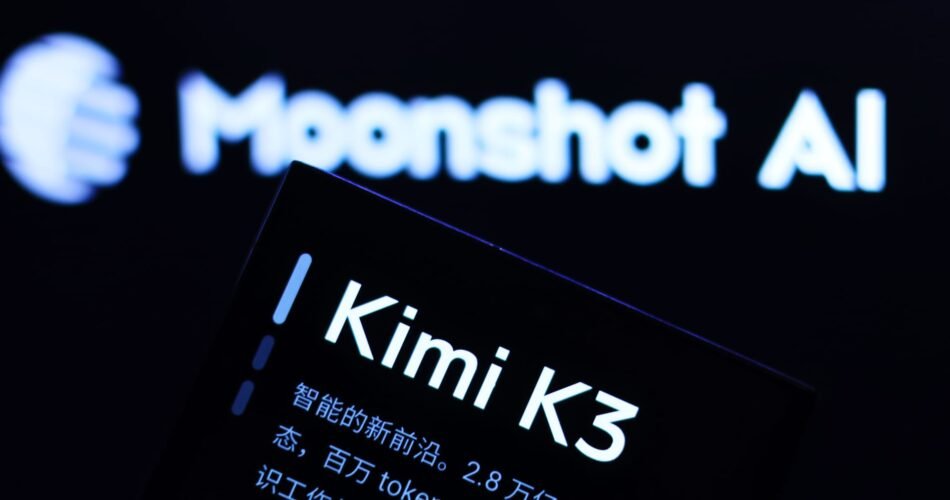
Less than a week after Moonshot AI released a new model in July, White House official Michael Kratsios accused the company of using Nvidia’s GB300 chips via a facility in Thailand.
Moonshot’s Kimi K3 is one of a wave of new Chinese AI models that have made leaps in performance in recent months, as the race for AI supremacy between Washington and Beijing intensifies. DeepSeek and Alibaba have also recently released new AI systems that have scored well on performance benchmarks.
Industry watchers say access to advanced compute via overseas cloud providers is a key factor in Chinese AI models gaining capability. U.S. legislation is being discussed to plug this loophole, but hurdles remain before it can have an impact.
How Chinese firms access Nvidia computing power overseas
Nvidia’s most advanced AI chips are under export restrictions to China, though some less capable semiconductors are allowed to be shipped to the country.
Cassia King, senior researcher on the Compute Policy team at the Institute for AI Policy and Strategy, told CNBC that Moonshot’s reported access to compute through a Thai facility was legal “so long as Moonshot isn’t actually buying and owning the physical hardware directly.”
She said the U.S. export control regime “controls physical AI chips. It does not cover remote access to those chips.”

When asked about Chinese firms accessing Nvidia compute overseas to train AI models, a White House official told CNBC: “The Trump administration has implemented the most rigorous export control regime in modern history, and remains committed to safeguarding America’s national and economic security.”
The U.S. Department of Commerce and Bureau of Industry and Security (BIS) did not respond to a request for comment.
Chinese hyperscalers including ByteDance, Alibaba and Tencent have reportedly accessed compute power from Nvidia chips remotely via other Asian nations, including Thailand, Malaysia and Japan. ByteDance and Tencent did not respond to a request for comment. Alibaba declined to comment.
ByteDance was working with Singapore-headquartered Aolani, a cloud provider with Nvidia chips, to access compute in Malaysia, according to a source familiar with the matter, who asked to remain anonymous when discussing private information. The Wall Street Journal first reported the arrangement in March.
Aolani told CNBC it worked “with a global and diversified customer base spanning customers from North America and Asia.”
“The companies we service do not have ownership, potential future claim or physical access to the chips that power our solutions,” the spokesperson added. “Any permitted access to our services, infrastructure or technology is fully compliant with all applicable regulations.”
AI infrastructure buildouts in Southeast Asia are booming as companies look to tap the growing market for advanced compute.
Real estate company JLL estimates that global data center capacity could roughly double to 200GW by 2030.
There are 31 planned 100MW+ data centers across Malaysia, Indonesia and Thailand, compared to just two today, according to data compiled by DC Byte.
What the Remote Access Security Act would change
Michelle Nie, a visiting fellow in technology and national security at think tank Center for a New American Security, told CNBC that loophole was “threatening U.S. national security.”
“The point of chip export controls is to deny China the ability to train frontier AI using advanced U.S. chips,” she added.
A proposed piece of legislation, the Remote Access Security Act (RASA), seeks to expand U.S. export controls to include the remote cloud-based access of critical hardware and software. It passed the House of Representatives in January but has yet to pass the Senate.
It faces potential industry pushback, Nie said, adding: “Cloud providers would bear the compliance burden of any KYC and customer verification requirements mandated by the bill.”
The passing of RASA alone wouldn’t solve the problem, Nie added, saying it would give the U.S. government “the authority to regulate remote access,” but it “would still need to create a rule to export-control remote access to advanced chips.”
The Bureau of Industry and Security (BIS) could push through a rule quickly, possibly in a “matter of days” with White House support, said King.
“The challenge will be in making a rule that’s effective and enforceable,” she added. “Policymakers will need to decide what compute is covered, who should be prohibited from remotely accessing the compute, and how to implement a robust know-your-customer scheme.”
Source link