
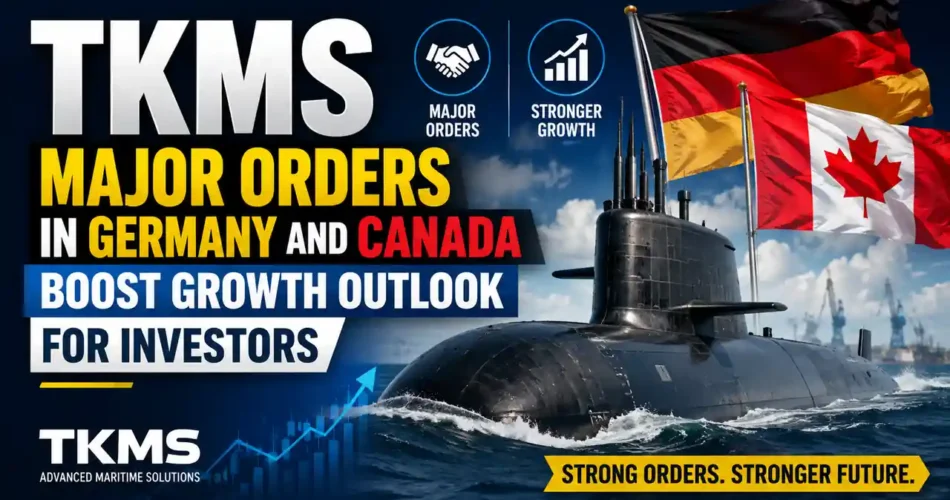
TKMS Major Orders in Germany and Canada Strengthen Growth Outlook for Investors
Thyssenkrupp Marine Systems, commonly known as TKMS, is attracting growing investor attention after reporting major business opportunities in Germany and Canada. The company’s strong order pipeline could support revenue growth, improve earnings visibility and strengthen its position in the international naval-defense market.
TKMS reported an order book of approximately €20.6 billion for the first half of fiscal 2025/26. The company also confirmed expectations for revenue growth of 2% to 5% during the fiscal year and an adjusted EBIT margin above 6%. Over the medium term, management is targeting average annual sales growth of around 10% and an adjusted EBIT margin above 7%. [Source: TKMS]
For investors, the development is important because defense businesses typically benefit from long-term government contracts, high barriers to entry and relatively predictable demand. However, the investment case will also depend on execution, delivery schedules, costs, funding arrangements and the broader direction of defense spending.
TKMS Receives Investor Attention
TKMS operates in the naval-defense industry, designing and building submarines, surface vessels and related maritime systems. Unlike companies that depend mainly on short product cycles, shipbuilders often work under multi-year contracts that can provide extended order visibility.
The company’s business activity in Germany and Canada suggests that its order pipeline remains strong. Major contracts can help a defense contractor plan production, secure supplier capacity and maintain a stable workforce over several years.
For investors, orders should not be confused with immediate revenue. A contract normally creates future business potential, while revenue is recognized progressively as engineering, manufacturing, testing and delivery milestones are completed.
Why Orders Matter
A large order backlog can offer several potential advantages:
- Greater visibility into future sales.
- Improved utilization of production facilities.
- Better planning for employees and suppliers.
- Potential economies of scale.
- Stronger credibility when competing for new contracts.
Investors should nevertheless examine whether new contracts are profitable and whether they include sufficient protection against inflation, wage increases and higher raw-material costs.
Germany Supports Domestic Demand
Germany remains a key market for TKMS. The country has been reviewing and expanding its defense capabilities in response to changes in the European security environment. Naval modernization has become an important part of this process, particularly in areas involving maritime surveillance, submarine capabilities and protection of critical infrastructure.
TKMS has received major German orders, including a contract connected with the German-Norwegian 212CD submarine program. The company has also been awarded a modernization contract for six Type 212A submarines by the German Navy. [Source: TKMS]
Domestic orders can be strategically valuable because they may provide a foundation for long-term production. Contracts from the company’s home market can also strengthen its references when it competes for international projects.
Benefits of German Contracts
German orders may support TKMS in several ways:
- They can provide a stable base of work for domestic shipyards.
- They may support investments in technology and production capacity.
- They can improve the company’s competitiveness in foreign tenders.
- They may deepen relationships with government and defense agencies.
- They can contribute to employment and industrial development in Germany.
From an investor perspective, domestic contracts may reduce dependence on a small number of overseas customers. At the same time, government procurement can involve lengthy approval processes, budget negotiations and political scrutiny.
Canada Adds International Potential
Canada represents another important opportunity for TKMS. The country has significant maritime responsibilities because of its large coastline and strategic position in the North Atlantic and Arctic regions. Modern naval capabilities may be required to address surveillance, sovereignty protection and changing security requirements.
TKMS submitted a non-binding offer and industry package for up to 12 submarines under Canada’s submarine procurement program, working alongside Germany and Norway. The Canadian opportunity could become a significant long-term international project if the company is selected. [Source: TKMS]
A Canadian contract would potentially expand TKMS’s international footprint and demonstrate that the company can compete in a demanding allied market. International orders are often viewed positively by investors because they diversify revenue beyond the company’s home country.
Strategic Importance of Canada
Canadian business could offer TKMS:
- Access to a major allied defense market.
- Greater geographic diversification.
- Opportunities for long-term maintenance and support services.
- Potential partnerships with Canadian companies.
- Stronger positioning in future naval procurement programs.
However, international defense projects can be complex. They may require local industrial participation, technology transfer, workforce development and cooperation with domestic suppliers. These requirements can create additional costs but may also produce stronger relationships with customers.
Backlog Could Improve Revenue Visibility
One of the main attractions of a defense contractor is the possibility of a substantial order backlog. A backlog represents contracted work that has not yet been fully delivered or recognized as revenue.
For investors, a growing backlog may make future sales easier to estimate than in industries that rely heavily on short-term consumer demand. It can also support investment in research, facilities and skilled personnel.
Backlog Is Not Guaranteed Profit
A strong backlog should not automatically be interpreted as a guarantee of higher earnings. Shipbuilding programs can experience:
- Delays in design and engineering.
- Supply-chain shortages.
- Labor and skills constraints.
- Changes in customer requirements.
- Inflation-related cost pressure.
- Penalties or contract renegotiations.
- Unexpected technical problems.
The quality of the backlog matters as much as its size. Investors should look for information about contract margins, payment schedules, milestone structures and possible cost overruns.
Defense Spending Creates a Favorable Environment
Governments across Europe and other allied countries have been reassessing defense budgets. This has created opportunities for manufacturers of submarines, naval vessels, radar systems, combat systems and maritime technology.
TKMS may benefit from this environment because naval procurement is usually linked to national security priorities. Governments may also favor suppliers with established technical experience and the ability to provide long-term support.
Long-Term Demand Drivers
Several factors could support demand for naval-defense products:
- Increased focus on maritime security.
- Protection of undersea cables and energy infrastructure.
- Greater surveillance requirements in northern waters.
- Modernization of aging naval fleets.
- Expansion of allied defense cooperation.
- Demand for advanced conventional submarines.
These trends may create opportunities, but defense procurement remains dependent on government budgets. A change in political priorities, fiscal conditions or procurement strategy could affect the timing of future contracts.
What Investors Should Monitor
Investors evaluating TKMS should look beyond headline order announcements. The company’s future performance will depend on whether it converts contracts into profitable deliveries.
Key Financial Indicators
Important areas to monitor include:
- Order intake.
- Order backlog.
- Revenue growth.
- Operating profit and margins.
- Free cash flow.
- Net debt or cash position.
- Capital expenditure.
- Research and development spending.
- Contract provisions.
- Cash received from customers.
Revenue growth without corresponding cash generation may require closer examination. Large shipbuilding programs can consume significant working capital before final payments are received.
Operational Execution
The ability to deliver vessels on schedule is equally important. Investors should track production progress, testing milestones and customer acceptance dates.
A company may secure an attractive contract but still face financial pressure if costs rise faster than expected. Efficient project management and reliable supplier networks are therefore central to the investment case.
Potential Risks for Shareholders
Although major orders may strengthen TKMS’s outlook, investors should consider several risks.
Program Delays
Naval projects can take years to complete. Delays may postpone revenue and increase labor, financing and material costs.
Cost Inflation
Steel, electronics, machinery and specialized components can become more expensive. If contracts have limited price-adjustment protection, inflation may reduce margins.
Customer Concentration
Dependence on a small number of government customers may expose the company to changes in political decisions or procurement schedules.
Regulatory and Export Restrictions
Defense exports are subject to government approvals and international regulations. A change in export policy could affect the timing or completion of overseas projects.
Workforce Shortages
Shipbuilding requires highly skilled engineers, technicians and project managers. Difficulty recruiting and retaining workers could limit production capacity.
Valuation Risk
If investor optimism causes a company’s valuation to rise sharply, even strong operational performance may not be enough to support further share-price gains. Investors should compare valuation with expected earnings, cash flow and execution risk.
Investor Outlook for TKMS
The major orders and opportunities in Germany and Canada provide a constructive foundation for TKMS’s growth outlook. They may improve backlog visibility, support capacity utilization and strengthen the company’s position among international naval-defense suppliers.
The most important question for investors is whether TKMS can execute these programs efficiently. Consistent order growth, improving margins, disciplined cash management and timely delivery would make the outlook more convincing.
Investors should also distinguish between short-term market excitement and long-term business performance. Defense stocks can react strongly to contract announcements, but the lasting value of an order depends on profitability and cash generation over the project’s full life cycle.
Frequently Asked Questions
What is TKMS?
TKMS, or thyssenkrupp Marine Systems, is a naval-defense company involved in submarines, naval vessels and maritime defense technologies.
Why are the Germany and Canada opportunities important?
They could strengthen TKMS’s backlog, improve future revenue visibility and expand the company’s presence in both domestic and international defense markets.
Do new orders immediately increase TKMS revenue?
No. Revenue is generally recognized as work progresses through engineering, construction, testing and delivery milestones.
Is a larger backlog always positive for investors?
A larger backlog can improve visibility, but it does not guarantee higher profits. Investors must also assess contract margins, execution risks, cost inflation and cash-flow requirements.
What should investors monitor after the announcements?
Investors should monitor order intake, backlog growth, revenue, operating margins, free cash flow, delivery schedules, contract provisions and management guidance.
Could TKMS benefit from higher defense spending?
Higher defense budgets may create additional procurement opportunities for naval contractors. However, government approval processes and budget timing can affect when those opportunities become actual contracts.
What are the main risks?
Key risks include project delays, cost overruns, supply-chain problems, labor shortages, export restrictions, customer concentration and excessive valuation.
Is this article investment advice?
No. This article is provided for general educational purposes and should not replace independent research or advice from a qualified financial professional. Investors should review official company announcements, financial statements and risk disclosures before making an investment decision.
External Government of Canada References
Defence and Marine Procurement – Government of Canada
Defence Procurement Processes, Announcements and Strategy – Government of Canada
2026–27 Departmental Plan – Department of National Defence
Disclaimer: This article is not a recommendation to buy or sell any security. Investment decisions involve risk, and past performance does not guarantee future results.

