(Bloomberg) — Bond traders are changing gears again. After a raft of data helped all but price out interest rate hikes for the rest of the year, wagers in the options market are looking to hedge the risk that the Federal Reserve pivots to cutting rates in 2027.
Most Read from Bloomberg
The dovish wagers are at odds with recent moves in the Treasuries market, which saw yields on long-dated bonds climb to multiyear highs as a Fed on hold would keep inflation running above its target for longer. Traders in options closely linked to the central bank’s policy path are instead focusing on signs of weakness in the US economy prompting a reversal.
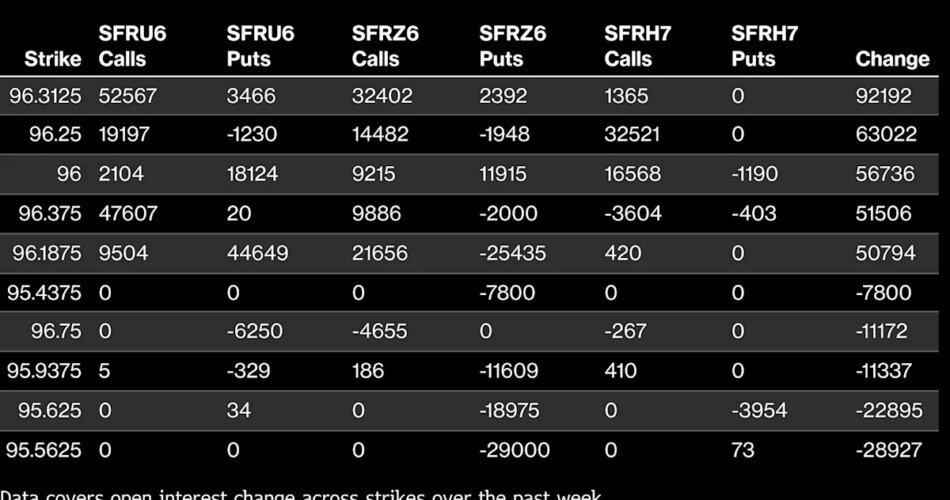
The activity first emerged after data last week showed inflation and consumer demand eased in July, tapering expectations for a rate hike at the Sept. 16 policy meeting. Players in the options market started putting money to work in positioning that looks to fade the amount of rate hikes priced into the swaps market over the coming months. Some options are even looking to hedge rate cuts by the middle of next year.
There is “less concern about a hike,” said Jeff Schuh, head of the interest rates desk at Constitution Capital, noting that recent positions betting on that outcome are being liquidated. “We’ve seen numerous September and December put sellers giving up and liquidating.”
Standout trades over the past week have included buyers of September trades targeting the Fed on hold at the next policy meeting, along with buyers of call options with March and June 2027 expiries that would benefit from a shift in market pricing toward rate cuts.
Interest rate swaps are currently pricing in nine basis points of a quarter-point hike into the September policy meeting and around 40 basis points of tightening by June next year.
Along with a soft inflation print, traders have been digesting nonfarm payroll data that showed the US economy unexpectedly lost 23,000 jobs in July. Subsequent data showed US retail sales fell by the most in more than a year in July while consumer sentiment weakened.
In the last week, September rate hike odds were halved from as high as 68% just two weeks ago, Schuh noted. That “tells you a lot about the street’s view on the negative nonfarm data and soft CPI data.”