

Bezos Among Investors Nearing Deal for Liverpool Soccer Team
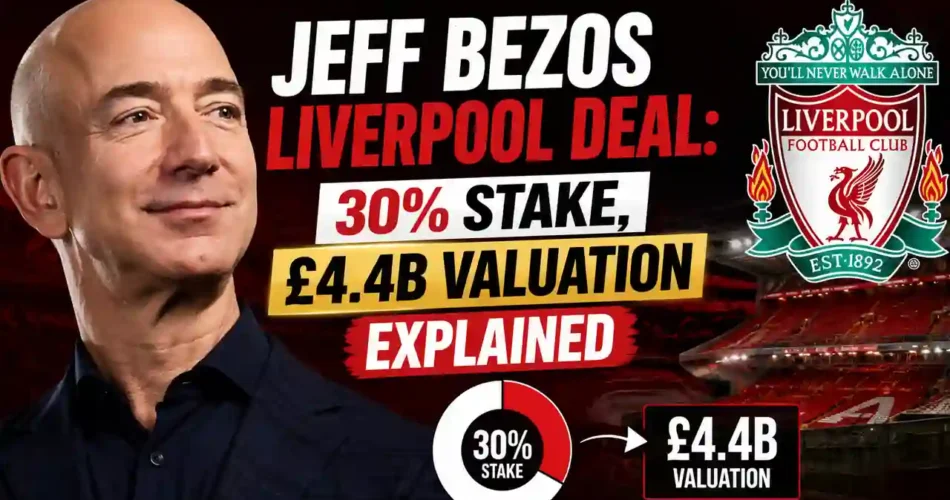
Amazon founder Jeff Bezos is part of a high-profile investor group that is close to finalizing a deal to buy a significant minority stake in Liverpool Football Club. The consortium, led by British-Indian businessman Amit Bhatia, is reportedly nearing an agreement to acquire around one-third of the Premier League giants from current owners Fenway Sports Group (FSG), in a transaction that would value the club at roughly £4.4 billion ($6 billion).
Who Is in the Investor Group?
Jeff Bezos: The Headline Name
Jeff Bezos, one of the world’s richest individuals and founder of Amazon and Blue Origin, has emerged as the most prominent name linked to the Liverpool deal. While he has not previously owned a major sports team, reports indicate he has held discussions about joining the Bhatia-led syndicate and is now close to committing capital.
His potential entry marks a surprise move into European football ownership and instantly elevates the profile of the bid. Bezos’ involvement also signals strong financial backing, given his vast personal wealth and global business influence.
Amit Bhatia: The Deal Leader
The consortium is being led by Amit Bhatia, a British-Indian entrepreneur and former co-owner of Queens Park Rangers (QPR). Bhatia recently stepped away from QPR, a move widely seen as preparation to focus on the Liverpool opportunity.
Bhatia is connected to the Mittal family through marriage; his father-in-law is steel magnate Lakshmi Mittal. This network provides additional financial depth and credibility to the group’s proposal.
Eduardo Saverin and Other Backers
Alongside Bezos and Bhatia, Facebook co-founder Eduardo Saverin is also reported to be part of the investor group. The presence of multiple billionaire tech entrepreneurs strengthens the consortium’s ability to fund a deal of this scale and adds a modern, innovation-focused dimension to the ownership structure.
Sources suggest the group may still be in talks with other potential investors to round out funding before a formal announcement.
What Stake Is Being Bought and at What Valuation?
Size of the Stake
The consortium is targeting a strategic minority investment of approximately 30% of Liverpool FC. This would not change overall control of the club, which remains with FSG, but it would give the new investors substantial influence and a meaningful share of future revenues and growth.
FSG has publicly confirmed that a group led and represented by Amit Bhatia has expressed interest in making a “strategic minority investment” in Liverpool, though it has not commented on specific names like Bezos until now.
Valuation and Price Tag
Multiple reports place the total valuation of Liverpool in this deal at around £4.4 billion, or about $6 billion. For a 30% stake, the consortium is said to be offering roughly £1.35 billion ($1.8 billion).
If completed, this would be one of the highest valuations ever recorded for a football club, reflecting Liverpool’s strong commercial performance, global fanbase, and consistent competitiveness in the Premier League and European competitions.
Why This Deal Matters for Liverpool FC
Financial Muscle for Growth
New capital from Bezos and fellow investors could help Liverpool invest more aggressively in:
- Squad depth and top-tier transfers
- Stadium and training-ground upgrades
- Global commercial partnerships and brand expansion
With football economics increasingly driven by scale and innovation, the involvement of tech billionaires could accelerate Liverpool’s ability to compete financially with state-backed rivals and other elite clubs.
Strategic Direction and Governance
While FSG will retain control, a 30% stake held by a consortium with Bezos’ profile is likely to bring:
- Greater scrutiny on long-term strategy
- Pressure to modernize operations and digital offerings
- Potential new revenue streams tied to technology, media, and data
Investors of this caliber typically seek not just financial returns but also influence over how the club is run, especially in areas like global branding, fan engagement, and content.
Fan Reaction and Club Identity
Liverpool’s supporters have a strong sense of ownership and identity. Any change in the shareholder structure naturally raises questions about:
- Commitment to sporting success over pure profit
- Respect for club culture and fan voice
- Long-term vision versus short-term gains
FSG has enjoyed broad support from fans over the years due to its relatively prudent and football-focused approach. The key test for the new investors will be to show they share that philosophy while adding value.
How This Fits Into Broader Trends in Football Ownership
Tech Billionaires Entering Sports
Bezos’ potential move mirrors a wider trend of technology entrepreneurs investing in sports assets. From NBA and NFL teams in the U.S. to European football clubs, wealthy founders see sports franchises as:
- High-profile, emotionally resonant brands
- Platforms for media, content, and technology experiments
- Long-term appreciating assets with global reach
Liverpool, with its history, fanbase, and Premier League status, fits neatly into this playbook.
Minority Stakes as a Strategic Entry Point
Rather than buying clubs outright, many new investors are opting for significant minority stakes. This approach allows them to:
- Share risk with existing owners
- Learn the business before committing more capital
- Influence strategy without full operational responsibility
For FSG, selling a 30% stake unlocks value while keeping control, creating a hybrid ownership model that could become more common in top-tier football.
What Could Happen Next?
Timing of the Announcement
Reports suggest FSG is preparing to confirm the deal as early as this week, though exact timing can shift as final terms are negotiated and regulatory checks are completed.
An official statement is expected to outline:
- The size of the stake being sold
- The valuation of the club
- The identities of key investors, potentially including Bezos
Regulatory and League Approvals
As with any major football ownership change, the deal will need to satisfy:
- Premier League owners’ and directors’ tests
- Relevant financial and legal due diligence
- Any required competition or foreign investment reviews
Given the stature of the investors and the structure as a minority stake, significant regulatory hurdles are not expected, but formal clearance is still required.
Impact on Transfer Market and Operations
If the deal closes during or just before a transfer window, it could:
- Boost confidence among agents and selling clubs about Liverpool’s financial strength
- Enable more ambitious recruitment if new owners back sporting investment
- Strengthen negotiations for commercial and sponsorship deals
Over time, fans and analysts will watch for concrete changes in transfer policy, infrastructure projects, and revenue growth to judge the success of the new ownership arrangement.
FAQ
Is Jeff Bezos buying Liverpool FC?
No. Bezos is not buying the whole club. He is part of a consortium led by Amit Bhatia that is close to acquiring around a 30% minority stake in Liverpool from FSG, while FSG retains overall control.
Who else is in the investor group besides Bezos?
The group is led by Amit Bhatia and reportedly includes Facebook co-founder Eduardo Saverin, along with backing connected to the Mittal family. Other investors may also join before the deal is finalized.
How much is Liverpool being valued at in this deal?
The transaction is expected to value Liverpool at approximately £4.4 billion ($6 billion). The consortium is offering around £1.35 billion ($1.8 billion) for a 30% stake.
Will this change who runs Liverpool day to day?
Not immediately. FSG will remain the controlling owner and continue to run the club’s football and business operations. However, the new investors are likely to have a strong voice in strategic decisions and long-term planning.
When will the deal be officially announced?
Reports indicate an announcement could come as early as this week, pending final negotiations and necessary approvals. Exact timing may vary as details are finalized.
What does this mean for Liverpool fans?
In the short term, little may change on the pitch. Over time, fans can expect the new owners to push for growth in revenue, brand, and possibly squad investment, while FSG maintains its focus on sustainable, football-first management.
For more on football ownership rules, see Football Governance Act 2025.
Company details for Liverpool Football Club Limited are available on Companies House.
For the UK government’s latest football reform updates, see the Football Governance Bill announcement.

