
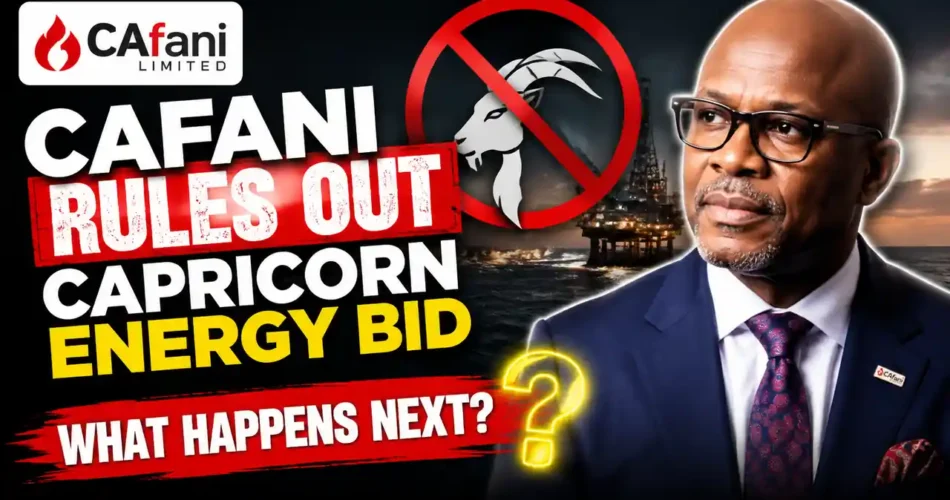
Cafani Group Rules Out Bid for Capricorn Energy
The Cafani Group has confirmed that it will not make a takeover offer for Capricorn Energy, bringing an end to months of speculation surrounding a potential acquisition of the UK-listed oil and gas company. The decision was announced through Alamadiyaf al-Masiyyah For Trading Company Limited, a Cafani Group-affiliated investment vehicle.
The announcement means that Cafani and parties acting in concert with it are generally restricted from making another offer for Capricorn Energy for six months under Rule 2.8 of the UK Takeover Code, subject to certain exceptions. [Source: Capricorn Energy announcement]
Cafani ends takeover discussions
Cafani’s decision follows several months of discussions and takeover speculation. Capricorn Energy had previously disclosed that it received a number of non-binding proposals from Alamadiyaf al-Masiyyah for a possible all-cash transaction.
However, the proposals did not develop into a formal offer under Rule 2.7 of the Takeover Code. The latest announcement confirms that the Cafani Group-affiliated company does not intend to proceed with a bid for Capricorn Energy.
What the announcement means
A statement under Rule 2.8 is commonly described as a formal decision not to make an offer. It provides clarity to the target company and its shareholders by ending the immediate uncertainty surrounding a possible bid.
Cafani and its related parties will generally be unable to announce another offer for Capricorn during the six-month restricted period. Exceptions may apply if the Takeover Panel gives consent or if specific circumstances set out in the announcement occur.
Why Cafani had been linked to Capricorn
Cafani’s interest attracted attention because Capricorn Energy owns oil and gas assets in Egypt and had become the subject of wider takeover activity. Energy companies and investment groups have increasingly examined mature producing assets as they look for cash-generating projects and opportunities to expand their portfolios.
Capricorn’s assets, production profile and position in the Egyptian energy sector made the company a potential target for buyers seeking exposure to international oil and gas operations. Its takeover situation also developed during a period when several parties were assessing the company’s value.
Initial proposals were non-binding
The proposals linked to Cafani were not binding offers. A non-binding proposal allows a potential buyer to explore a transaction without committing to complete the acquisition. Further negotiations, due diligence, financing arrangements and regulatory considerations are normally required before a firm offer can be announced.
Earlier reports indicated that Capricorn was seeking additional information about the proposed funding arrangements. The absence of a firm offer ultimately left the transaction subject to continued uncertainty.
Possible reasons for the withdrawal
Cafani did not provide a detailed explanation for its decision in the statement. As a result, the precise reasons behind the withdrawal are not publicly established. Several factors may influence a buyer’s decision to abandon a potential energy acquisition.
Valuation and financing challenges
One possible factor is a difference between the price expected by Capricorn shareholders and the value Cafani was prepared to offer. Takeover negotiations can fail when the buyer’s financial model does not support the seller’s valuation expectations.
Financing is another important consideration. Large acquisitions require clear evidence that the buyer can fund the transaction and meet the conditions imposed by regulators and takeover authorities. If funding arrangements take longer than expected or become less certain, a potential bidder may decide not to proceed.
Energy market uncertainty
Oil and gas companies are exposed to changes in commodity prices, production levels, operating costs and government policies. These factors can significantly affect the future cash flow of an acquisition target.
A buyer may also reassess a transaction if the expected benefits from acquiring the company become less attractive because of market volatility, geopolitical risks or changing investment priorities.
Other takeover interest in Capricorn
Cafani’s withdrawal does not necessarily remove all takeover interest in Capricorn Energy. The company has also been involved in discussions with other potential buyers, including Genel Energy and Samos Energy, according to reports about the developing takeover process.
Genel Energy agreed to acquire Capricorn in an all-cash transaction valued at approximately $360 million, while Samos Energy was reported to have made a proposal worth about £268.8 million. These developments show that Capricorn remained the focus of competing strategic interest even as Cafani reviewed its position. [Source: Reuters report]
Potential impact of competing offers
The presence of other bidders can affect the outcome in several ways. Competition may support a higher price for Capricorn shareholders, but it can also make the process more complex if proposals are subject to different conditions, financing arrangements and regulatory approvals.
Investors will likely focus on whether any alternative offer becomes legally binding and whether the proposed transaction receives the necessary approvals. Until completion, takeover announcements remain subject to conditions and other risks.
What it means for Capricorn shareholders
For shareholders, Cafani’s decision removes one possible source of a takeover premium. A takeover premium is the additional amount a buyer may offer above the company’s undisturbed market price to encourage shareholders to approve a transaction.
However, the effect on shareholders will depend on the broader takeover process. If another bidder remains committed, the withdrawal may have a limited impact. If competing proposals fail, investors may instead assess Capricorn based on its standalone business outlook.
Key issues investors may monitor
- Whether another potential buyer announces a firm offer.
- The proposed price and payment structure of any competing transaction.
- Capricorn Energy’s production, cash flow and operating performance.
- Oil and gas prices and their effect on future revenue.
- Regulatory approvals and other conditions attached to a takeover.
- Any changes to Capricorn’s strategic plans or shareholder-return policy.
Impact on the energy sector
The development reflects the cautious approach often taken in energy-sector mergers and acquisitions. Buyers must consider commodity-price risk, asset quality, production costs, environmental obligations and the long-term direction of energy policy before committing significant capital.
Private investment groups may be interested in producing assets with established cash flows, but they generally remain selective. A transaction must offer a clear path to value creation and must be supported by credible financing and an acceptable risk profile.
What happens next?
The next stage of Capricorn Energy’s takeover process will depend mainly on other interested parties and the company’s strategic decisions. The board may continue discussions with alternative bidders, evaluate formal proposals or focus on operating the business independently.
The Rule 2.8 restrictions provide a period of certainty regarding Cafani’s position, although the stated exceptions mean that the situation cannot be considered completely irreversible. Investors should rely on official company announcements and regulatory disclosures when assessing future developments.
Frequently Asked Questions
Did Cafani Group make a formal offer for Capricorn Energy?
No. The Cafani Group-affiliated investment vehicle confirmed that it does not intend to make an offer. Its earlier proposals were described as non-binding and did not become a firm takeover offer.
What is Rule 2.8 of the UK Takeover Code?
Rule 2.8 applies when a potential bidder announces that it does not intend to make an offer. The bidder and parties acting in concert with it are generally restricted from making another offer for the target for six months, unless an applicable exception or regulatory consent applies.
Can Cafani make another bid immediately?
Generally, no. Cafani and related parties are subject to the restrictions connected with the Rule 2.8 announcement. However, the restrictions may be lifted in certain circumstances, including events specified in the announcement or with the consent of the Takeover Panel.
Does Cafani’s withdrawal mean Capricorn Energy will not be acquired?
No. Cafani’s decision only rules out its own offer at this stage. Other potential bidders may continue discussions or make proposals, depending on the terms and conditions of the takeover process.
How could the decision affect Capricorn’s share price?
The removal of a potential bidder can reduce expectations of a takeover premium and may influence short-term trading. Longer-term performance will depend on any competing offers, Capricorn’s financial results, production levels and wider energy-market conditions.
What should investors do now?
Investors should review official announcements, takeover terms, company results and regulatory filings before making decisions. A takeover process can change quickly, and market speculation should not be treated as confirmation of a completed transaction.

