

This has turned out to be another sensational year for equities. Since early June, the timeless Dow Jones Industrial Average (^DJI -0.20%), broad-based S&P 500 (^GSPC -0.17%), and technology-propelled Nasdaq Composite (^IXIC -0.28%) have catapulted to fresh highs.
However, danger is always lurking on Wall Street. While the July inflation report is fanning the flames of optimism among investors and lowering the odds of a rate hike when the Federal Open Market Committee (FOMC) meets in mid-September, Trumpflation (inflation that’s specifically driven by President Donald Trump’s policies) has shown no signs of reprieve — and that’s a big problem.
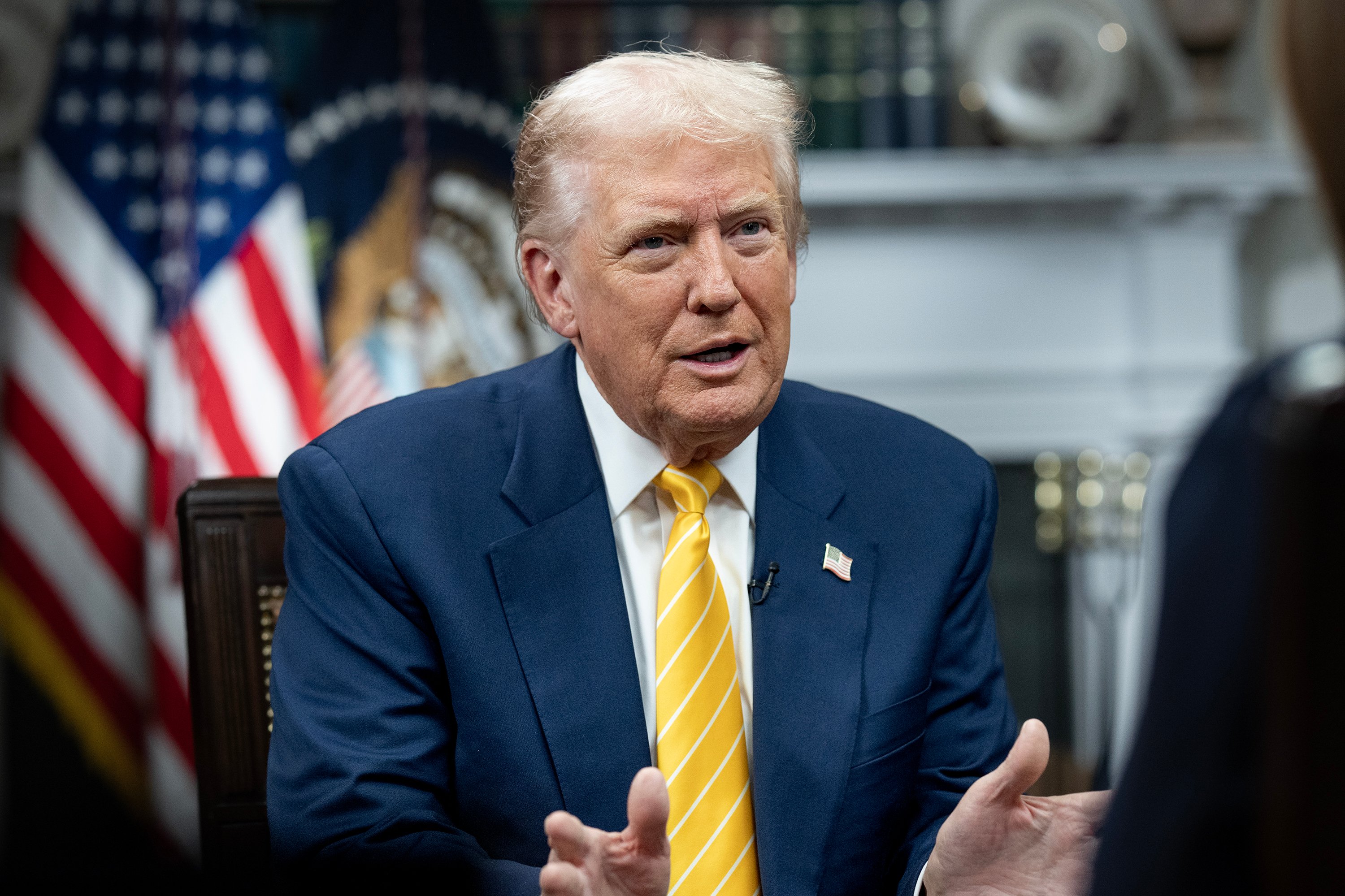
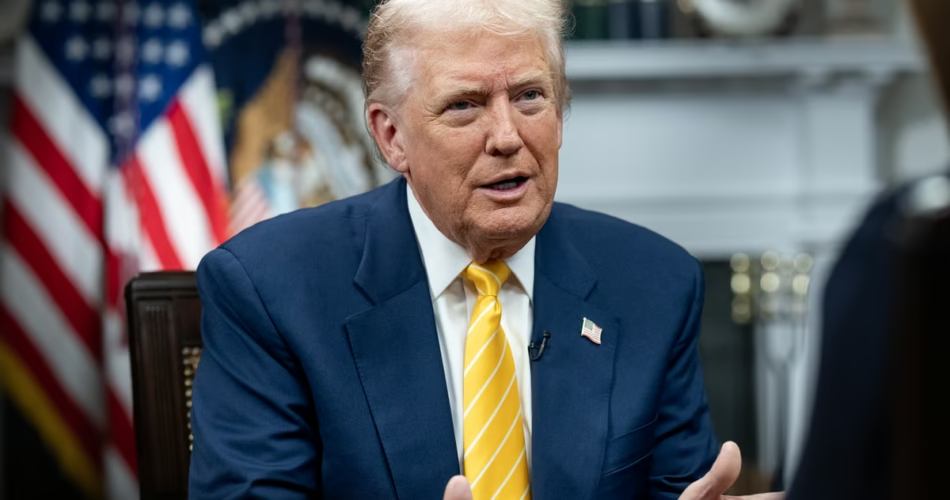
Trumpflation may be a serious problem for a high-flying stock market. Image source: Official White House Photo by Joyce N. Boghosian.
The July inflation report comes with a silver lining for Wall Street
Historically, there’s nothing the stock market values more than predictability, and that’s precisely what it got on Aug. 12, when the Bureau of Labor Statistics published the July inflation data.
For a second consecutive month, trailing 12-month (TTM) inflation eased. After TTM inflation peaked at a three-year high of 4.2% in May, headline inflation retreated to 3.5% in June and now 3.4% in July — exactly as economists had forecast.
BREAKING: July CPI inflation falls to 3.4%, in-line with expectations of 3.4%
Core CPI inflation falls to 2.5%, also in-line with expectations of 2.5%.
Month-over-month CPI inflation rose +0.1%, up from -0.4% in June.
US stock market futures are rising on the news.
— The Kobeissi Letter (@KobeissiLetter) August 12, 2026
The primary catalyst responsible for calming nerves and dramatically lowering the odds of a September interest rate hike is energy prices. Since peace talks between the U.S. and Iran ramped up in June, crude oil prices have fallen well below their recent highs. Although fuel prices react almost immediately when energy supply shocks occur and take their sweet time adjusting lower once a supply shock abates, a substantial decline in crude oil prices has meaningfully lowered the headline inflation rate.
But while this key figure is falling, a far more important inflation metric indicates that Trumpflation isn’t improving.

Image source: Getty Images.
Trumpflation isn’t improving, which is a recipe for disaster for the stock market
Core Personal Consumption Expenditures (PCE), which excludes volatile food and energy expenses, has hardly budged in the wake of declining headline inflation. It fell slightly from a nearly three-year high of 3.4% in May to 3.3% in June, and is projected by the Cleveland Fed’s Inflation Nowcasting tool to hover at roughly 3.3% in July and August.
Despite declining energy prices, Core PCE forecasts suggest that the effects of Trumpflation, including the president’s tariffs, are hitting the broader economy and adversely impacting consumers’ pocketbooks. The cost for businesses to adjust transportation routes and/or their supply chains due to the Iran war is being passed on to consumers.
64.
As in 64 consecutive months with US core inflation above the Fed’s 2% target.
The Fed has lost all credibility when it comes to fighting inflation.
Kevin Warsh talks a big game, but talk is cheap. The Fed should have hiked rates yesterday and ended QE. pic.twitter.com/HvimqfW6WW
— Charlie Bilello (@charliebilello) July 30, 2026
While headline inflation is somewhat cooperating with the Fed’s plan to stabilize prices, Core PCE is not, courtesy of Trumpflation. This may leave Fed Chair Kevin Warsh and his FOMC peers with little choice but to tackle above-average inflation head-on.
The Fed raising interest rates wouldn’t be ideal for the second-priciest stock market in history. Wall Street’s No. 1 catalyst, the artificial intelligence (AI) revolution, is somewhat reliant on debt for the ongoing data center build-out. If lending costs rise and the AI infrastructure build-out slows even marginally, it could force investors to rethink the stock market’s premium valuations.
The longer Trumpflation remains unchecked, the bigger the consequences for Wall Street.

