

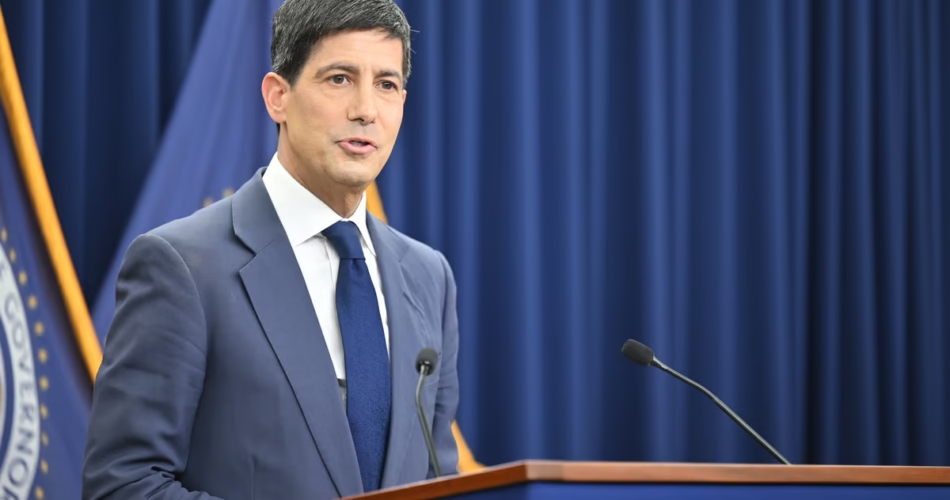
Kevin Warsh stepped into a tough situation when he was sworn in as the new Federal Reserve chair in May. President Donald Trump appointed him in hopes that Warsh would cut interest rates — or, at a minimum, leave them unchanged. However, the macroeconomic dynamics were converging in a way that heightened expectations that the Fed would have to increase rates.
But Warsh’s job now appears to be much easier, thanks to two economic reports released by the U.S. Bureau of Labor Statistics (BLS) in recent weeks. Here’s what’s likely next for the stock market as a result.
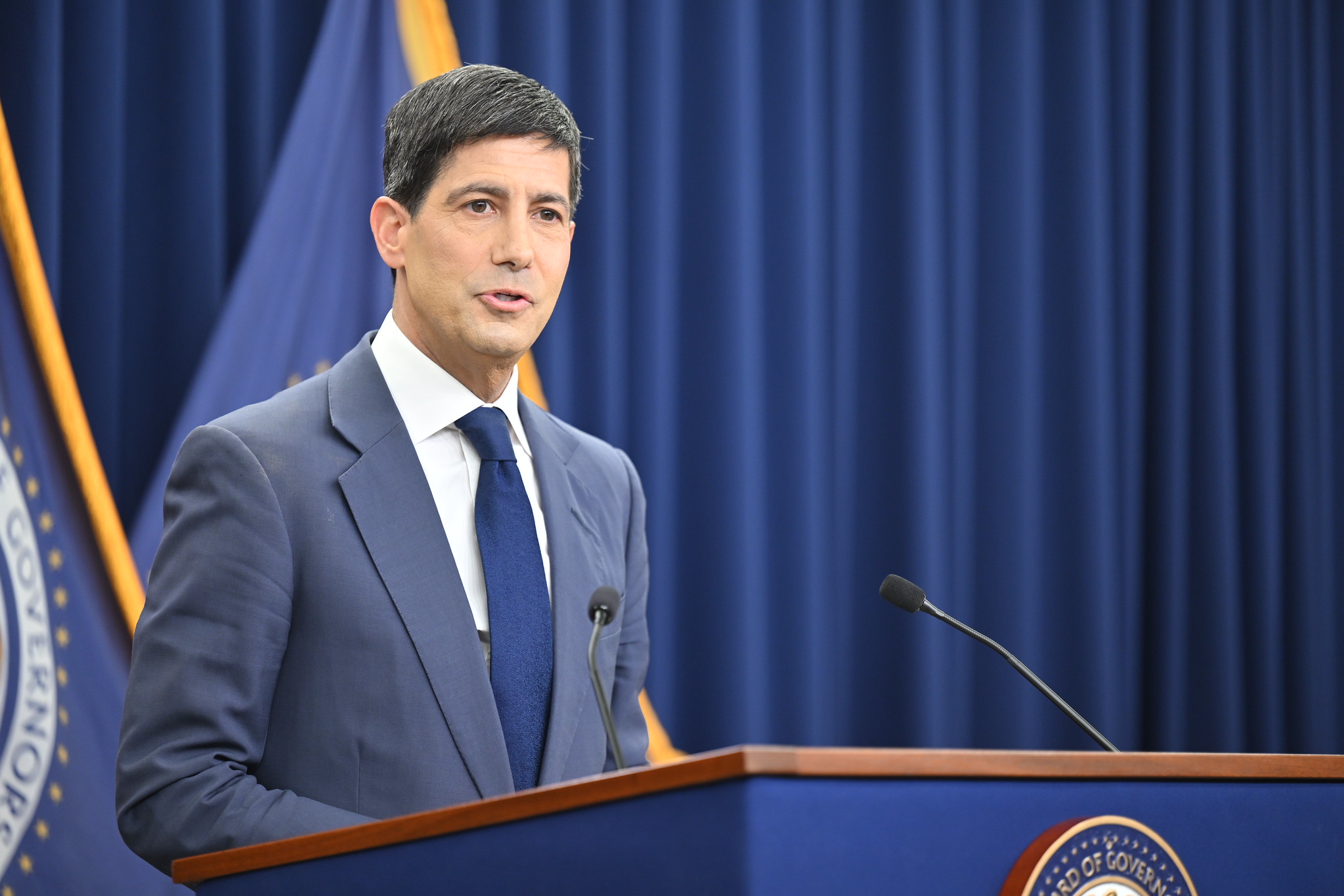
Image source: Official Federal Reserve Photo.
Two reports that reduce pressure on Warsh
Only a few weeks ago, CME Group‘s (CME +0.97%) FedWatch put the probability that the Federal Open Market Committee (FOMC) would raise rates at its September meeting at roughly 82%. Today, the estimated odds of a rate hike in September are only 33%. What’s behind the wild downward swing?
First, the BLS released the July jobs numbers on Aug. 7, 2026. Economists were expecting an increase of 83,000 jobs. Instead, the U.S. economy lost roughly 23,000 jobs. The news was even worse than that. BLS also revised both May and June jobs growth down by a combined 103,000 jobs.
Second, the BLS announced the July inflation numbers five days later. The Consumer Price Index (CPI) rose 0.1% from June and 3.4% year over year. However, this reflected an improvement from the 3.5% inflation increase in June.
The Fed has a dual mandate to maximize employment and stabilize prices. When employment is strong and inflation is rampant, rate hikes are more likely. However, when job numbers are weak and inflation appears to be under control, the Fed doesn’t feel pressure to raise rates.
What it means for the stock market (probably)
The Federal funds futures used by CME’s FedWatch clearly indicate that traders don’t look for a rate hike next month. Kalshi’s prediction market concurs, with a 73% chance that the FOMC will leave rates unchanged at its September meeting.
Generally speaking, this should be positive for the stock market. Many investors were expecting an imminent rate hike not long ago. Such an increase seems unlikely now. Most stocks perform better when interest rates aren’t rising.
Which stocks benefit the most if the Fed doesn’t jack up rates? Growth stocks that are especially rate-sensitive rank at the top of the list. This group includes artificial intelligence (AI) infrastructure stocks such as CoreWeave (CRWV -0.97%) and Nebius Group (NBIS +8.88%).
Unsurprisingly, the tech-heavy Nasdaq-100 index has outperformed the S&P 500 (^GSPC -0.17%) and Dow Jones Industrial Average (^DJI -0.20%) so far in August. However, all three indexes rose following the release of the two BLS reports.
Caution is still advised for investors.
Investors shouldn’t celebrate too much just yet, though. Neither the relatively mild inflation report nor the worse-than-expected jobs report establishes clear trends.
Just because a rate hike is less likely next month doesn’t mean that one won’t be on the way soon. CME’s FedWatch pegs the probability that the FOMC will increase rates at its December 2026 meeting at 67.6%. The number jumps to 73.6% for the FOMC’s January 2027 meeting and 79.5% for its March 2027 meeting. Kalshi shows the chances of a rate hike before July 2027 at 68%.
Importantly, no one knows what will happen with the Iran war. An escalation in the conflict could still push oil prices — and inflation — higher. If inflation rises, so will the probability of a Fed rate increase.
The bottom line is that Warsh’s job could be easier only for a short period. Investors looking ahead could still find defensive stocks, including consumer staples and healthcare, attractive amid the uncertainty.
Source link

