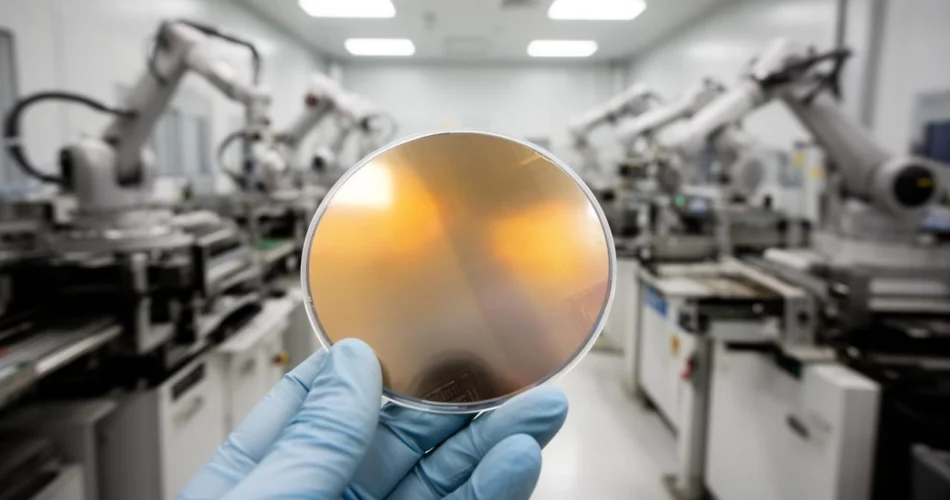
Explosive demand for artificial intelligence (AI) semiconductors is further concentrating the global foundry market around its leader. Market research firm Counterpoint Research released data on the 28th showing that TSMC (2330.TW) captured a staggering 73% share of the global pure-play foundry market in the second quarter of this year — not only holding steady at this level for two consecutive quarters, but also widening its lead over second-place Samsung Electronics to 66 percentage points, creating an extreme landscape of “one dominant player with the rest chasing.”
Counterpoint Research’s report shows that the global pure-play foundry market grew 29% year-over-year in Q2 2026, with growth momentum driven primarily by surging AI chip orders and capacity reallocation. Notably, supply shortages are not limited to advanced nodes — mature process nodes are also facing supply-demand imbalances, giving a competitive edge to players with diversified process portfolios.
TSMC’s strong performance is anchored in technology node advancement and sustained capacity utilization. The report notes that TSMC’s 2nm process has entered volume production, 3nm capacity continues to expand, and supply remains tight across 8-inch and 12-inch mature nodes as well as advanced packaging, keeping the company’s utilization rates elevated. Compared with a 71% share in the same period last year, TSMC’s 73% in Q2 2026 represents a 2-percentage-point gain.
By contrast, South Korea’s Samsung Electronics held its foundry market share at 7% in Q2, flat from the previous quarter but down 1 percentage point from 8% a year earlier. The South Korean tech giant is currently focused on improving yield rates for its “SF2” 2nm process. Counterpoint Research analysis indicates that demand for Samsung’s 4nm (SF4) and 5nm (SF5) nodes, along with wafer price increases in the first half of the year, were the primary factors supporting its revenue growth — but the failure to gain market share suggests Samsung remains in catch-up mode in the advanced process race.
Among the world’s top five pure-play foundries, China’s largest contract chipmaker SMIC held steady in third place with a 5% share. SMIC benefited in Q2 from solid domestic Chinese demand and an influx of overseas orders, posting record quarterly revenue. Taiwan’s United Microelectronics (2303.TW) ranked fourth with a 4% share, while U.S.-headquartered GlobalFoundries took fifth at 3%.
Historical data published by Counterpoint Research shows that this “one dominant player” dynamic is not a single-quarter anomaly, but rather a structural trend that has persisted for more than a year:
| Company | Q1 2025 | Q2 2025 | Q3 2025 | Q4 2025 | Q1 2026 | Q2 2026 |
|---|---|---|---|---|---|---|
| TSMC | 68% | 71% | 72% | 72% | 73% | 73% |
| Samsung Electronics | 9% | 8% | 7% | 7% | 7% | 7% |
| SMIC | 6% | 5% | 5% | 5% | 5% | 5% |
| United Microelectronics | 5% | 5% | 4% | 4% | 4% | 4% |
| GlobalFoundries | 4% | 4% | 4% | 4% | 3% | 3% |
| Others | 8% | 8% | 7% | 8% | 7% | 7% |
Source: Counterpoint Research, “Global Pure Foundry Market Share: Quarterly,” updated August 26, 2026.
Over six quarters, TSMC’s market share has climbed steadily by 5 percentage points, while Samsung, SMIC, United Microelectronics, and GlobalFoundries have all seen gradual declines — indicating that the competitive barriers in advanced process technology are rising, rather than this being merely the result of single-quarter order fluctuations.
▲ Global pure-play foundry market share distribution in Q2 2026 — TSMC alone commands nearly three-quarters of the market.
From a broader market structure perspective, the top two players combined now account for 80% of the market, underscoring the deepening consolidation trend in the foundry industry. In particular, the gap between TSMC and Samsung has widened from 63 percentage points a year ago to 66 percentage points, reflecting that at this critical juncture of exploding AI chip demand, the chasm between the technology leader and its pursuers is widening rather than narrowing.
Looking ahead to the second half of the year, Counterpoint Research expects the foundry market’s growth momentum to continue. The firm notes that wafer average selling prices (ASP) are expected to rise further, and utilization rates at major pure-play foundries will likely remain at relatively elevated levels. Against the backdrop of continued expansion in AI servers, high-performance computing (HPC), and edge computing applications, the supply tightness in advanced processes and advanced packaging is unlikely to ease in the near term.
For the semiconductor supply chain, TSMC’s leadership in 2nm and 3nm processes makes it an indispensable partner for AI chip designers. If Samsung cannot achieve a breakthrough in SF2 yield rates, it will struggle to narrow the market share gap with TSMC in the coming quarters. Meanwhile, SMIC’s expansion in mature process nodes could put pressure on second-tier players such as United Microelectronics and GlobalFoundries, leading to further divergence in competitive dynamics within the industry.
It is also worth noting that even as Intel aggressively expands its foundry business in a bid to enter the AI chip outsourcing market, its share has yet to crack the global top ten pure-play foundries. Semiconductor industry analysis platform Semiecosystem points out that this underscores the depth of the moat in advanced process foundry services — even traditional IDM giants with capital and process R&D capabilities cannot easily shake the advantages that incumbent leaders have built in customer relationships and yield performance in the short term.
Source link
Author

- Ytv Market News
- Share-market news writer and analyst with deep experience covering equities, commodities, forex, and cryptocurrencies for readers in the USA, UK, Canada, and Australia. Ytv Market News delivers timely market updates, practical trading insights, and clear explanations of macro and company-level catalysts that move prices. Combines on-the-ground financial reporting with technical analysis, using concise charts and actionable ideas to help investors and traders make smarter decisions.
Latest entries
 Crypto NewsAugust 29, 2026BCRA purchases exceeded $14 billion barrier in 2026
 Investing InsightsAugust 29, 2026Is Energy Transfer’s US$5.9 Billion Gas Buildout Altering The Investment Case For ET?
 UsaAugust 29, 2026Why Elastic Stock Snapped Back Today
 AustraliaAugust 29, 20262 Vanguard ETFs I’d buy and hold for a decade