

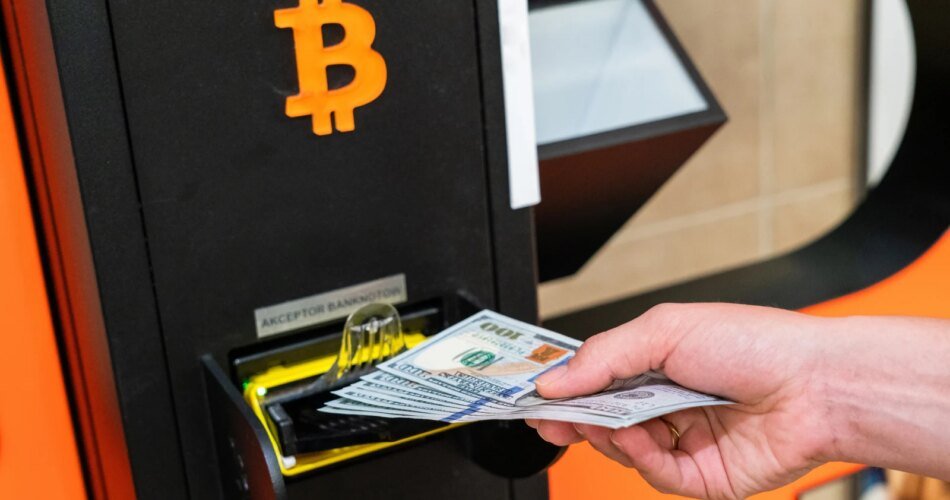
The U.S. Commodity Futures Trading Commission (CFTC) has issued an emergency “Pause Before You Pay” directive, officially identifying demands to transfer money through crypto ATMs as a major warning sign of fraud.
The regulator’s stern warning was prompted by a prolonged infrastructure crisis this summer and FBI data showing that Americans’ losses from such schemes surged 58% over the past year, exceeding $388 million.
You Might Also Like

According to the agency, any instructions from someone claiming to represent a government agency or bank to use a public crypto terminal should now be unequivocally treated as “Probably a Scam” — a strong indicator of fraud.

How the U.S. is getting rid of crypto ATMs
Over the past several months, the U.S. market has seen a series of events critical to the industry that effectively led to the dismantling of the sector following the release of data on enormous losses:
- May: The largest U.S. operator, Bitcoin Depot, filed for bankruptcy and disconnected all 9,700 of its terminals after losing revenue amid mandatory user verification requirements.
- June: Authorities in Delaware and New Jersey passed strict laws targeting crypto ATMs, recognizing them as tools for transferring stolen funds.
- July: The global crypto ATM market shrank by nearly one-third, losing 10,836 machines, of which 10,380 were removed in the United States alone.
- August: Minnesota authorities introduced a total ban, ordering operators to remove all terminals from public places by the end of the year.
Crypto ATMs became an ideal tool for criminals because of the way they work. Unlike the traditional banking system, where the movement of funds can be tracked and blocked, these terminals send money in only one direction.
Scammers posing as employees of the Internal Revenue Service (IRS), banks, or the technical support departments of major technology companies use psychological pressure and create an artificial sense of urgency.
You Might Also Like

Driven by fear, the victim withdraws cash, finds the nearest machine and scans a QR code provided by the criminals. The fiat money is instantly converted into cryptocurrency and sent to an anonymous wallet, after which a chargeback becomes technically impossible.
As a final argument, the CFTC reiterates a basic international standard of financial hygiene — no legitimate government agency, bank or major corporation will ever demand that money be sent through a crypto ATM or via gift cards. Any mention of these payment methods during a conversation is a direct sign that the person on the other end of the line is a criminal.
Source link
Author

- Ytv Market News
- Share-market news writer and analyst with deep experience covering equities, commodities, forex, and cryptocurrencies for readers in the USA, UK, Canada, and Australia. Ytv Market News delivers timely market updates, practical trading insights, and clear explanations of macro and company-level catalysts that move prices. Combines on-the-ground financial reporting with technical analysis, using concise charts and actionable ideas to help investors and traders make smarter decisions.
Latest entries
 CanadaAugust 28, 2026Canada Nickel Closes Non-Brokered Private Placement for Gross Proceeds of C$21.0 Million
 Crypto NewsAugust 28, 2026Meme Coin TRUMP Soars 20% Daily After a Major Announcement: What Are the Next Targets?
 Crypto NewsAugust 28, 2026Spot Trading on Decentralized Exchanges Reaches 13.6%, Sparking Debate on DeFi Governance
 Investing InsightsAugust 28, 2026Rubrik (RBRK) Stock May Be 5% Above Fair Value On Cash Flow


