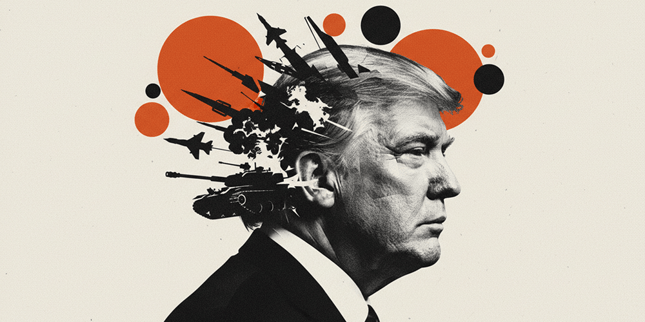
US President Donald Trump held a press conference on Thursday at the White House, where he insisted that Canada has been “ripping” off the US on trade and that it wants to be “treated like a state.”
He also spoke about Russian President Vladimir Putin and stated that “millions of barrels of Oil are coming through Hormuz daily.”
Key highlights:
Canada has been ripping US off on trade for a long time.
Canada wants to be treated like state, but not a state.
We don’t want Canada to make cars for the US.
Tariffs on (Canadian) cars at a substantial level.
Canada is the worst to deal with on trade.
Putin will not attack nato territory.
Has had good talks with Putin.
On Iran: They’re in big trouble.
Russia has behaved quite well with the Strait of Hormuz.
On punishing Putin for Iran business: Who says I’m not
Millions of barrels of oil are coming through Hormuz daily.
Risk sentiment FAQs
In the world of financial jargon the two widely used terms “risk-on” and “risk off” refer to the level of risk that investors are willing to stomach during the period referenced. In a “risk-on” market, investors are optimistic about the future and more willing to buy risky assets. In a “risk-off” market investors start to ‘play it safe’ because they are worried about the future, and therefore buy less risky assets that are more certain of bringing a return, even if it is relatively modest.
Typically, during periods of “risk-on”, stock markets will rise, most commodities – except Gold – will also gain in value, since they benefit from a positive growth outlook. The currencies of nations that are heavy commodity exporters strengthen because of increased demand, and Cryptocurrencies rise. In a “risk-off” market, Bonds go up – especially major government Bonds – Gold shines, and safe-haven currencies such as the Japanese Yen, Swiss Franc and US Dollar all benefit.
The Australian Dollar (AUD), the Canadian Dollar (CAD), the New Zealand Dollar (NZD) and minor FX like the Ruble (RUB) and the South African Rand (ZAR), all tend to rise in markets that are “risk-on”. This is because the economies of these currencies are heavily reliant on commodity exports for growth, and commodities tend to rise in price during risk-on periods. This is because investors foresee greater demand for raw materials in the future due to heightened economic activity.
The major currencies that tend to rise during periods of “risk-off” are the US Dollar (USD), the Japanese Yen (JPY) and the Swiss Franc (CHF). The US Dollar, because it is the world’s reserve currency, and because in times of crisis investors buy US government debt, which is seen as safe because the largest economy in the world is unlikely to default. The Yen, from increased demand for Japanese government bonds, because a high proportion are held by domestic investors who are unlikely to dump them – even in a crisis. The Swiss Franc, because strict Swiss banking laws offer investors enhanced capital protection.
Source link
Author

- Ytv Market News
- Share-market news writer and analyst with deep experience covering equities, commodities, forex, and cryptocurrencies for readers in the USA, UK, Canada, and Australia. Ytv Market News delivers timely market updates, practical trading insights, and clear explanations of macro and company-level catalysts that move prices. Combines on-the-ground financial reporting with technical analysis, using concise charts and actionable ideas to help investors and traders make smarter decisions.
Latest entries
 CanadaAugust 27, 2026A Metal With Few Substitutes, a Supply Chain Dominated by One Country, and a Historic Canadian Tungsten Zone Being Drill-Tested Again
 AustraliaAugust 27, 2026Prescient Therapeutics’ First-in-Class Cancer Drug Approaching a Pivotal Moment
 Crypto NewsAugust 27, 2026Bithumb Wins Lawsuit After Mistakenly Crediting Users With 620,000 BTC: Report
 Crypto NewsAugust 27, 2026Project that Turns Recycling into Income Wins UNICEF’s Youth Challenge Blockchain