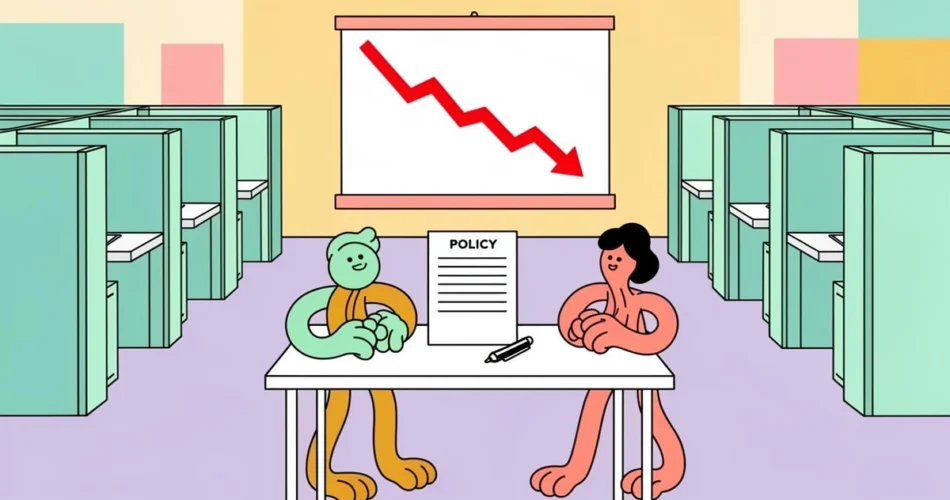
Prudential Life Insurance announced on the 27th that new insurance policy contracts in the April–June 2026 quarter fell 90.7% year-on-year to approximately 7,000 contracts. The company has essentially suspended new policy sales since early February in response to a series of issues involving improper monetary receipts and investment solicitation practices, which directly impacted results.
Premium and other income, equivalent to revenue, declined 2.7% to ¥333.4 billion (approximately $2.1 billion). The company held 4.62 million policies as of March 2026, and premium income from existing policyholders provided a floor that limited the revenue decline from the sales suspension.
New policy face amount plunged 92.8% year-on-year to ¥69 billion (approximately $433.1 million). New contracts did not fall to zero even during the sales suspension because the company has continued to make exceptions for corporate insurance, where companies enroll their employees. If new hires were not allowed to join, it would create unfairness among employees, so these contracts have been maintained on an exceptional basis.
Meanwhile, net profit rose sharply by 64.6% year-on-year to ¥10.6 billion (approximately $66.5 million). The increase was driven by higher investment returns amid rising interest rates, as well as the release of funds that had been set aside to guard against asset price fluctuation risk. Core profit also increased.
The company has booked approximately ¥4.7 billion (approximately $29.5 million) in compensation costs for victims to date. No additional compensation costs were recorded in this quarter’s results.
The situation surrounding Prudential Life Insurance remains unresolved, as it has come to light that improper monetary receipts may have occurred even during the sales suspension period. Rebuilding the governance framework, including the involvement of parent company Prudential Financial, has become an urgent priority.
What these results reveal is a structure in which the financial damage is limited for the time being, supported by stock revenue from existing contracts, while the sharp decline in new contracts is steadily eroding the future revenue base. The life insurance business model relies on collecting premiums from policyholders over the long term to stabilize earnings, and a 90% drop in new contracts will directly feed through to premium and other income several years down the road.
If the sales suspension continues for an extended period, concerns extend beyond the burden of maintaining the sales network to secondary effects such as declining morale and attrition among sales staff, as well as withdrawal from agency channels. How far the company can restore trust in its sales operations and rebuild its distribution system while investment returns are buoying performance in a rising interest rate environment will determine its medium-term trajectory.
Source link
Author

- Ytv Market News
- Share-market news writer and analyst with deep experience covering equities, commodities, forex, and cryptocurrencies for readers in the USA, UK, Canada, and Australia. Ytv Market News delivers timely market updates, practical trading insights, and clear explanations of macro and company-level catalysts that move prices. Combines on-the-ground financial reporting with technical analysis, using concise charts and actionable ideas to help investors and traders make smarter decisions.
Latest entries
 AustraliaAugust 27, 2026Prescient Therapeutics’ First-in-Class Cancer Drug Approaching a Pivotal Moment
 Crypto NewsAugust 27, 2026Bithumb Wins Lawsuit After Mistakenly Crediting Users With 620,000 BTC: Report
 Crypto NewsAugust 27, 2026Project that Turns Recycling into Income Wins UNICEF’s Youth Challenge Blockchain
 Stock Market VideosAugust 27, 2026What Venezuela means for Gold and Silver Investors – Alan Hibbard