


The USD/CAD pair is seen consolidating near the weekly high and trading around the 1.3875-1.3880 region during the Asian session on Thursday amid mixed fundamental cues.
Despite the optimism over the reopening of the Strait of Hormuz, the protracted Russia-Ukraine war keeps a floor under crude oil prices. This is seen offering some support to the commodity-linked Loonie, though US-Canada trade tensions keep a lid on any meaningful gains. Furthermore, the slightly hot US inflation data released on Wednesday keeps Federal Reserve (Fed) rate hike bets on the table, which helps the US Dollar (USD) preserve overnight gains and acts as a tailwind for the USD/CAD pair.
The Russia-Ukraine war has entered a new phase, with both countries causing destruction with long-range drones and missiles. Ukraine’s attacks this week included a drone strike that caused a massive fire at one of Russia’s largest oil refineries, near Nizhny Novgorod, on Wednesday. Meanwhile, Iran and Oman have agreed on shipping routes through the Strait of Hormuz, though Tehran warned that the waterway will not fully reopen. This, in turn, is seen lending some support to crude oil prices.
Meanwhile, the US Commerce Department reported on Wednesday that the Personal Consumption Expenditures (PCE) Price Index rose 3.7% over the 12 months through July, unchanged from the previous month. The reading, however, was above consensus estimates and pointed to still sticky inflation, backing the case for policy tightening by the US Federal Reserve (Fed). Moreover, the geopolitical risk premium remains in play, supporting the buck and the USD/CAD pair.
Traders also seem reluctant to place aggressive directional bets and opt to wait for more cues about the Fed’s future policy path. Hence, the focus will remain glued to Fed Chair Kevin Warsh’s scheduled speech at the Jackson Hole Symposium on Friday. In the meantime, Thursday’s release of the usual Weekly Initial Jobless Claims could influence the USD. Apart from this, oil price dynamics might provide some impetus to the USD/CAD pair and contribute to producing short-term trading opportunities.
USD/CAD 4-hour chart
Technical Analysis
The USD/CAD pair keeps a mildly bearish near-term tone under the 100-period Simple Moving Average (SMA) on the 4-hour chart, at 1.3902. Moreover, price action suggests upside attempts remain capped by this overhead level, leaving spot prices vulnerable to further consolidation or a corrective pullback.
However, a sustained break above this barrier would ease the current downside bias and open the way for a stronger recovery toward the next relevant hurdle near the 1.3955-1.3960 horizontal zone.
(The technical analysis of this story was written with the help of an AI tool. Know more.)
Canadian Dollar FAQs
The key factors driving the Canadian Dollar (CAD) are the level of interest rates set by the Bank of Canada (BoC), the price of Oil, Canada’s largest export, the health of its economy, inflation and the Trade Balance, which is the difference between the value of Canada’s exports versus its imports. Other factors include market sentiment – whether investors are taking on more risky assets (risk-on) or seeking safe-havens (risk-off) – with risk-on being CAD-positive. As its largest trading partner, the health of the US economy is also a key factor influencing the Canadian Dollar.
The Bank of Canada (BoC) has a significant influence on the Canadian Dollar by setting the level of interest rates that banks can lend to one another. This influences the level of interest rates for everyone. The main goal of the BoC is to maintain inflation at 1-3% by adjusting interest rates up or down. Relatively higher interest rates tend to be positive for the CAD. The Bank of Canada can also use quantitative easing and tightening to influence credit conditions, with the former CAD-negative and the latter CAD-positive.
The price of Oil is a key factor impacting the value of the Canadian Dollar. Petroleum is Canada’s biggest export, so Oil price tends to have an immediate impact on the CAD value. Generally, if Oil price rises CAD also goes up, as aggregate demand for the currency increases. The opposite is the case if the price of Oil falls. Higher Oil prices also tend to result in a greater likelihood of a positive Trade Balance, which is also supportive of the CAD.
While inflation had always traditionally been thought of as a negative factor for a currency since it lowers the value of money, the opposite has actually been the case in modern times with the relaxation of cross-border capital controls. Higher inflation tends to lead central banks to put up interest rates which attracts more capital inflows from global investors seeking a lucrative place to keep their money. This increases demand for the local currency, which in Canada’s case is the Canadian Dollar.
Macroeconomic data releases gauge the health of the economy and can have an impact on the Canadian Dollar. Indicators such as GDP, Manufacturing and Services PMIs, employment, and consumer sentiment surveys can all influence the direction of the CAD. A strong economy is good for the Canadian Dollar. Not only does it attract more foreign investment but it may encourage the Bank of Canada to put up interest rates, leading to a stronger currency. If economic data is weak, however, the CAD is likely to fall.
Source link
Author

- Ytv Market News
- Share-market news writer and analyst with deep experience covering equities, commodities, forex, and cryptocurrencies for readers in the USA, UK, Canada, and Australia. Ytv Market News delivers timely market updates, practical trading insights, and clear explanations of macro and company-level catalysts that move prices. Combines on-the-ground financial reporting with technical analysis, using concise charts and actionable ideas to help investors and traders make smarter decisions.
Latest entries
 Crypto NewsAugust 27, 2026StarkWare tests quantum-resistant Bitcoin transaction on mainnet
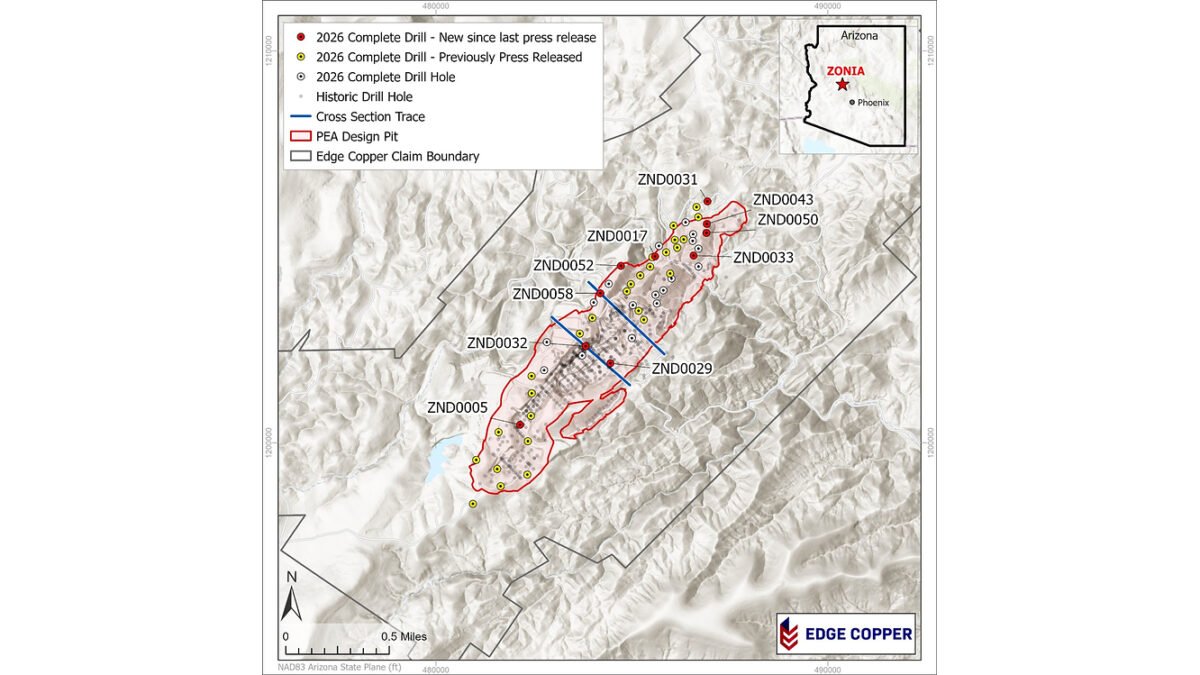 CanadaAugust 27, 2026Edge Copper Intersects 287 ft at 0.73% Total Copper, including 190 ft at 1.01% Total Copper, at Zonia
 AustraliaAugust 27, 2026Mithril Silver and Gold Confirms 550m of Strike at Copalquin-Zaragoza Structure
 Crypto NewsAugust 27, 2026What is Coinbase chasing after being two months behind?

