

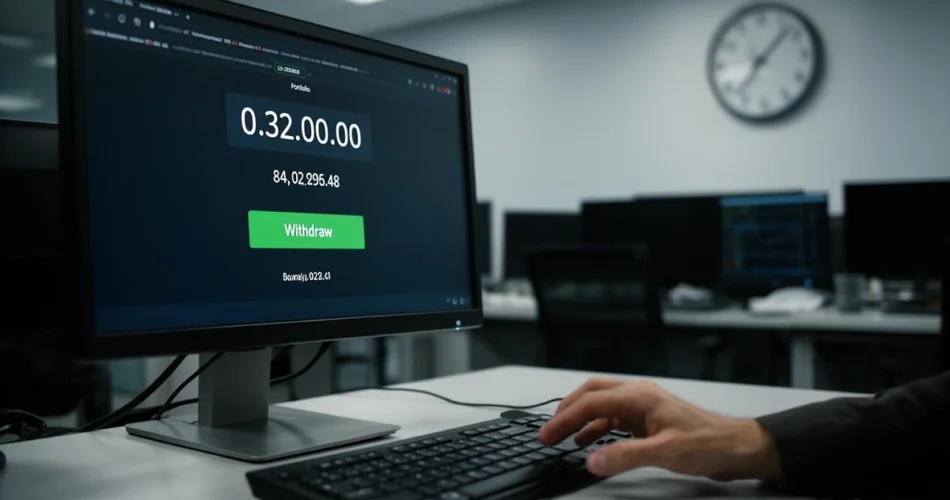
BitMEX, once the dominant force in crypto derivatives trading, is entering the final phase of its eleven-year run. The exchange will cease all trading operations on September 23 at 04:00 UTC, and the path to that endpoint is marked by four hard deadlines that will determine how much control traders retain over their positions and their money.
The wind-down, announced on July 23 following what the operator described as a strategic review by the board of HDR Global Trading Limited, has already stopped new account creation. Now the operational constraints are beginning to bite. From August 26 at 04:00 UTC, affected accounts move into reduce-only mode, meaning traders can shrink or close existing positions but cannot open new ones. On September 2, eleven perpetual swap contracts will be settled early. On September 23, the exchange shuts down entirely, force-closing anything still open. And after that date, anyone who leaves a balance behind will pay a monthly account fee that can consume small holdings within months.
The Reduce-Only Switch: August 26 at 04:00 UTC
Reduce-only is a trading mode in which an exchange accepts only orders that make an existing position smaller. A sell order on an existing long position goes through; a buy order on that same position is rejected. From the August 26 cutoff, that is the state BitMEX imposes through risk limits on affected accounts.
Two aspects of this transition are easily overlooked. First, trading does not end at that moment. The platform remains in normal operation until Closure Time, so users can continue to sell, close, and withdraw. Second, and more consequential, the company has expressly reserved the right to force-close open positions itself at any point between August 26 and September 23 in order to wind the market down in an orderly way. In its own notice, the operator states it accepts no responsibility for trading losses arising because users failed to close positions themselves by the deadline.
The practical implication is stark: from August 26 onward, the moment at which a position is closed is no longer reliably in the trader’s hands. Anyone who still wants to determine their own exit price must act before the cutoff. For contracts with thin liquidity, the company has additionally announced early settlement procedures, with notice to be given through its usual channels.
The stock of open contracts paints an interesting picture. A query of the operator’s public trading interface on August 26 at 00:37 UTC showed that of five listed futures contracts, four expire only after Closure Time, the latest in March 2027. Those positions will not be allowed to run their natural course.
Eleven Perpetual Swaps Settle Early: September 2
The second deadline is less conspicuous but affects more accounts. On September 2, BitMEX will withdraw eleven perpetual swap contracts from trading and settle them early, citing the closure decision as justification.
The schedule has two markers. Until 04:00 UTC, described in the notice as T start, the contracts trade normally. At that point the funding rate is calculated one last time from the preceding eight hours and then set to zero. At 12:00 UTC, the point termed T settle, the contracts expire. Trading ends, all open orders are cancelled, the last funding is settled, and all open positions are closed at the respective settlement price. No fees are charged for this settlement, according to the operator.
A perpetual swap is a derivative on a price that, unlike a classic futures contract, has no expiry date. To keep its price anchored to the spot market, holders on one side pay a balancing payment to the other at fixed intervals. That payment is the funding rate. When positive, long positions pay short positions; when negative, the payment runs the other way.
BitMEX introduced this product in 2014 and has described itself as the inventor of the perpetual swap with hundredfold leverage. Over eleven years it became the industry’s most traded instrument and was adopted by countless other platforms. That the pioneer of this product is now the one winding it down early is the real turning point behind the announcement.
For account holders, three concrete consequences follow on September 2. The last funding is still settled, after which it ceases. Positions are closed not at the trader’s preferred price but at the settlement price, which the operator forms from a thirty-minute index. And the result accrued over the term moves to the Bitcoin balance if the contract was collateralised in Bitcoin, or to the Tether balance if it was collateralised in USDT. The contract then disappears from the position overview.
The eleven contracts slated for early settlement, taken from the operator’s notice of August 18, are:
| Contract | Settlement Index |
|---|---|
| SOLUSDT | .BSOLT30M |
| SOLUSD | .BSOL30M |
| XRPUSD | .BXRP30M |
| XRPUSDT | .BXRPT30M |
| BNBUSDT | .BBNBT30M |
| BNBUSD | .BBNB30M |
| HYPEUSDT | .BHYPET30M |
| LINKUSD | .BLINK30M |
| SUIUSDT | .BSUIT30M |
| NEARUSDT | .BNEART30M |
| XAUTUSDT | .BXAUTT30M |
Note: Settlement prices are formed from thirty-minute index values for each respective contract.
A measurement at the operator’s public trading interface on August 26 at 00:37 UTC showed 27 instruments in total stood open at that point, with all eleven announced contracts among them. All eleven therefore remain tradable for now, and anyone holding a position in them can still close it themselves before the September 2 settlement.
Closure Time and the Fee That Follows: September 23 at 04:00 UTC
Closure Time is the endpoint set by the operator: September 23, 2026, 04:00:00 UTC. From that moment BitMEX no longer provides trading services and merely holds the assets of users who have not withdrawn by then. All positions still open at that point are immediately force-closed.
One detail concerns holders of the in-house token. The operator has already unstaked all staked BMEX tokens, so they sit immediately available in accounts. Anyone still holding them does not have to release them from a staking contract before withdrawing.
Account access remains in place after the cut-off date. Users can continue to log in, view their balance and transaction history, and initiate withdrawals. But that access is no longer free.
Anyone who has verified their account and does not withdraw their assets by Closure Time will be charged an account fee of 1 percent per year, billed monthly. For accounts whose balance amounts to no more than that sum, a flat charge of the equivalent of 50 US dollars applies instead. The fee runs until the balance has been withdrawn in full.
Two additions make the matter more unpleasant than the bare percentage sounds. The operator reserves the right to raise the fee over time, though it intends to announce this in advance. And anyone who does not withdraw by Closure Time is, by the wording of the notice, deemed to agree to this fee and to later increases. With a small residual balance of a few hundred dollars, the flat charge eats up the holding within a few months.
Withdrawal Delays and Phishing Risks
The operator expects withdrawal delays itself and gives three reasons. It has introduced additional checks for all requested withdrawals. Under heavy demand, network limits can apply depending on the coin. And the confirmation times of some blockchains are simply long: with Bitcoin, an hour is said not to be unusual, which together with a fixed pool of withdrawal addresses slows processing down. If a withdrawal shows the status in progress, it is in the queue and will be sent as soon as the next address becomes free.
The consequence is simple: the closer September 23 comes, the fuller that queue gets. A withdrawal at the end of August is considerably more relaxed than one on the evening of September 22.
BitMEX has also issued a security warning that deserves attention. The company expressly warns about phishing campaigns using the closure as a hook, and makes clear that there is no preferential or expedited withdrawal service. Any message promising a faster withdrawal in exchange for a fee, through a link, or against disclosure of access details is identifiable as an attempted fraud. Wind-downs are attractive to attackers because they create genuine time pressure among those affected.
A separate operational deadline follows the closure itself: BitMEX will disable API withdrawals on September 28 at 04:00 UTC, including institutional integrations such as Fireblocks and Copper, leaving manual website withdrawals as the remaining route.
What Comes After
BitMEX will not exist as a trading venue after September 23. As a custodian for balances not withdrawn, it will continue to operate for the time being. The company has said it will keep contacting users who have not withdrawn their assets after the cut-off date, in order to move them toward withdrawal. No end date for this phase has been given, but the stated intention to raise fees over time provides its own incentive.
On the coverage of customer balances, the operator states that assets exceed liabilities, as its own page on proof of reserves and liabilities shows. Proof of reserves is a verification procedure by which an exchange is meant to demonstrate that it actually holds customer balances. That is a statement by the company about itself, not a third-party attestation. For a holder, the conclusion stays the same regardless of how solid one considers this evidence: a balance on an exchange in wind-down is a claim, not possession.
For tax purposes, the forced settlements on September 2 and September 23 produce realised results whether or not the trader chose those moments. The operator has undertaken to keep the transaction history viewable after the cut-off date, but an account at a wound-down exchange is a poor filing place for records needed in the following year’s tax return. Exporting the full trading and withdrawal history while the platform is running normally is the prudent move.
The wind-down is also drawing legal attention. A lawsuit seeking 623 BTC tied to the shutdown has already been filed, adding another layer of uncertainty to the final chapter of one of crypto’s most storied exchanges.
Source link
Author

- Ytv Market News
- Share-market news writer and analyst with deep experience covering equities, commodities, forex, and cryptocurrencies for readers in the USA, UK, Canada, and Australia. Ytv Market News delivers timely market updates, practical trading insights, and clear explanations of macro and company-level catalysts that move prices. Combines on-the-ground financial reporting with technical analysis, using concise charts and actionable ideas to help investors and traders make smarter decisions.
Latest entries
 Company Press ReleasesAugust 27, 2026Blister Pack Collective gains Papela’s converter business
 Company NewsAugust 27, 2026Steyr Motors Aktie: 310 Millionen Euro Auftragsbestand bis 2030
 Stock Market VideosAugust 27, 2026Dems, GOP Evaluate 2026 Midterm Roadmap | Balance of Power 08/12/2026
 UkAugust 27, 2026TRADING UPDATES: TPXimpact contract wins; Mila Coffey resource upgrade

